
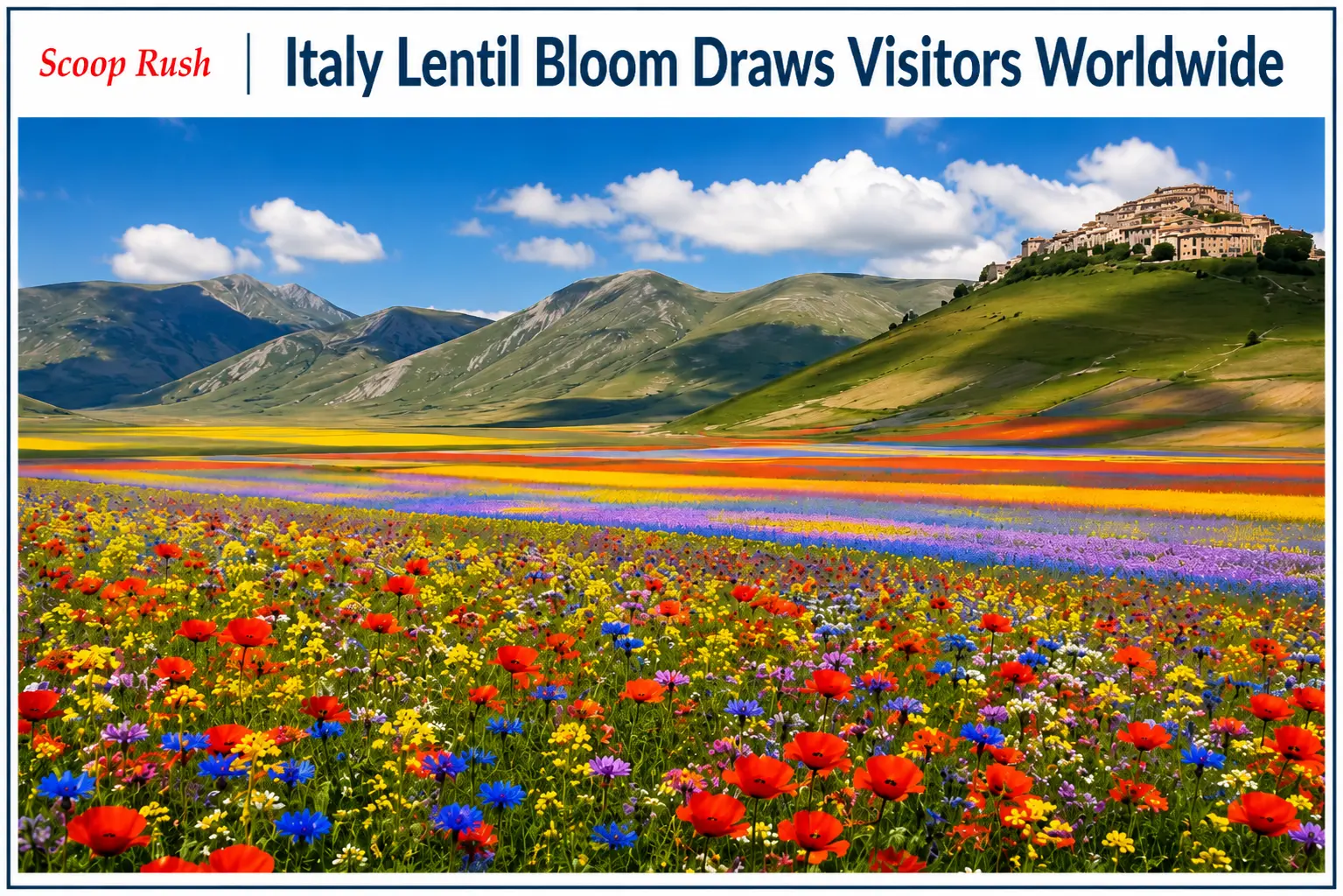
The Italy Lentil Bloom has returned to the plains of Castelluccio di Norcia, creating one of Europe’s most spectacular natural displays. Every summer, the landscape transforms into a colorful patchwork of red, yellow, blue, purple, and white flowers. Thousands of travelers visit this small Umbrian village to witness the famous event known as La Fioritura.
The annual bloom offers more than beautiful scenery. It reflects centuries of traditional farming, supports local businesses, and highlights the resilience of a community rebuilding after the devastating 2016 earthquake.
Italy Lentil Bloom Returns to Umbria in 2026
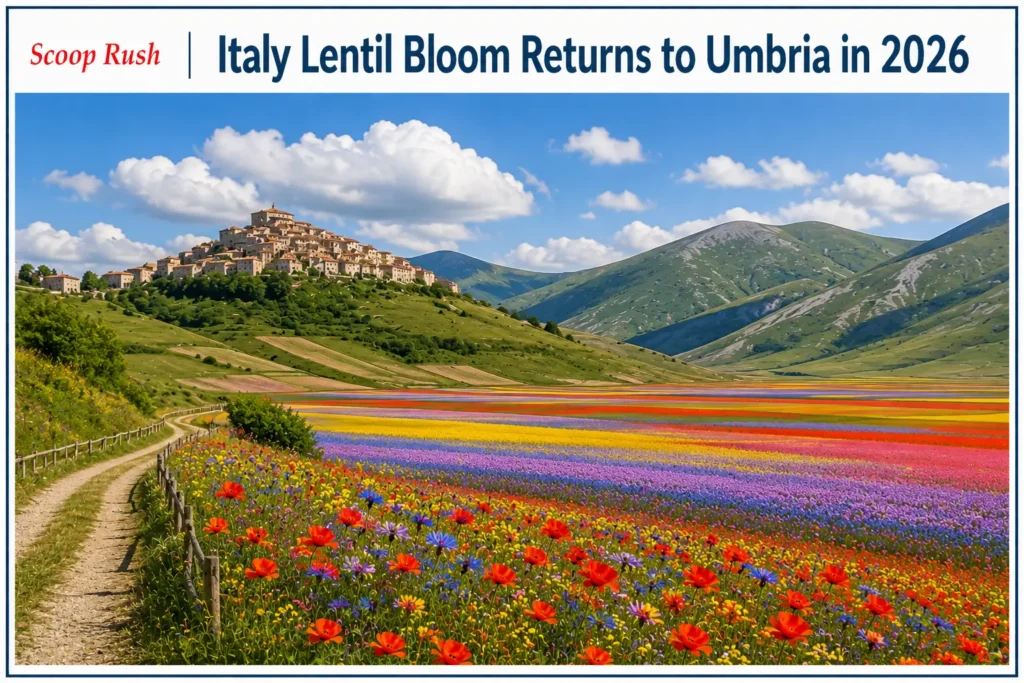
The Italy Lentil Bloom returns every year between late May and early July. During this period, colorful wildflowers transform the plains surrounding Castelluccio di Norcia into one of Italy’s most spectacular natural attractions.
Unlike a traditional flower festival, the bloom develops naturally through centuries-old farming practices. Local farmers grow lentils using methods that allow wildflowers to flourish alongside the crop.
Castelluccio di Norcia Becomes the Heart of the Italy Lentil Bloom
The famous bloom spreads across three vast plains inside Monti Sibillini National Park. Pian Grande, Pian Piccolo, and Pian Perduto create an unforgettable landscape during the flowering season.
Located about 1,450 meters above sea level, these mountain plains offer fertile soil and cool temperatures. Together, they provide ideal conditions for both lentils and wildflowers to thrive.
Traditional Lentil Farming Creates the Rainbow Landscape

The colorful scenery does not come from the lentil flowers themselves. The lentil plant produces small white or pale lilac blossoms that many visitors hardly notice.
Instead, lentils naturally enrich the soil with nitrogen while allowing sunlight to reach nearby plants. This process encourages poppies, cornflowers, mustard, and many other wildflowers to bloom across the fields.
Seasonal Wildflowers Transform the Plains Into a Natural Mosaic
The blooming season changes the landscape week by week. Bright yellow wild mustard and rapeseed flowers appear first across the plains.
Soon afterward, vivid red poppies dominate the fields. Blue cornflowers and violet pink roveja flowers complete the colorful display, creating a different pattern every year depending on weather conditions and planting times.
Ancient Geology Makes the Bloom Possible

Thousands of years ago, the three plains formed large glacial lakes. Earthquakes, glaciers, rainfall, and natural erosion gradually drained the water and created fertile land.
Today, the well-drained soil supports healthy crops and native wildflowers. The alpine climate also protects seeds during winter before they bloom together each summer.
Castelluccio’s Story of Hope and Recovery
The hilltop village of Castelluccio di Norcia overlooks the colorful plains. In 2016, a powerful earthquake caused severe damage throughout the village. Many residents relocated while reconstruction slowly began.
Despite these challenges, the annual bloom continues to attract visitors from around the world. Tourism supports local shops, agriturismi, family businesses, and seasonal restaurants. For many residents, the bloom represents hope, resilience, and a brighter future.
The Famous Castelluccio Lentils
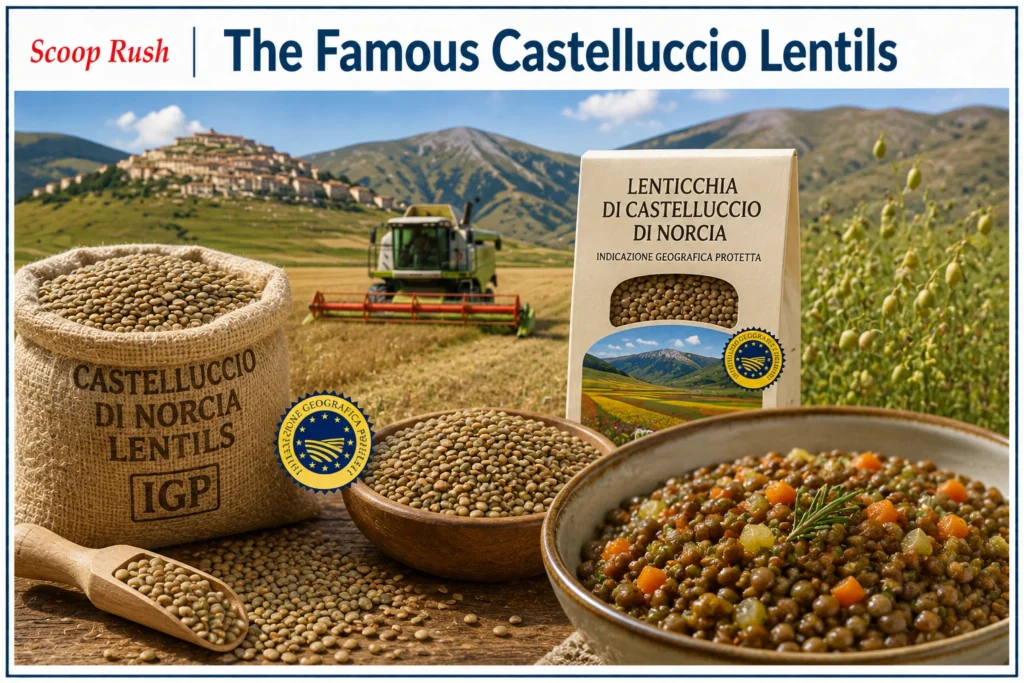
After the blooming season ends, farmers harvest the renowned Castelluccio di Norcia lentils between July and August. These lentils received Protected Geographical Indication (IGP) status in 1999.
The lentils remain popular because of their creamy texture, thin skin, and rich flavor. They cook quickly without soaking and keep their shape during cooking, making them a favorite ingredient in Umbrian cuisine.
Traditional Umbrian Dishes Made With the Lentils
Local families often prepare simple lentil soup using onions, carrots, celery, garlic, rosemary, and bay leaves. Fresh extra virgin olive oil adds the finishing touch before serving.
Many restaurants also pair the lentils with traditional Umbrian sausages or toasted country bread. These simple recipes highlight the natural flavor of the locally grown crop.
Best Walking Trails for Viewing the Bloom

Several marked trails allow visitors to enjoy the scenery without damaging crops. The Anello dei Piani trail circles the edge of Pian Grande and offers wide panoramic views.
The Red Trail climbs nearby hills and provides elevated views of the colorful mosaic below. Another popular stop is the Italy-shaped forest along the SP477 road, which overlooks the plains.
Visitor Rules Help Protect the Bloom
The growing popularity of the Italy Lentil Bloom has increased visitor numbers every year. Local authorities now enforce measures to reduce environmental damage during peak weekends.
Private cars cannot park near the bloom during the busiest periods. Shuttle buses and motorcycles provide easier access. Visitors should also remain on marked paths to protect crops and support local farmers.
Why the Italy Lentil Bloom Is Famous Worldwide
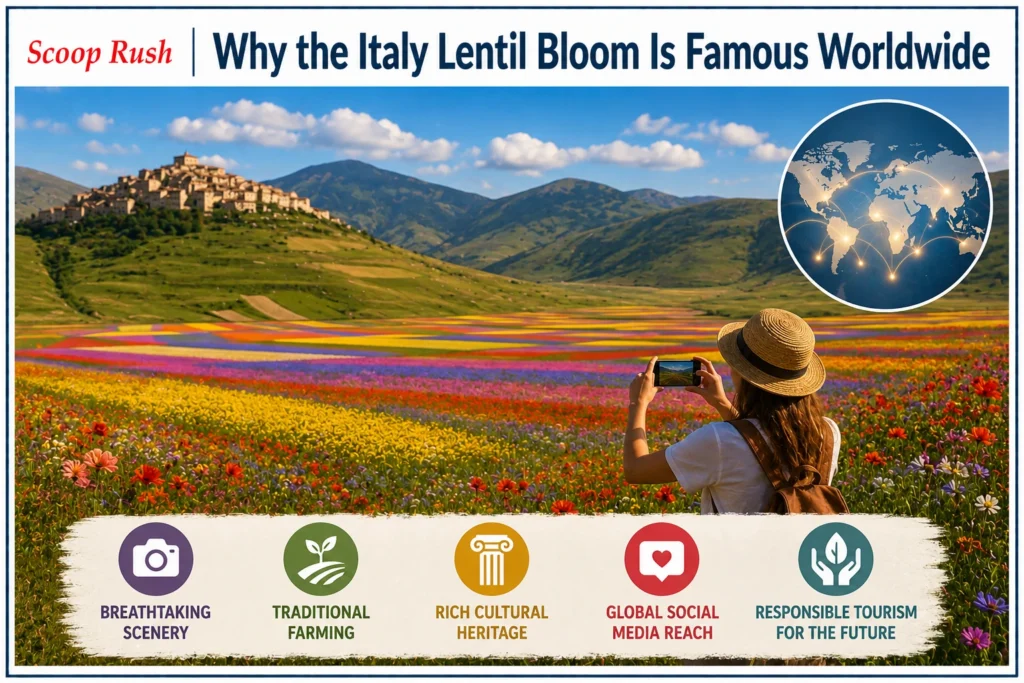
The Italy Lentil Bloom combines breathtaking scenery with traditional farming and rich cultural heritage. Few places in Europe offer such a unique blend of agriculture and natural beauty.
Social media has also increased its global popularity. However, responsible tourism remains essential to preserve this extraordinary landscape for future generations.
Final Thoughts
The Italy Lentil Bloom remains one of Italy’s most remarkable natural events. Its vibrant colors, traditional farming methods, and stunning mountain setting attract visitors from across the globe every summer.
Beyond the beautiful views, the bloom tells a powerful story of sustainability, local heritage, and community resilience. Travelers who respect the landscape help preserve this unforgettable experience while supporting the people who call Castelluccio di Norcia home.
FAQs
1. When is the best time to visit the Italy Lentil Bloom?
The best time is from late June to early July. The exact peak changes each year depending on weather conditions and flowering cycles.
2. Why are the fields so colorful?
The bright colors come mainly from wildflowers growing naturally among lentil crops. The lentils improve soil quality, allowing many flower species to flourish.
3. Where is the Italy Lentil Bloom located?
The bloom takes place around Castelluccio di Norcia in Umbria, inside Monti Sibillini National Park on the plains of Pian Grande, Pian Piccolo, and Pian Perduto.
4. Can visitors walk through the flower fields?
No. Visitors should stay on marked paths at all times. Walking into the fields damages crops, harms the fragile ecosystem, and affects local farmers’ livelihoods.
5. What makes Castelluccio di Norcia lentils unique?
These lentils have Protected Geographical Indication (IGP) status. They feature a creamy texture, thin skin, rich flavor, and cook without soaking, making them highly valued in Italian cuisine.

