
A low residue diet is often recommended when your digestive system needs a break. Whether you’re recovering from bowel surgery, managing inflammatory bowel disease (IBD), or preparing for a colonoscopy, this eating plan helps reduce the amount of undigested food moving through your intestines.
Unlike many popular diets, a low residue diet isn’t designed for weight loss. Instead, it temporarily limits high-fiber foods and other hard-to-digest ingredients to reduce bowel activity, making digestion easier and helping relieve uncomfortable symptoms.
In this guide, you’ll learn what a low residue diet is, who needs it, which foods are allowed, which foods should be avoided, and how to safely transition back to a normal diet.
What Is a Low Residue Diet?
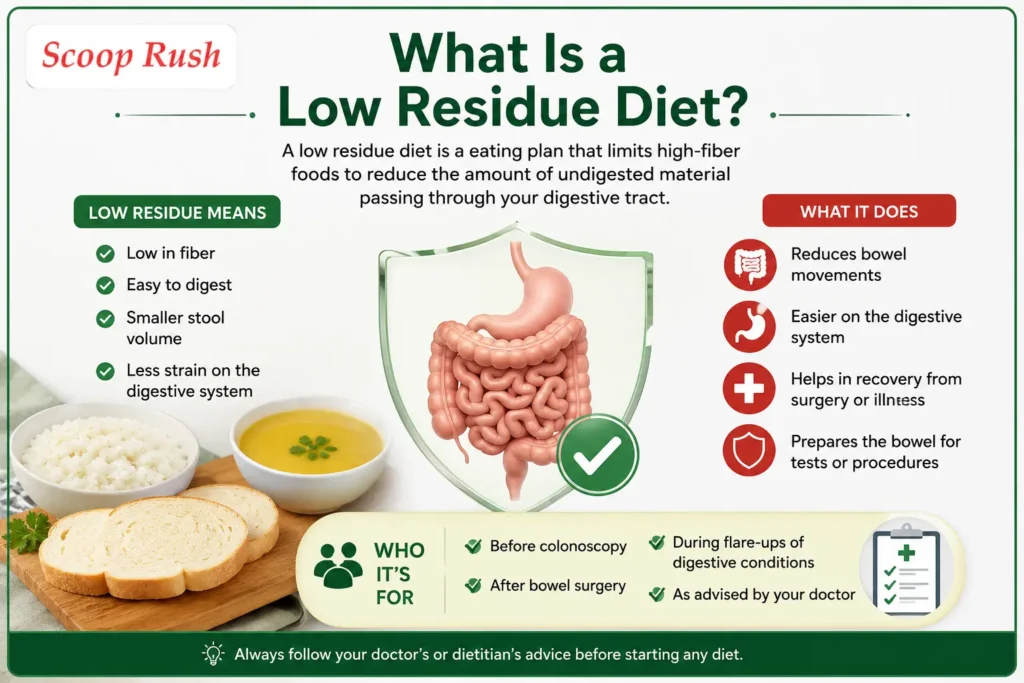
A low residue diet is a short-term eating plan that limits foods leaving large amounts of undigested material, called residue, in your intestines.
Residue mainly consists of dietary fiber, but it can also include seeds, skins, connective tissue from meats, and certain dairy products that may be difficult to digest.
The goal is to:
- Reduce bowel movements
- Minimize stool volume
- Ease abdominal pain
- Reduce diarrhea
- Lower gas and bloating
- Allow the intestines to heal
Doctors usually recommend this diet only for a limited period.
Many people assume that all healthy diets should include plenty of fiber. While fiber is an essential part of a balanced diet for most people, there are times when your digestive system needs a temporary break — this is where a low residue diet can help.
Fiber passes through the digestive tract largely undigested. As it moves through the intestines, it adds bulk to stool and stimulates bowel movements. For someone with an inflamed bowel, recovering from surgery, or preparing for a medical procedure, this extra work can increase discomfort and slow healing. A low residue diet reduces the amount of undigested material that reaches the large intestine, resulting in fewer and smaller bowel movements and relief from symptoms like diarrhea, cramping, bloating, and excess gas.
It’s important to remember that this eating plan is a medical diet rather than a lifestyle diet. Most people should only follow it for the period recommended by their healthcare provider.
Low Residue Diet vs. Low Fiber Diet
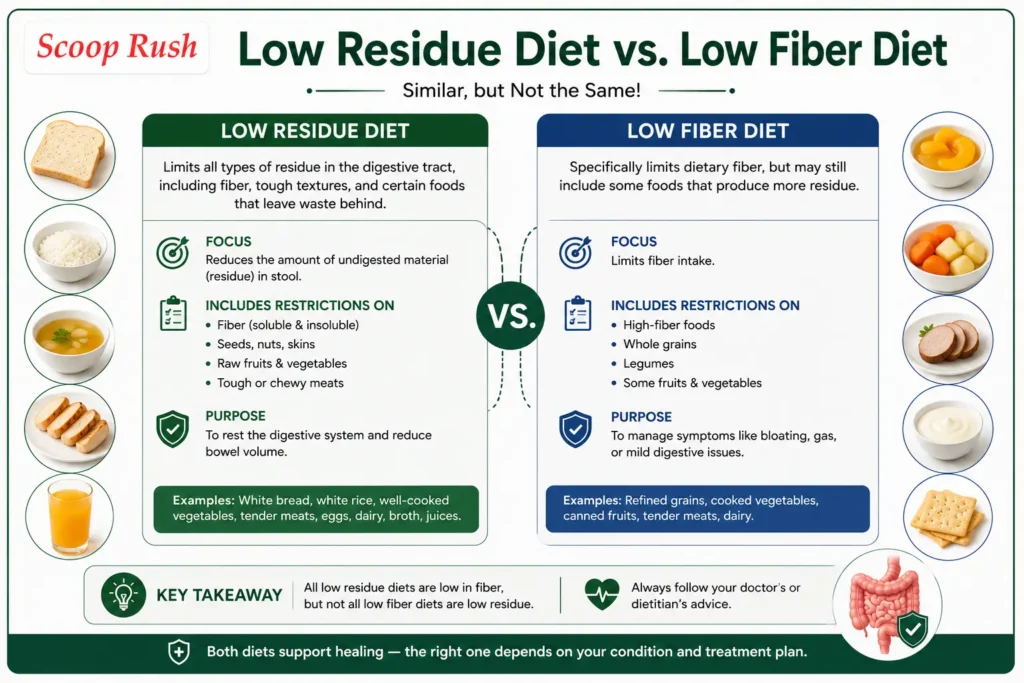
Although the two terms are often used interchangeably, they are not exactly the same.
A low-fiber diet simply reduces fiber intake.
A low residue diet goes a step further by limiting foods that increase stool volume, including certain dairy products, nuts, seeds, legumes, and some tougher meats.
Because of these additional restrictions, a low residue diet is generally more limiting.
Who May Need a Low Residue Diet?
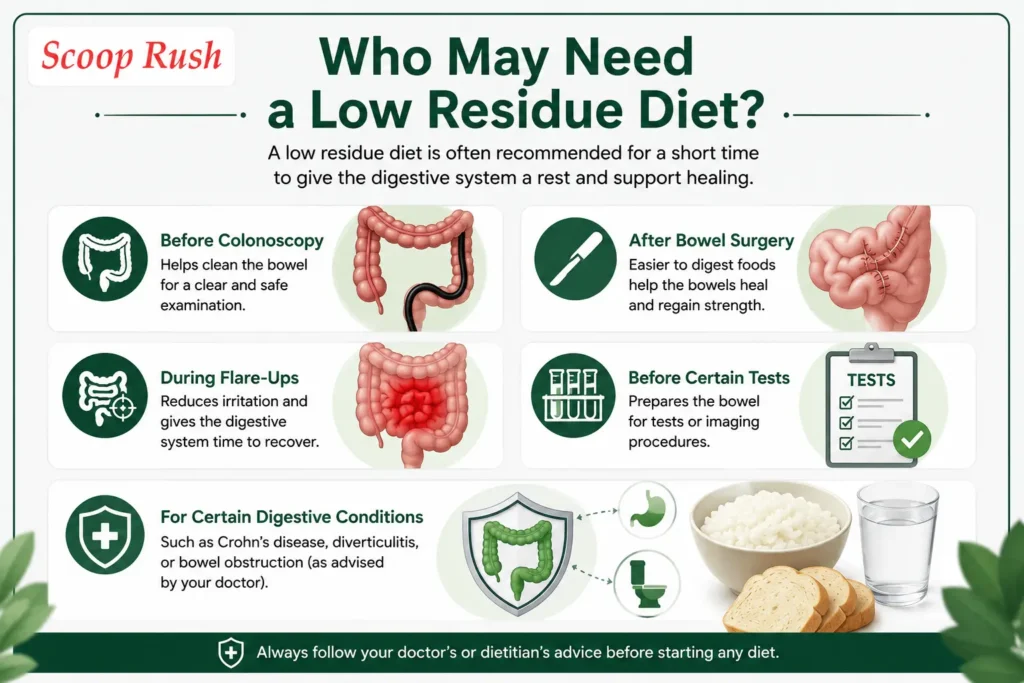
Healthcare providers may recommend this diet for people with certain digestive conditions or in preparation for specific procedures.
Crohn’s Disease Crohn’s disease causes chronic inflammation anywhere along the digestive tract. During a flare-up, high-fiber foods can worsen abdominal pain, diarrhea, and irritation, so a temporary low residue diet may reduce stress on the intestines while medication helps control inflammation.
Ulcerative Colitis This condition affects the lining of the large intestine and rectum. During active disease, reducing fiber intake may decrease bowel movements and improve symptoms until inflammation settles.
Diverticulitis A low residue diet may be recommended during recovery, with fiber gradually reintroduced afterward to support long-term colon health.
Before a Colonoscopy Doctors want the bowel as clean as possible before this procedure. Following a low residue diet for several days, then switching to clear liquids the day before, helps improve bowel prep and procedure effectiveness.
After Intestinal Surgery Following bowel surgery, softer foods reduce stress on the healing digestive tract and may lower the risk of complications.
Bowel Obstruction or Gastroparesis Some patients with slowed digestion or a partial bowel obstruction may benefit from this diet under close medical supervision, since high-fiber foods can be difficult to pass through narrowed areas.
Benefits of a Low Residue Diet
Following this diet for a short period may help:
- Reduce diarrhea
- Ease stomach cramps
- Minimize bloating
- Reduce intestinal irritation
- Produce smaller bowel movements
- Help prepare the bowel before medical procedures
- Support recovery after gastrointestinal surgery
Foods to Eat on a Low Residue Diet
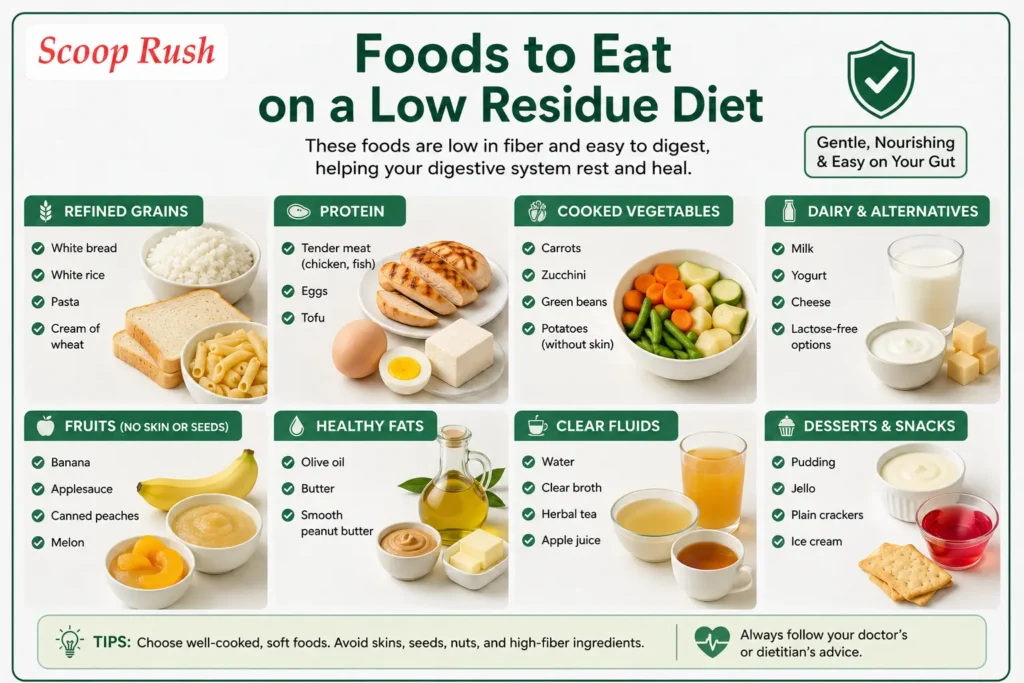
The emphasis is on foods that are soft, refined, and easy to digest.
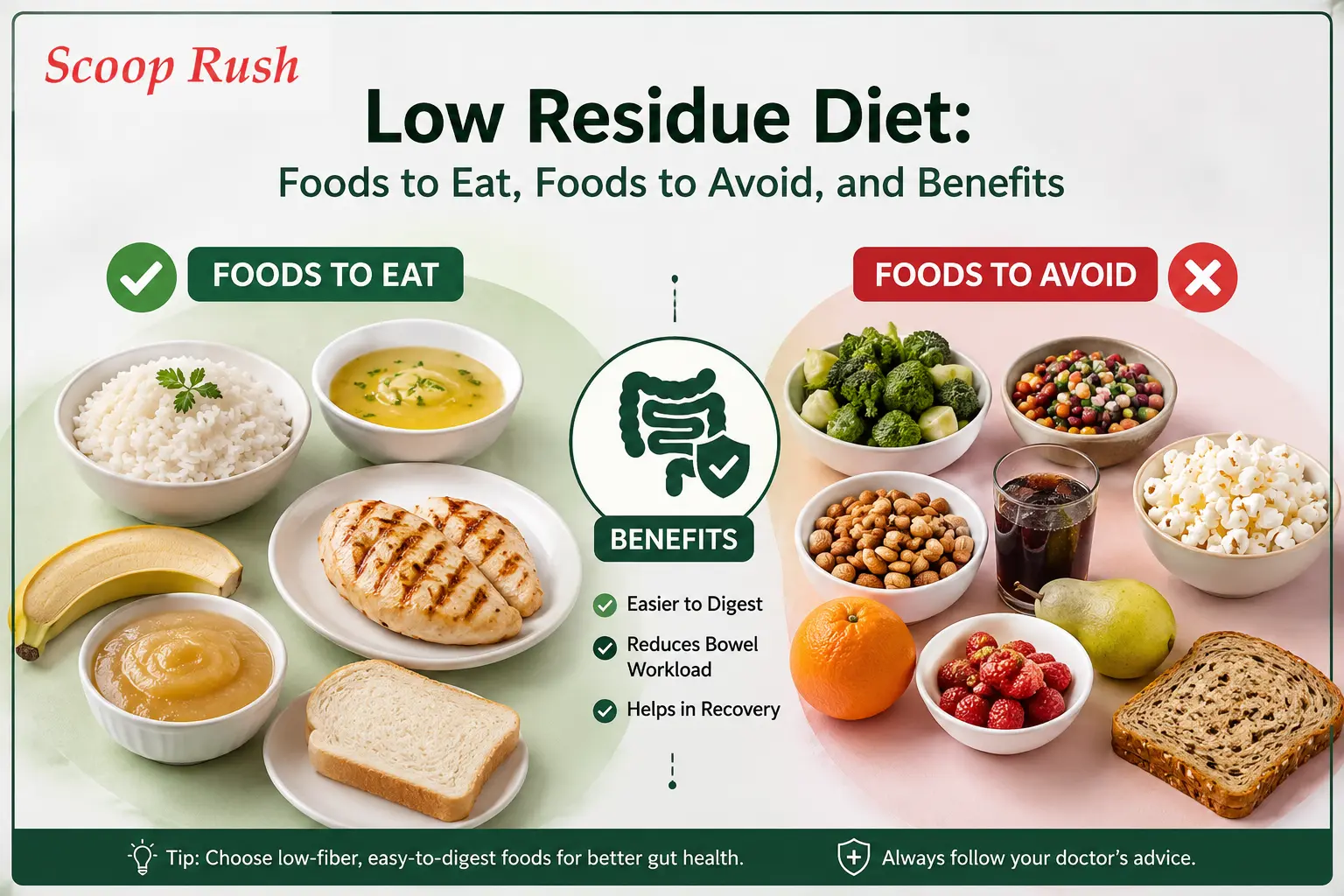
Refined Grains: White bread, white toast, plain bagels, saltine crackers, white rice, regular pasta, Cream of Wheat, grits, corn flakes, Rice Krispies. (Avoid whole-grain products.)
Fruits: Bananas, applesauce, canned peaches, canned pears, ripe melon, honeydew, cooked apples without skin, fruit juice without pulp. (Avoid fruits with skins, seeds, or dried fruit.)
Vegetables (cooked until soft): Carrots, green beans, beets, asparagus tips, spinach, pumpkin, peeled potatoes, squash without seeds. (Avoid raw vegetables and vegetables with skins.)
Protein Foods: Chicken, turkey, lean beef, pork, fish without bones, eggs, smooth peanut butter. Choose tender, well-cooked meats.
Dairy (if tolerated): Milk (in moderation), yogurt without fruit, cottage cheese, mild cheese, pudding. People with lactose intolerance may need lactose-free alternatives.
Drinks: Water, apple juice, cranberry juice, tea, decaffeinated coffee, sports drinks, clear fruit drinks.
Foods to Avoid on a Low Residue Diet
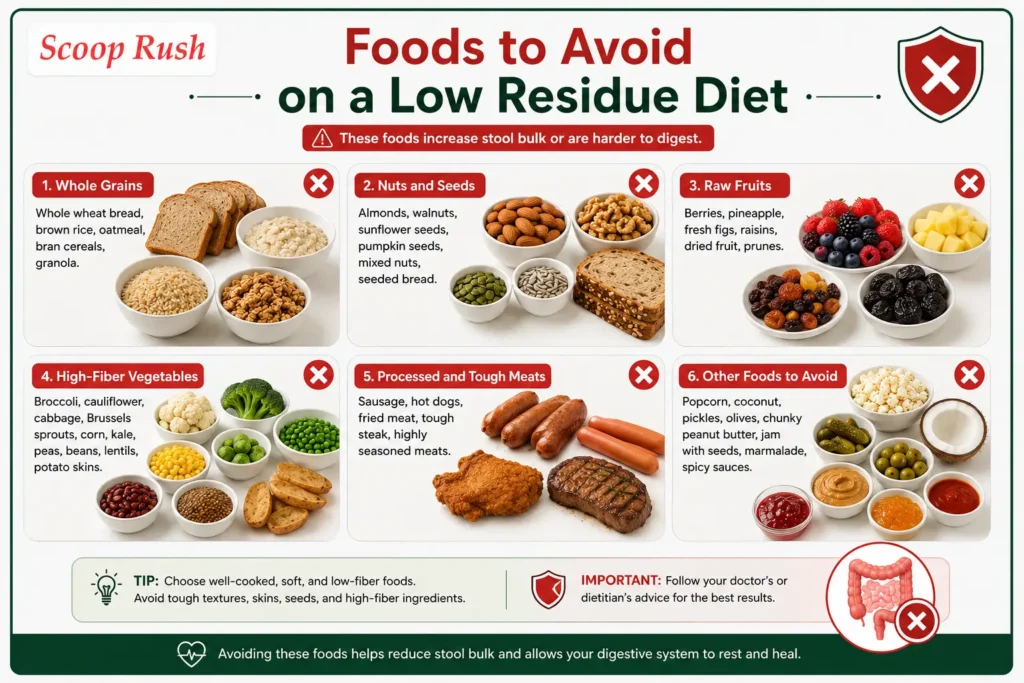
These foods increase stool bulk or are harder to digest.
Whole Grains: Whole wheat bread, brown rice, oatmeal, bran cereals, granola.
Nuts and Seeds: Almonds, walnuts, sunflower seeds, pumpkin seeds, mixed nuts, seeded bread.
Raw Fruits: Berries, pineapple, fresh figs, raisins, dried fruit, prunes.
High-Fiber Vegetables: Broccoli, cauliflower, cabbage, Brussels sprouts, corn, kale, peas, beans, lentils, potato skins.
Processed and Tough Meats: Sausage, hot dogs, fried meat, tough steak, highly seasoned meats.
Other Foods to Avoid: Popcorn, coconut, pickles, olives, chunky peanut butter, jam with seeds, marmalade, spicy sauces.
Sample One-Day Low Residue Diet Menu
Breakfast: Scrambled eggs, white toast, applesauce, decaffeinated coffee Morning Snack: Vanilla pudding Lunch: Grilled chicken, white rice, cooked carrots Afternoon Snack: Saltine crackers Dinner: Baked fish, mashed potatoes without skin, cooked green beans Dessert: Gelatin or sherbet
Sample Grocery List for a Low Residue Diet
Bread and Grains: White bread, plain bagels, white rice, plain pasta, saltine crackers, Cream of Wheat, grits
Protein: Chicken breast, turkey, lean beef, fish, eggs, smooth peanut butter
Fruits: Bananas, applesauce, canned peaches, canned pears, honeydew melon, cantaloupe
Vegetables: Carrots, green beans, spinach, pumpkin, peeled potatoes, beets
Dairy: Yogurt without fruit, cottage cheese, mild cheese, milk (if tolerated)
Pantry Items: Butter, olive oil, honey, jelly without seeds, plain gelatin, sugar, salt
Low Residue Diet vs. BRAT Diet vs. Clear Liquid Diet
People often confuse a low residue diet with other short-term eating plans, but each serves a different purpose.
BRAT Diet This stands for bananas, rice, applesauce, and toast. It’s typically used for a day or two after an acute stomach bug or bout of vomiting and diarrhea, mainly to settle the stomach. It’s much more limited than a low residue diet and isn’t meant to provide complete nutrition, even in the short term.
Clear Liquid Diet — This is the most restrictive of the three, allowing only liquids you can see through, such as broth, plain gelatin, water, and clear juices without pulp. It’s usually reserved for the day immediately before a colonoscopy or other procedure requiring a completely empty bowel, or for brief post-surgical recovery periods.
Low Residue Diet — This sits in the middle. It allows a wider variety of solid foods than the other two plans, including meats, dairy, and refined grains, while still limiting fiber and other hard-to-digest ingredients. Because it includes more food groups, it can be sustained for a longer period than a clear liquid or BRAT diet without major nutritional gaps, though it still isn’t meant to be permanent.
Understanding these distinctions matters because your doctor may move you between these diets depending on where you are in treatment or recovery. For example, someone preparing for a colonoscopy might follow a low residue diet for several days, then switch to clear liquids the day before the procedure, then return to a low residue diet for a short time afterward before gradually adding fiber back in.
Eating Out and Traveling on a Low Residue Diet
Following a low residue diet doesn’t mean you have to stay home. With a little planning, it’s possible to eat at restaurants or travel while still sticking to your plan.
At Restaurants
- Choose grilled, baked, or roasted proteins instead of fried or heavily breaded options.
- Ask for sauces, dressings, and gravies on the side so you can control the amount.
- Request that vegetables be well-cooked rather than raw or lightly steamed.
- Swap whole-grain bread or brown rice for white bread or white rice when available.
- Avoid dishes with visible seeds, nuts, or skins unless they can be removed.
While Traveling
- Pack portable low residue snacks such as saltine crackers, plain white bread, or single-serve applesauce cups.
- Look up restaurant menus in advance so you’re not deciding under pressure when hungry.
- Carry a bottle of water and stay hydrated, especially during flights or long car rides, since dehydration can worsen digestive symptoms.
- If you’re staying in a hotel with a refrigerator, consider bringing shelf-stable items like pudding cups, canned fruit, or plain crackers.
Social Situations It’s common to feel self-conscious about food restrictions at gatherings or celebrations. You don’t need to explain your entire medical history to enjoy a meal with others — simply choosing the safest options from what’s available, or eating beforehand if you’re unsure what will be served, can help you participate without added stress.
Extended Sample Meal Plan (3 Days)
A single day’s menu can be helpful, but seeing a few days in sequence makes it easier to plan groceries and avoid repetition.
Day 1: A Simple Start
Begin your first day with gentle, easy-to-digest meals.
Breakfast: Scrambled eggs, white toast with a small amount of seedless jelly, and decaffeinated coffee.
Morning Snack: One ripe banana.
Lunch: Baked chicken breast with white rice and cooked carrots.
Afternoon Snack: Saltine crackers spread with a thin layer of smooth peanut butter.
Dinner: Baked white fish served with peeled mashed potatoes and cooked green beans.
Dessert: Vanilla pudding.
Day 2: Variety While Staying Low Residue
On the second day, continue choosing soft, low-fiber foods that are easy on the digestive system.
Breakfast: Cream of Wheat with a drizzle of honey and canned peaches.
Morning Snack: Plain yogurt without fruit pieces.
Lunch: Turkey sandwich on white bread with mayonnaise, served without lettuce or other raw vegetables.
Afternoon Snack: Applesauce.
Dinner: Lean ground beef with white pasta and a small amount of strained tomato sauce.
Dessert: Sherbet.
Day 3: Balanced and Easy to Digest
Finish the meal plan with another day of nutritious, low-residue meals.
Breakfast: Plain bagel with cream cheese and ripe melon.
Morning Snack: Cottage cheese.
Lunch: Grilled chicken served over white rice with cooked spinach.
Afternoon Snack: Rice Krispies with lactose-free milk, if tolerated.
Dinner: Baked pork tenderloin with peeled boiled potatoes and cooked squash.
Dessert: Plain gelatin.
Rotating proteins, grains, and cooked vegetables across several days like this can help prevent the diet from feeling monotonous, which is often one of the biggest challenges people report.
Low Residue Diets for Children
When a child needs to follow a low residue diet, whether for a digestive condition or before a procedure, the approach is similar but requires some additional care.
Children generally need consistent calorie and nutrient intake to support normal growth, so a low residue diet should always be guided closely by a pediatrician or pediatric gastroenterologist rather than managed on your own. Because the diet restricts many fruits, vegetables, and whole grains, providers often monitor growth and nutrient levels more closely in children than in adults, especially if the diet needs to continue for more than a few days.
Making the diet feel less restrictive can help with compliance in younger children. Presenting approved foods in fun ways, such as cutting white bread into shapes or offering approved fruits as a colorful snack plate, can make mealtimes feel more normal. It also helps to involve children in food choices from the approved list when appropriate, giving them a sense of control during a time that may already feel confusing or uncomfortable.
Preparing for a Colonoscopy
Doctors often recommend a low residue diet for several days before a colonoscopy. This usually includes white bread, white rice, tender chicken, eggs, pasta, applesauce, and bananas. The day before the procedure, most patients switch to a clear liquid diet according to their healthcare provider’s instructions.
How Long Should You Follow a Low Residue Diet?
This diet is intended to be temporary. For many people, it lasts:
- 2–5 days before a colonoscopy
- Several days after bowel surgery
- During flare-ups of Crohn’s disease or ulcerative colitis
- Until symptoms improve
Long-term use may lead to nutritional deficiencies because many healthy foods are restricted.
Possible Nutritional Concerns
Since the diet limits many fruits, vegetables, legumes, and whole grains, you may not get enough:
- Vitamin C
- Folate
- Calcium
- Potassium
- Magnesium
- Dietary fiber
Some healthcare providers recommend a multivitamin if the diet continues beyond two weeks. Since taking too many vitamins or supplements can carry its own risks, always check with your doctor before adding one on your own. People with inflammatory bowel disease may already have difficulty absorbing nutrients, making proper medical guidance especially important during extended dietary changes.
Tips for Following a Low Residue Diet Successfully
Making temporary dietary changes can feel overwhelming, especially if you normally eat a high-fiber diet. Planning your meals in advance can make the transition much easier.
- Read food labels and choose products containing very little fiber.
- Peel fruits and vegetables before cooking whenever appropriate.
- Cook vegetables until they become soft instead of eating them raw.
- Choose tender cuts of meat and avoid heavily seasoned or fried foods.
- Eat smaller meals throughout the day if large meals worsen symptoms.
- Drink enough water unless your doctor has advised otherwise.
- Keep a food diary to identify foods that improve or worsen your symptoms.
Everyone’s digestive system responds differently. Even foods considered acceptable may cause discomfort in some people, so tracking your meals can help you and your healthcare provider identify your personal triggers. Building sustainable habits now can also support your long-term gut health — see our guide on healthy habits to build in your 20s and 30s for ideas that complement your recovery once you’re back to a regular diet.
Mistakes to Avoid on a Low Residue Diet
Although the diet appears straightforward, several common mistakes can make it less effective.
Assuming all soft foods are safe — Some soft foods still contain large amounts of fiber. Oatmeal, bran cereal, and whole-grain bread may seem gentle but aren’t suitable for this diet.
Eating too much dairy — Milk products contain little or no fiber, but excessive dairy can trigger diarrhea or bloating in people with lactose intolerance. Moderate portions are usually recommended.
Forgetting hidden seeds — Seeds are sometimes hidden in breads, crackers, fruit preserves, and salad dressings. Always check ingredient labels carefully.
Staying on the diet too long — Because this diet is restrictive, remaining on it longer than necessary may increase the risk of vitamin and mineral deficiencies. Follow your doctor’s recommendations for transitioning back to a more balanced eating pattern.
How to Transition Back to a Regular Diet
Once your digestive symptoms improve, your healthcare provider will usually recommend slowly increasing fiber rather than returning to your normal diet all at once. A gradual approach allows your digestive system to adjust comfortably.
You might begin by adding one higher-fiber food every few days while continuing to drink plenty of water, monitoring how your body responds before introducing another new food.
Good first choices to reintroduce may include:
- Oatmeal
- Soft berries
- Whole-grain bread
- Brown rice
- Cooked beans
- Fresh vegetables
If symptoms return, speak with your healthcare provider before making additional dietary changes.
When to Talk to Your Doctor
Although a low residue diet may help relieve digestive symptoms, it is not a substitute for medical treatment. Contact your healthcare provider if you experience:
- Persistent diarrhea or vomiting
- Severe abdominal pain
- Blood in the stool
- High fever
- Significant or ongoing weight loss
- Difficulty eating
- Signs of dehydration
- Symptoms that continue despite following the diet
These symptoms may require further evaluation beyond dietary changes.
FAQs
Can I eat eggs on a low residue diet?
Yes. Eggs are naturally low in fiber and are generally well tolerated.
Is white rice allowed?
Yes. White rice is one of the most commonly recommended foods on a low residue diet.
Can I eat bananas?
Yes. Ripe bananas are considered one of the best fruit choices because they are easy to digest.
Can I drink coffee?
Decaffeinated coffee is generally preferred, as caffeine may worsen digestive symptoms in some people. If you’re used to having coffee on an empty stomach, it may be worth pairing it with food while on this diet to help reduce digestive irritation.
Is peanut butter allowed?
Smooth peanut butter is usually acceptable, but crunchy peanut butter should be avoided because it contains pieces of nuts.
Can I eat cheese on a low residue diet?
Mild, low-fat cheeses like mozzarella or cheddar are generally well tolerated in moderate amounts. Cheeses with added nuts, seeds, or dried fruit should be avoided.
Is popcorn ever allowed?
No. Popcorn hulls are difficult to digest and can irritate the intestinal lining, so it’s typically avoided even in small amounts.
Can I season my food while on this diet?
Mild seasonings like salt, a small amount of pepper, and herbs without seeds are usually fine. Spicy seasonings and hot sauces are generally discouraged since they can irritate the digestive tract.
Do I need to avoid all forms of dairy?
Not necessarily. Many people tolerate moderate amounts of milk, mild cheese, and plain yogurt well. However, if you have lactose intolerance or notice dairy worsens your symptoms, lactose-free alternatives are a reasonable substitute.
Is it safe to exercise while on a low residue diet?
Light to moderate activity is usually fine — even something as simple as a 5-minute walk every hour can support digestion without overexerting your body. However, intense exercise may be harder to sustain if you’re eating fewer calories or feeling fatigued. Listen to your body and check with your healthcare provider if you have concerns, especially if you’re following the diet after surgery.
Key Takeaways
A low residue diet is designed to temporarily reduce the amount of undigested material passing through your digestive tract. By limiting high-fiber foods and choosing softer, easy-to-digest options, it may help relieve symptoms associated with Crohn’s disease, ulcerative colitis, diverticulitis, bowel surgery recovery, and colonoscopy preparation.
While the diet can be highly effective for short-term symptom management, it is not intended as a permanent eating plan. As your digestive health improves, gradually returning to a balanced diet rich in fruits, vegetables, whole grains, and other fiber-containing foods is essential for long-term gut health.
Following your healthcare provider’s advice and making gradual dietary changes will help ensure you receive the nutrients your body needs while allowing your digestive system the time it needs to heal.

