
What Is a Heat Dome?
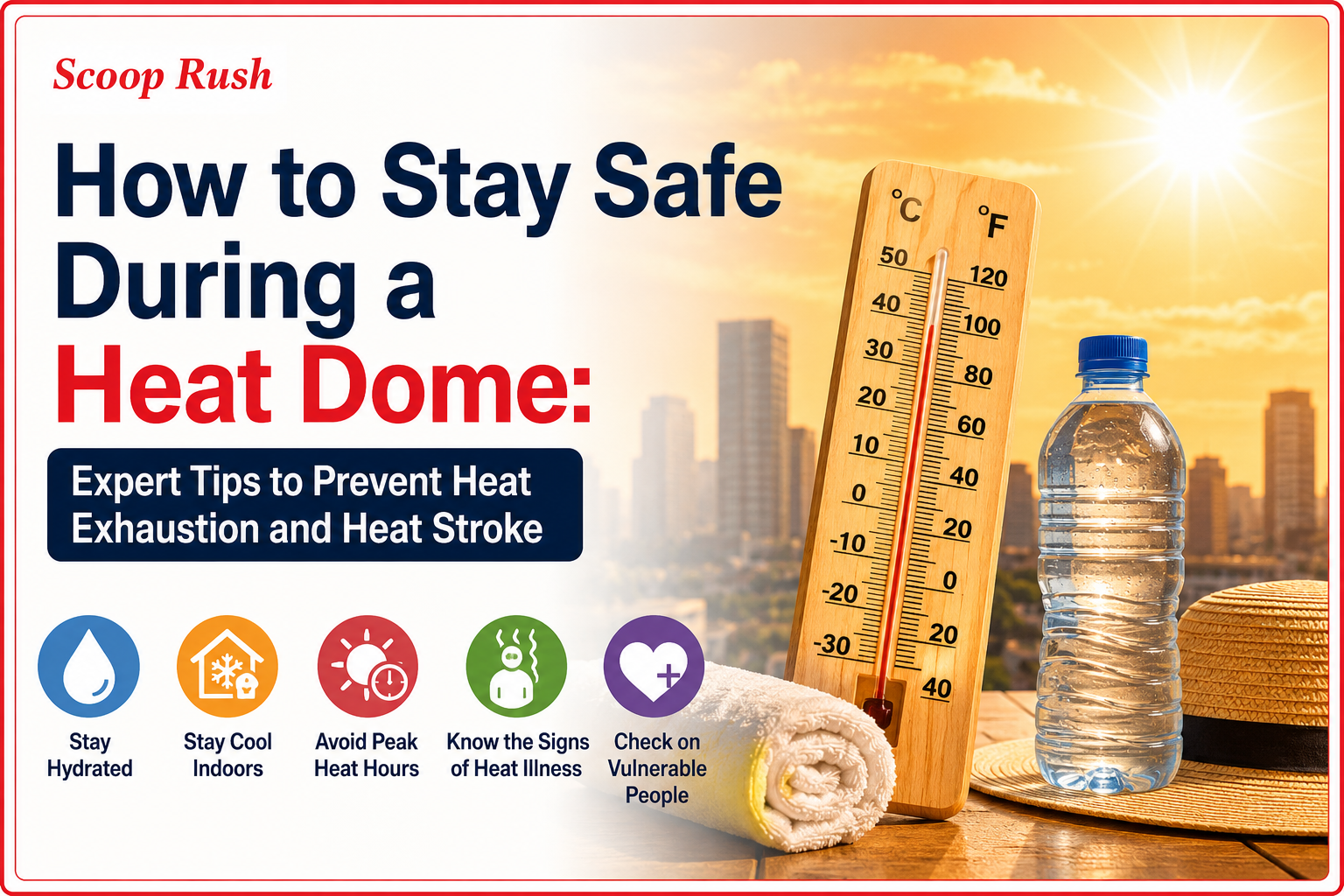
A heat dome is a weather pattern where high pressure traps hot air over a region, keeping temperatures unusually high for several days. Warm nights that don’t cool down much make it harder for the body to recover from daytime heat, which raises the risk of dehydration, heat exhaustion, and heat stroke especially for older adults, young children, and people with chronic health conditions.
What Happens to Your Body During Extreme Heat?
Your body cools itself by sweating and sending more blood flow to the skin. When temperatures climb especially with high humidity those cooling systems become far less effective.
As body temperature rises, dehydration develops faster than most people expect. Without intervention, mild symptoms can progress into heat exhaustion and then heat stroke, a life-threatening emergency, sometimes within minutes. Recognizing early symptoms is what makes the difference.
Stay Hydrated Before You Feel Thirsty
Drink water regularly throughout the day don’t wait until you’re thirsty, because by then your body may already be dehydrated.
Plain water is enough for most healthy adults. Sports drinks and electrolyte beverages are usually unnecessary unless a doctor recommends them or you’ve been sweating heavily for a prolonged period and it’s worth knowing the supplement risks of taking too many vitamins if you’re leaning on extra electrolyte or vitamin products to get through the heat.
Signs you may not be drinking enough:
- Dark yellow urine
- Dry mouth
- Feeling thirsty
- Fatigue
- Lightheadedness
Water-rich fruits and vegetables can help too: watermelon, strawberries, oranges, grapes, cucumbers, and celery.
Limit alcohol during extreme heat it speeds up dehydration and can mask warning signs of heat illness. If you have a condition like heart failure, follow your doctor’s specific guidance on fluid intake.
Plan Outdoor Activities Carefully
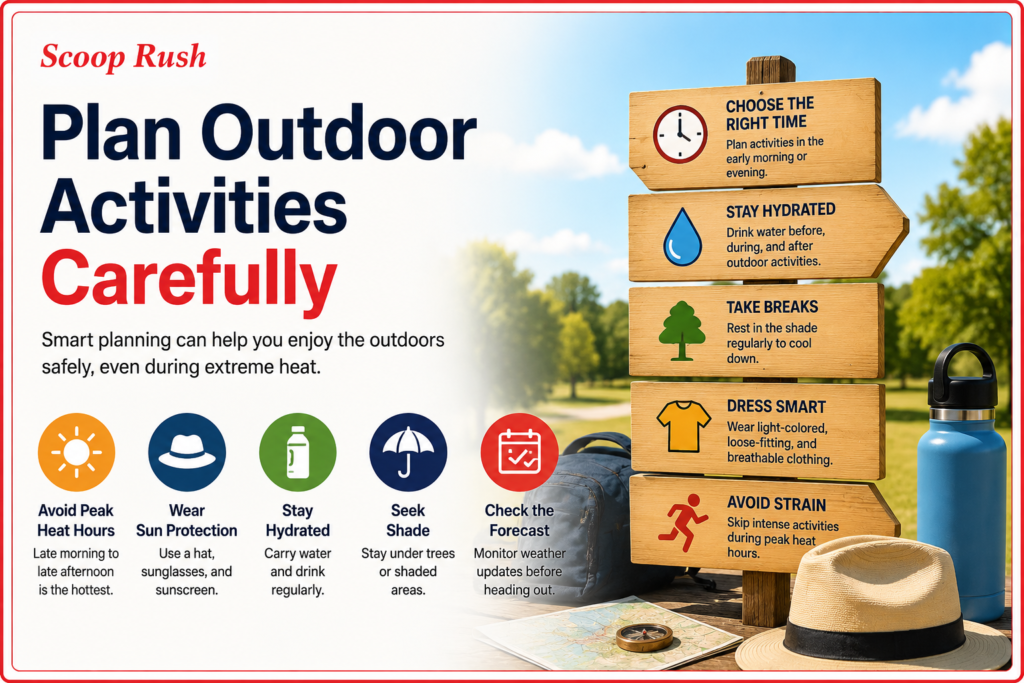
Schedule outdoor activities for early morning or evening, when temperatures are lower. The hottest window is typically late morning through late afternoon.
If you must be outside:
- Take frequent breaks in the shade
- Drink water often
- Avoid strenuous exercise
- Wear loose-fitting, light-colored, breathable clothing like cotton or linen
- Wear a wide-brimmed hat if you have one
Dark clothing absorbs more heat, while breathable natural fabrics help your body cool more efficiently. If you’re trying to stay active despite the heat, something like a 5-minute walk every hour during cooler parts of the day is a safer way to keep moving than a single long outdoor workout.
Keep Your Home Cool
Air conditioning is one of the best defenses against dangerous heat. If you have it, spend as much time indoors as possible during peak heat hours.
If you don’t have AC, a few home cooling tips for hot weather can make a real difference: keep curtains or sheets over sun-facing windows during the day, open windows during cooler nighttime hours, use fans to improve air circulation, and apply cool water or a damp cloth to your skin, forehead, or neck.
Many communities also open cooling centers during extreme heat. Libraries, malls, and other public buildings can offer relief if you need it.
Recognize the Early Signs of Heat Illness
Heat illness progresses in stages, and knowing the symptoms can help you catch it before it becomes an emergency.
Early Warning Sign: Heat Edema
Swelling in the hands, feet, or ankles is often one of the first signs of prolonged heat exposure. It usually improves once you move into a cool space and elevate the affected limbs.
Heat Exhaustion
A moderate but serious heat illness. Common symptoms:
- Heavy sweating
- Weakness
- Fatigue
- Dizziness
- Fainting
- Muscle cramps
- Nausea
- Vomiting
- Pale or clammy skin
- Fast heartbeat
If these appear:
- Move to a cool place immediately
- Drink water if the person is alert
- Rest
- Take a cool shower if possible
- Apply cool, wet towels to the body
Acting quickly can often stop the progression to something more serious.
Heat Stroke Is a Medical Emergency
The most severe heat illness, and it can be fatal if treatment is delayed.
Signs of heat stroke:
- Body temperature of 103°F (39.4°C) or higher
- Hot, red skin dry or damp
- Severe headache
- Confusion
- Difficulty walking
- Slurred speech
- Rapid heartbeat
- Rapid breathing
- Seizures
- Loss of consciousness
A change in mental status confusion, disorientation, trouble responding normally — is a key red flag.
If heat stroke is suspected:
- Call emergency services immediately
- Move the person to a cooler location
- Cool the body with cold cloths or a cool bath if possible
- Do not give fluids to someone who is unconscious or can’t swallow safely
Emergency departments typically begin aggressive cooling right away, since lowering body temperature quickly is the most effective treatment.
Who Faces the Highest Risk?
- Older adults
- Infants and young children
- Pregnant women
- People with heart disease
- People with lung disease
- People with kidney disease
- People living with diabetes
- People with certain mental health conditions
Young children can’t always describe how they feel, so unusual crying, sleepiness, irritability, or lethargy in hot weather shouldn’t be ignored. Older adults face particular heat and humidity risks since they can become dehydrated without realizing it regular check-ins matter. People managing conditions like type 1 diabetes should also be extra cautious, since blood sugar management and heat stress can compound each other.
Some Medications Can Increase Heat Risk
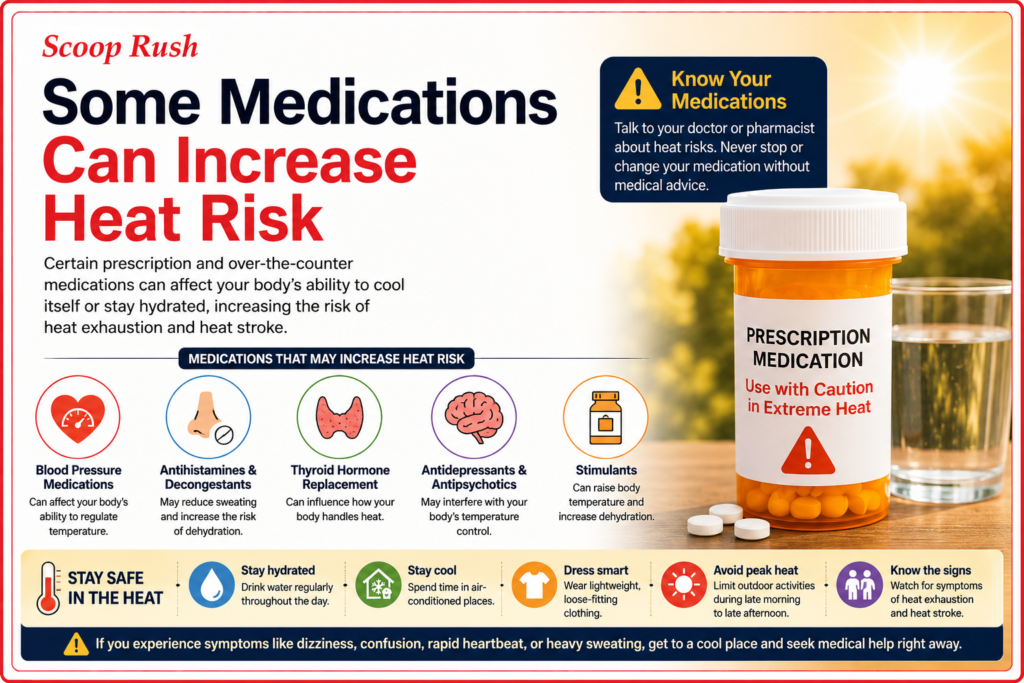
Certain medications interfere with the body’s natural cooling ability, including:
- Some blood pressure medications
- Certain antihistamines
- Some decongestants
- Certain antidepressants
- Some antipsychotic medications
- Thyroid hormone replacement medicines
- Prescription stimulants
These can reduce sweating or affect how the body regulates temperature. Never stop a prescribed medication without talking to your doctor first instead, ask whether you need extra heat precautions if you’re on any long-term medication.
Alcohol and Recreational Drugs Increase the Danger
Alcohol raises dehydration risk and impairs judgment, making it harder to notice you’re overheating. Stimulant drugs such as methamphetamine and cocaine substantially raise the risk of dangerous heat illness by increasing body temperature, heart rate, and metabolic activity. Avoiding these during extreme heat lowers your risk of a medical emergency.
Protect Children During Outdoor Events
- Encourage frequent water breaks
- Schedule regular cooling breaks
- Avoid prolonged vigorous play during peak heat hours
- Watch for unusual tiredness or irritability
- Move kids indoors right away if they seem overheated
Children heat up faster than adults, so early action matters more with them.
Check on Older Adults and Neighbors
Many heat deaths happen among older adults living alone. Small actions help: call elderly relatives, visit neighbors, help with outdoor chores, deliver meals or groceries, and confirm they have access to a cool space.
Don’t Forget Your Pets
- Keep pets indoors when possible
- Provide continuous fresh water
- Ensure shaded outdoor areas
- Don’t leave pets outside for long stretches
- Watch for excessive panting
- Watch for vomiting, diarrhea, or unusual tiredness
Get a pet to a vet promptly if you notice signs of overheating.
Practical Heat Safety Checklist
- Drink plenty of water
- Check the weather forecast
- Wear lightweight clothing
- Use sunscreen
- Plan regular breaks
- Avoid alcohol
- Know where air-conditioned spaces are located
- Watch children and older adults closely
- Monitor pets carefully
Final Thoughts
Extreme heat can turn dangerous faster than many people realize. Staying hydrated, avoiding peak heat hours, recognizing early warning signs, and checking on vulnerable family members, neighbors, and pets can help keep everyone safe. Building a few consistent healthy habits in your 20s and 30s like regular hydration and paced activity also makes it easier to handle heat stress as extreme weather becomes more common.
FAQs
1. What is a heat dome?
A weather pattern where high atmospheric pressure traps hot air over a region, keeping temperatures unusually high for days.
2. What’s the difference between heat exhaustion and heat stroke?
Heat exhaustion brings heavy sweating, dizziness, nausea, weakness, and cramps. Heat stroke is far more serious confusion, a body temperature of 103°F or higher, hot skin, and possible unconsciousness. It’s a medical emergency.
3. How much water should I drink during a heat wave?
Drink regularly throughout the day rather than waiting to feel thirsty. Needs vary by age, activity level, and health conditions.
4. Who’s most at risk during extreme heat?
Older adults, infants, young children, pregnant women, and people with heart, kidney, or lung disease, diabetes, or certain mental health conditions.
5. What should I do if someone shows signs of heat stroke?
Call emergency services immediately, move them somewhere cool, begin cooling with cool water or cold cloths, and don’t give fluids if they’re unconscious or can’t swallow safely.
Medical Disclaimer:
This article is for informational purposes only and should not replace professional medical advice. Consult a healthcare provider if you experience symptoms of heat-related illness.

