

Have you ever wondered whether your daily stack of supplements is actually helping you? For millions of people, vitamins, minerals, herbal products, and wellness powders have become part of a daily routine. But health professionals are increasingly warning that taking too many supplements can carry real health risks.
From kidney stones and liver damage to nerve problems and digestive issues, doctors are seeing a growing number of cases linked to excessive supplement use. Used correctly, supplements can play an important role in health but many people are taking products they may not actually need, often without understanding the consequences.
The Growing Concern About Supplement Risks
Supplement use has become increasingly common. A survey by consumer group Which? found that 76% of respondents take at least one supplement regularly, and nearly one in five take four or more every day.
This trend mirrors a wider cultural shift toward “optimizing” health. Social media is saturated with testimonials promoting vitamins, minerals, collagen, greens powders, probiotics, and herbal supplements — often presented as quick fixes for energy, immunity, or skin health.
Nutritionist Kristen Stavridis notes that some people have started to believe a pill can substitute for nutritious food. Health professionals say that belief is not only misleading, it can be genuinely dangerous when taken to an extreme.
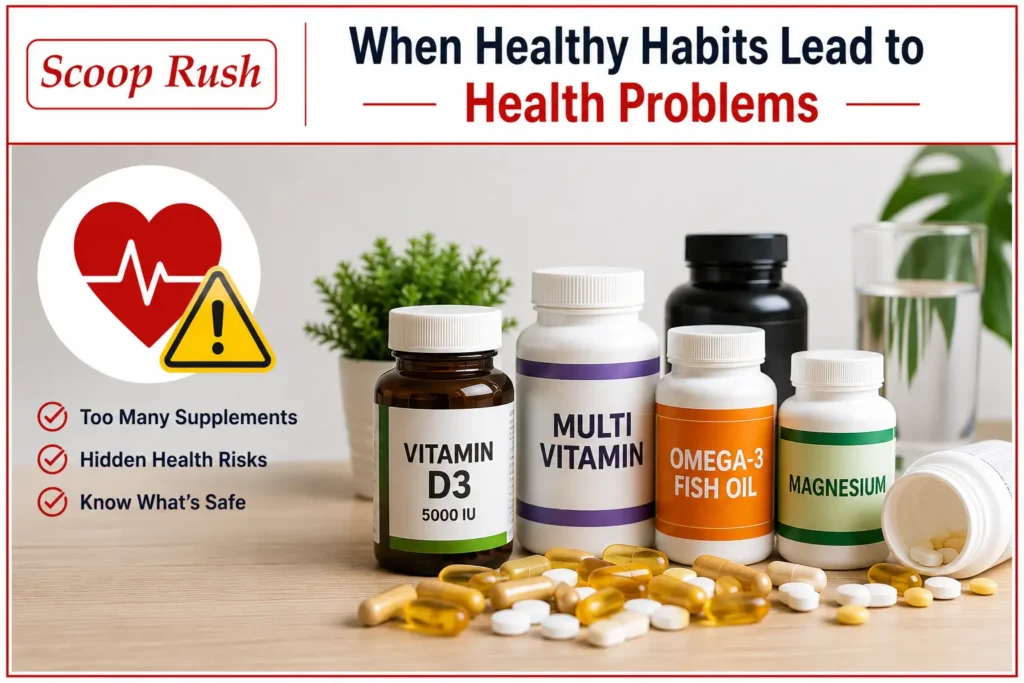
When Healthy Habits Lead to Health Problems
One case that illustrates the risk involves Seattle-based influencer Ginger Smith.
For several years, Smith regularly took high doses of vitamin C, vitamin D, turmeric, electrolyte drinks, and bloat-reducing supplements many of them free products she received through her work. At first, she felt energetic and well. But severe lower back pain eventually sent her to the doctor.
An exam revealed a kidney stone measuring two to three centimeters. Her medical team concluded that the combination of supplements she’d been taking had contributed to its formation, and she ultimately needed surgery to remove it.
Today, Smith says she feels just as healthy taking only a daily multivitamin — a routine far simpler than the one that landed her in the hospital.
How Excess Supplements Affect the Body
Kidney Stones and Excessive Supplement Use
The kidneys filter waste and regulate the body’s mineral and fluid balance. When someone consumes large amounts of certain vitamins or minerals, the kidneys come under added strain and in some cases, this contributes directly to kidney stone formation.
Although wellness marketing often frames supplements as harmless, high intake can place real, measurable stress on kidney function.
Liver Damage Linked to Herbal Supplements
Gastroenterologist Dr. Pedro de Maria Pallares says he’s treating a rising number of patients with liver problems tied to herbal supplements.
A complicating factor: many patients don’t initially disclose supplement use to their doctors, since they don’t think of them as “medication.” That can delay diagnosis significantly while clinicians search for other causes.
Research cited in the original report estimates that roughly 20% of liver injury cases in the United States are linked to herbal and dietary supplements. Products flagged as potentially toxic to the liver in high doses include:
- Vitamin A
- Glutamine
- Ashwagandha
- Green tea extract
The liver can often recover from this kind of damage, but repeated or prolonged exposure raises the risk of lasting harm.
What the Science Says About Vitamin and Mineral Toxicity
A medical review published in the Canadian Medical Association Journal (CMAJ) makes a key point: vitamins and minerals are essential but excessive amounts can still be harmful. Most healthy people can safely meet recommended intake levels through diet and standard supplementation. Problems tend to arise when people consistently exceed those levels.
Vitamins That Can Become Harmful in High Doses
Not every vitamin behaves the same way in the body.
Water-soluble vitamins are generally flushed out through urine when consumed in excess. Fat-soluble vitamins A, D, E, and K are stored in body tissue, so they can build up over time and raise the risk of toxicity.
One overlooked risk: taking a multivitamin alongside individual vitamin supplements can cause overlapping doses without the person realizing it. Vitamin B6 is a particular concern — long-term excessive intake has been linked to nerve damage.
Mineral Supplements Carry Their Own Risks
According to the CMAJ review, several minerals can cause side effects at high doses:
- Magnesium — diarrhea
- Phosphorus — digestive discomfort
- Iron — nausea, vomiting, constipation, and iron overload in susceptible individuals
- Zinc — interferes with copper absorption and immune function
- Selenium — brittle hair and nails, nerve issues, and gastrointestinal symptoms
The takeaway is consistent across the research: more is not automatically better.
Why Social Media May Be Fueling the Problem
Many people discover new supplements through influencer marketing rather than medical advice. Products are often sold with dramatic personal success stories — persuasive, but no substitute for a doctor’s guidance.
Health experts worry this kind of marketing pushes people toward buying multiple products without asking whether they actually need them, leading to complicated routines with a higher risk of overlapping ingredients and excessive intake.
How to Use Supplements More Safely
None of this means all supplements are harmful. In many cases certain life stages, diagnosed deficiencies, restricted diets supplementation is genuinely beneficial. The key is using them deliberately rather than habitually.
A few practical safety guidelines:
- Prioritize a balanced, nutrient-rich diet first
- Talk to a healthcare professional before combining multiple supplements
- Read labels carefully and check recommended daily amounts
- Avoid products with overlapping ingredients
- Ask about interactions with any prescription medications
- Only take supplements when there’s a clear, identified need
Conclusion
The popularity of vitamins, minerals, and herbal products reflects a genuine desire to feel better and stay healthy. But the evidence is clear: supplement risks deserve more attention than they currently get. Cases of kidney stones, liver injury, digestive problems, and nerve damage all point to the same conclusion both vitamins and minerals can become harmful in large enough doses.
Supplements work best as a complement to a healthy lifestyle, not a replacement for one. Before adding anything new to your routine, talk to a healthcare provider who can help you understand what your body actually needs.
The safest approach isn’t taking more supplements — it’s taking the right ones, for the right reasons.
FAQs
1. Can taking too many supplements be harmful?
Yes. Excessive supplement use has been linked to kidney stones, liver problems, digestive issues, nutrient imbalances, and vitamin toxicity, especially when multiple products are combined without medical guidance.
2. What is supplement stacking?
Supplement stacking means taking several vitamins, minerals, herbal products, or wellness supplements at the same time. It raises the risk of duplicate ingredients and exceeding recommended daily limits.
3. Can different supplements interfere with each other?
Yes. Some nutrients affect how others are absorbed for example, taking iron, calcium, and magnesium together can reduce how well each one is absorbed.
4. Are herbal supplements always safe?
No. Herbal products like ashwagandha and green tea extract have been linked to liver damage at high doses. “Natural” doesn’t automatically mean risk-free.
5. How can I take supplements safely?
Check recommended daily amounts, avoid duplicate ingredients across products, review interactions with any medications you take, and consult a healthcare professional if you suspect a nutrient deficiency.

