
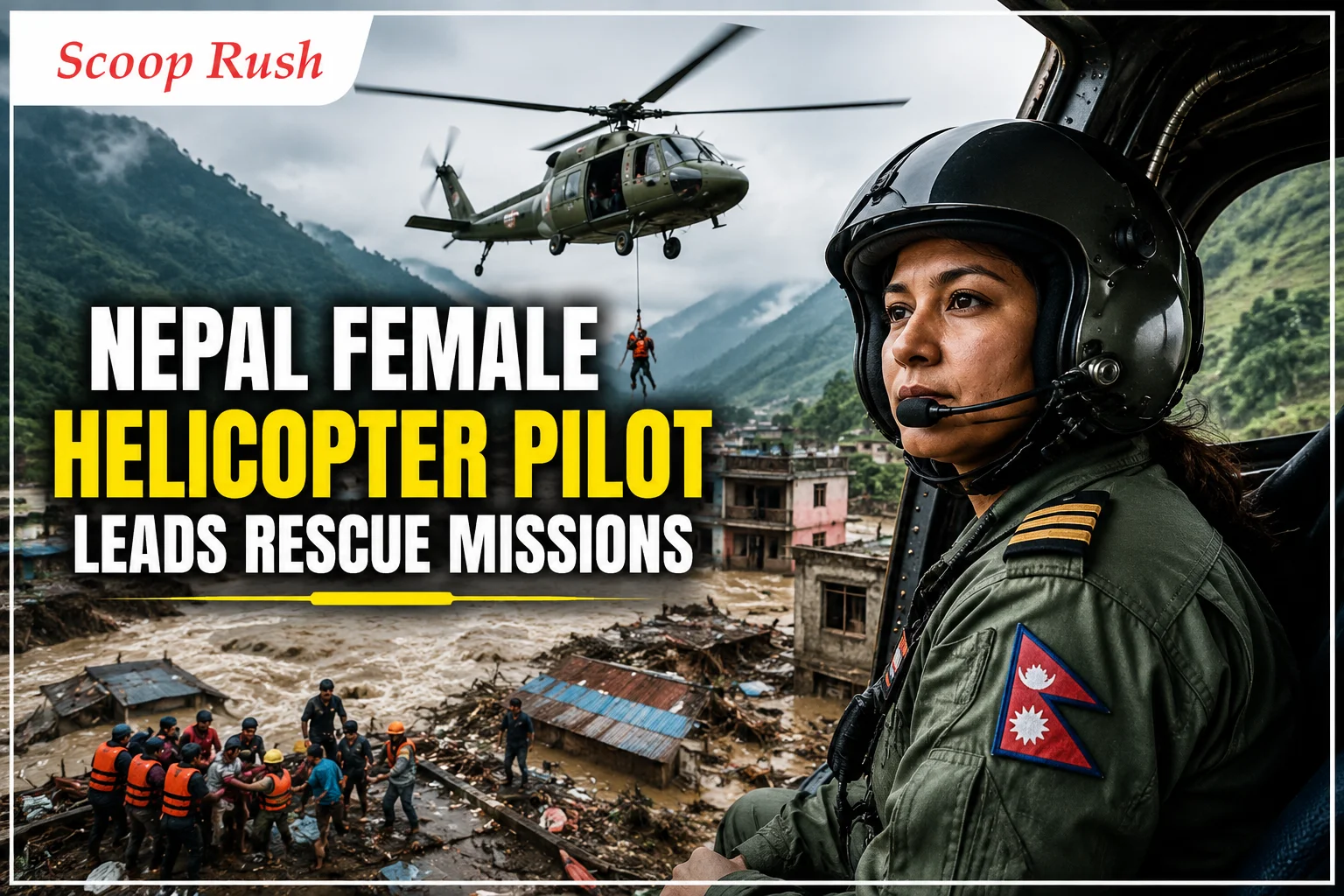
A Nepal female helicopter pilot has become a symbol of courage during a national disaster. Priya Adhikari has flown around 100 rescue missions in less than a week. She carried out these flights after devastating floods and landslides hit Nepal.
Adhikari now works across disaster zones near Kathmandu. Floodwater and debris have cut off many communities. Helicopters remain one of the few ways to reach trapped survivors quickly. Her flights have helped move injured people to safety during the crisis.
Priya Adhikari Speaks About The Rescue Effort
Adhikari spoke with CNN’s Anderson Cooper in Kathmandu about her recent missions. She described the scale of destruction across flood-hit areas. She also explained how she feels after each successful rescue.
Every survivor she reaches brings a strong sense of relief, she said. Her training keeps her steady under pressure. Her simple message summed up her mindset during the crisis. “We are trained for this,” she told CNN.
Around 100 Missions In Less Than A Week
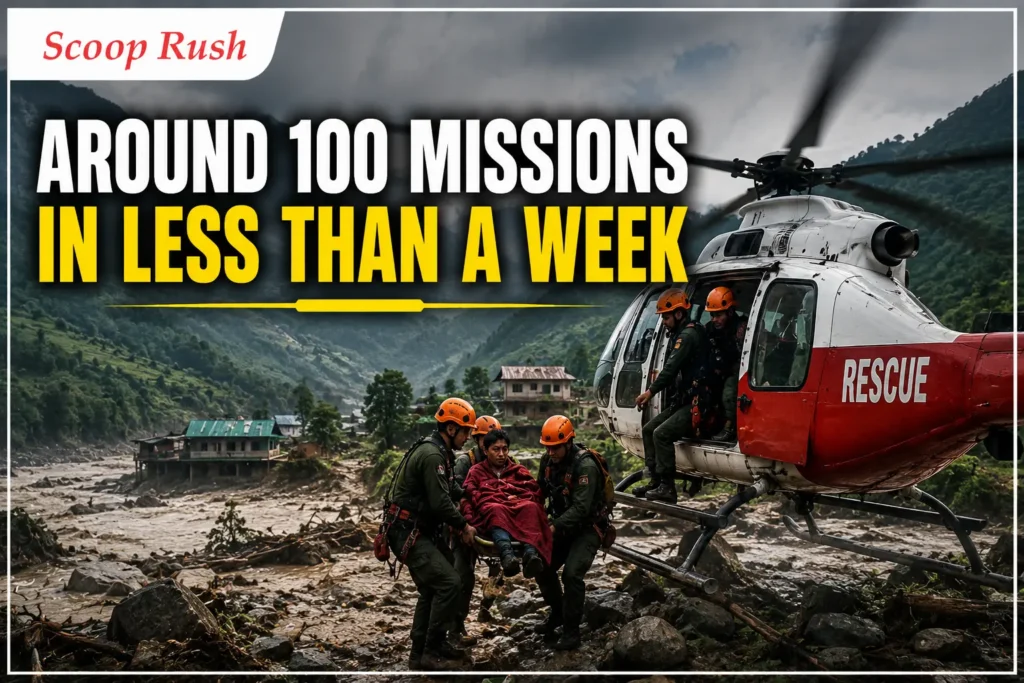
Adhikari has completed close to 100 rescue missions since the disaster struck. That pace shows just how urgent the need for helicopters has become. Roads remain blocked in many areas, so aircraft offer the fastest route to survivors.
Helicopters also allow rescue teams to evacuate people quickly from remote villages. Many survivors need urgent medical care after hours stranded in dangerous conditions. Experienced pilots like Adhikari play a vital role in this response. Her background gives her an edge during these demanding flights.
Nepal Faces A Complex Disaster Response
Nepal is dealing with a serious flooding and landslide disaster near its border with China. The death toll has climbed past 950, and thousands remain unaccounted for. Floodwater has reshaped roads, riverbanks, and entire settlements across affected regions.
Mud and debris have made ground travel nearly impossible in several areas. The crisis has also hit hydropower plants along major rivers hard. Rescue crews are still searching flooded tunnels where hundreds of workers remain missing. This adds urgency to an already difficult operation.
Helicopters Reach Areas Cut Off By Floods
Helicopters give rescue teams one of the fastest ways to reach isolated survivors. Ground crews often struggle with steep terrain and unstable surfaces. Aircraft, however, can approach areas that vehicles simply cannot reach.
Military helicopters and other aircraft continue to support Nepal’s rescue operations. Crews have lifted survivors from dangerous zones and flown them to safety. Pilots, soldiers, police officers, and volunteers all work together in this effort. Their coordination keeps the rescue operation moving despite tough conditions.
Adhikari Built Her Career From Scratch

Adhikari did not start her career as a pilot. She first worked as a flight attendant with a Nepali airline. A single helicopter ride changed the direction of her life completely.
She later traveled to the Philippines for helicopter flight training. She built her flying hours steadily after returning to Nepal. Over time, she became Nepal’s first female helicopter captain. Her rescue experience grew alongside her flying skills.
High-Altitude Missions Prepared Her For This Crisis
Adhikari has flown in some of the toughest environments in the world. Her rescue missions often take her across the Himalayas. Those flights demand sharp judgment and constant focus.
She has flown at extreme elevations during past rescue operations. ABC News reported that she once reached 6,200 meters during a mission. That flight involved rescuing a climber near Mount Kanchenjunga.
A Career That Broke Barriers For Women
Adhikari entered a field with very few women in Nepal. She became the country’s first woman to earn a helicopter captain’s licence. Her achievement has since drawn international attention and recognition.
Her success carries meaning far beyond her own career. She has shown that women can handle demanding aviation roles. Her journey offers encouragement to others considering careers in male-dominated fields.
Rescue Flying Demands Constant Focus
Emergency helicopter missions leave little room for error. Pilots must judge weather, terrain, and visibility within seconds. They also need to adapt quickly when conditions shift without warning.
High-altitude flying adds another layer of difficulty. Thin air affects both helicopter performance and pilot endurance. Mountain terrain also limits safe landing options in many areas. Adhikari’s Himalayan experience gives her a real advantage during flood rescues.
The Emotional Weight Of Rescue Work
Rescue missions involve far more than technical flying skills. Pilots often witness devastating personal losses up close. Many survivors have lost their homes, belongings, and contact with family members.
Adhikari has spoken about the joy she feels after meeting rescued survivors. Each successful evacuation offers a small moment of hope. That emotional connection seems to fuel her commitment to the mission.
Nepal’s Search And Rescue Teams Keep Working
The helicopter effort forms just one part of Nepal’s larger response. Ground crews continue searching damaged areas for missing people. Military personnel, police officers, and volunteers are working side by side.
Thousands of personnel have joined the search and rescue effort so far. Teams face especially hard conditions near flooded hydropower tunnels. Hundreds of workers remain unaccounted for, which keeps pressure on rescue teams.
Dangerous Terrain Slows Ground Rescue Efforts
Floods and landslides have completely changed the landscape in affected regions. Mud and debris often make roads unusable within hours. Bridges and other infrastructure have also suffered serious damage.
These conditions make helicopters especially valuable right now. Aircraft can bypass blocked roads and reach isolated communities directly. Still, pilots face real risks from shifting weather and difficult landing zones. Every rescue crew must balance speed with safety.
Why Her Rescue Work Matters So Much
Adhikari’s missions highlight how aviation supports disaster response. Helicopters offer a lifeline when normal transport systems break down completely. They can move survivors, emergency workers, and essential supplies at once.
Her role also shows the value of experienced local pilots. Local knowledge helps crews understand Nepal’s terrain and shifting weather patterns. Experienced pilots like Adhikari make a real difference during national emergencies.
A Symbol Of Courage And Professionalism
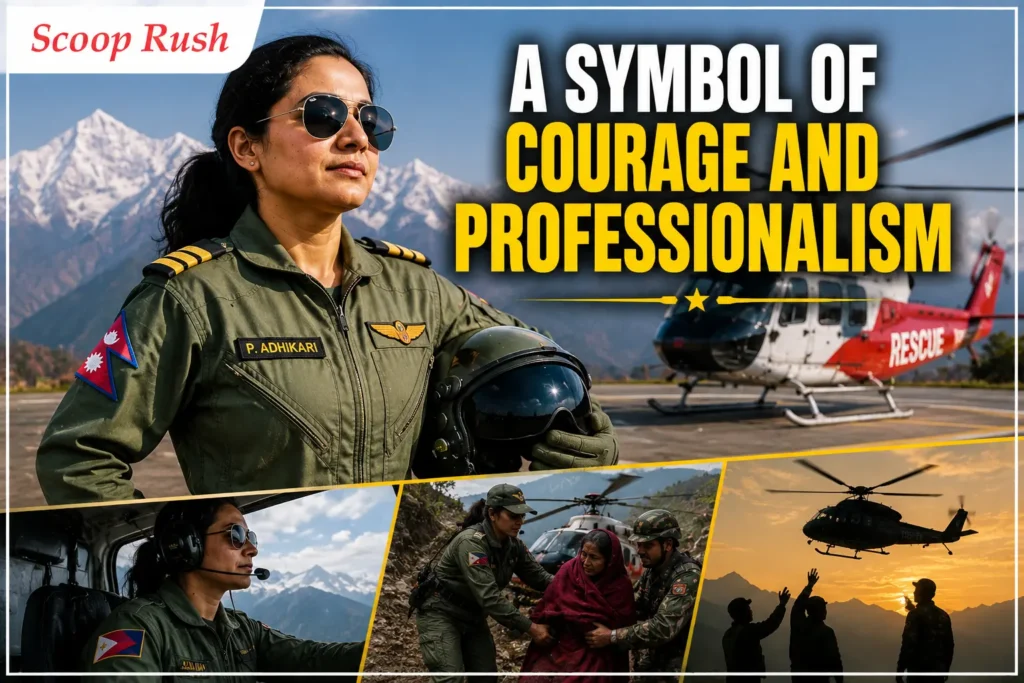
Adhikari has earned recognition as Nepal’s first female helicopter captain. Even so, her focus stays on rescuing people, not personal praise. Her calm response about training reflects that professional mindset.
Her story also carries a message about opportunity and persistence. She entered aviation through an unexpected path as cabin crew. Over the years, she built the skills needed for demanding rescue work. Her career shows how determination can open doors in specialised fields.
Nepal’s Rescue Effort Continues Against Time
Rescue crews keep working as officials assess the full scale of the disaster. Many families are still waiting for news about missing relatives. Search teams must continue working through dangerous and unstable terrain.
Helicopters will remain essential while roads and infrastructure slowly recover. Pilots like Adhikari will likely keep supporting evacuation and search missions. Their continued work could help more survivors reach safety in the days ahead.
A Pilot Focused On Saving Lives
Priya Adhikari’s recent missions add another chapter to her aviation career. She had already built a strong reputation through Himalayan rescue flights. Now she applies that experience during one of Nepal’s most serious disasters in decades.
Her story blends flying skill, courage, and public service. Nearly 100 missions in under a week show her intense workload. Yet Adhikari stays focused on the people waiting for help. Her words remain simple and clear: “We are trained for this.”
FAQs
1. Who is Priya Adhikari?
Priya Adhikari is Nepal’s first female helicopter captain. She works as a rescue pilot with extensive experience flying across the Himalayas.
2. How many rescue missions has Adhikari flown recently?
Adhikari has flown close to 100 rescue missions in under a week. She completed these flights during Nepal’s recent flooding and landslide disaster.
3. Why are helicopters so important during Nepal’s current disaster?
Floods and landslides have damaged roads and cut off many communities. Helicopters can reach areas that ground rescue teams cannot access easily.
4. Has Priya Adhikari flown high-altitude rescue missions before?
Yes, Adhikari has extensive high-altitude rescue experience in the Himalayas. ABC News reported that she once reached 6,200 meters during a rescue mission.
5. What did Adhikari say about her rescue work during the crisis?
Adhikari spoke to CNN’s Anderson Cooper about the scale of the disaster. She said, “We are trained for this,” reflecting her calm, focused approach.

