
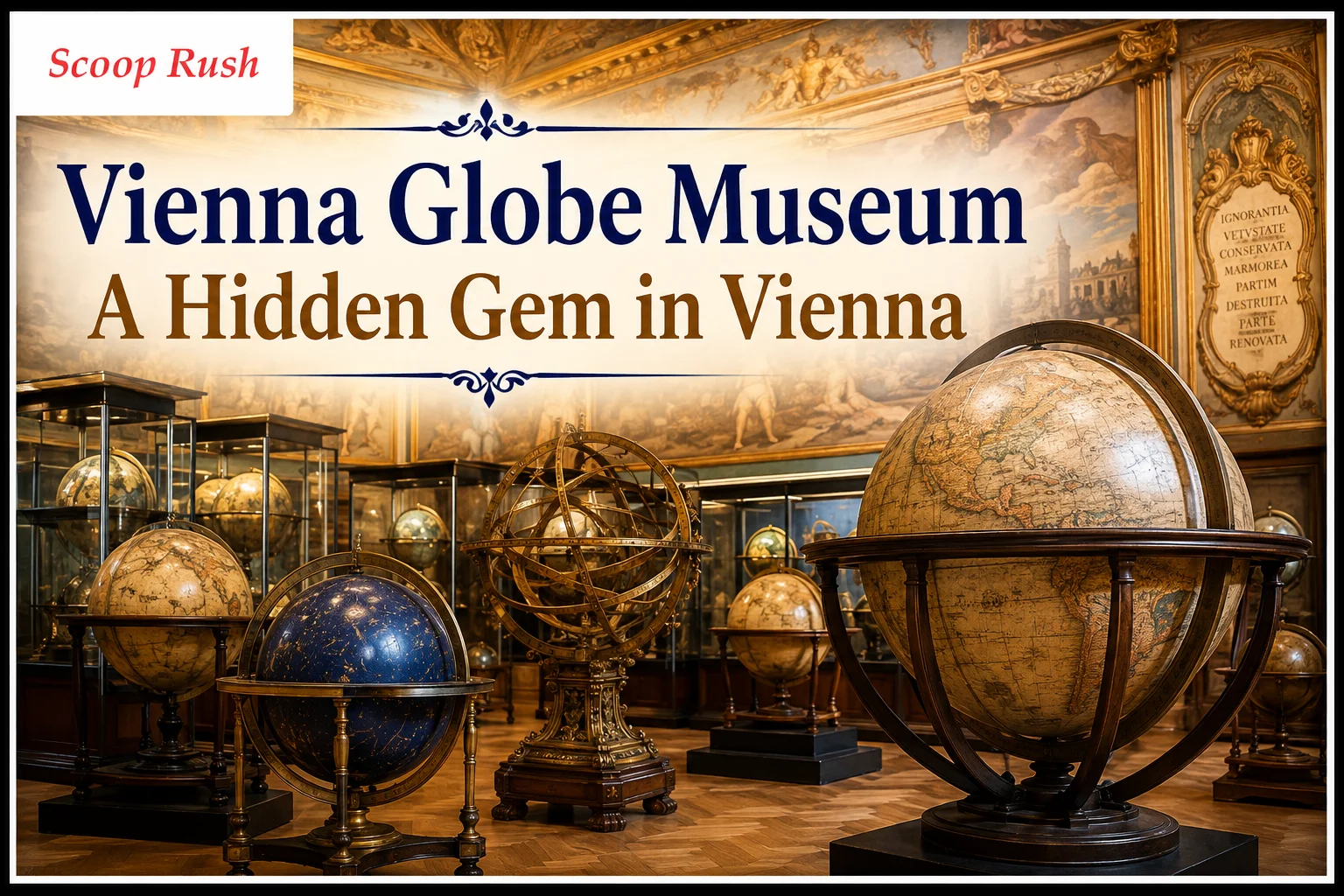
The Vienna Globe Museum is one of Europe’s most unusual travel destinations. It sits inside the 17th-century Palais Mollard in central Vienna. The museum holds more than 220 rare and antique globes. Despite its central location, it remains a peaceful spot away from busy crowds. For travelers seeking hidden gems in Vienna, this museum offers a fresh perspective on how people once viewed the world.
Unlike many crowded tourist sites, this museum rewards slow and careful exploration. Visitors can move quietly between glass cases filled with historic globes. Each piece blends science, art, and imagination in equal measure. Therefore, the museum suits travelers who enjoy thoughtful, low-key cultural stops during their trip.
What Is the Vienna Globe Museum
The Vienna Globe Museum focuses entirely on globes and related instruments. Its collection includes terrestrial and celestial spheres from many different eras. Most objects date from before 1850. Together, these pieces show what people once knew and what stayed unknown for centuries.
Beyond simple maps, the museum displays scientific tools as well. Telluriums show how Earth moves around the Sun. Armillary spheres represent the paths of celestial bodies. As a result, this Vienna attraction blends art, science, and history in one small space.
The Golden Cabinet Welcomes Every Visitor
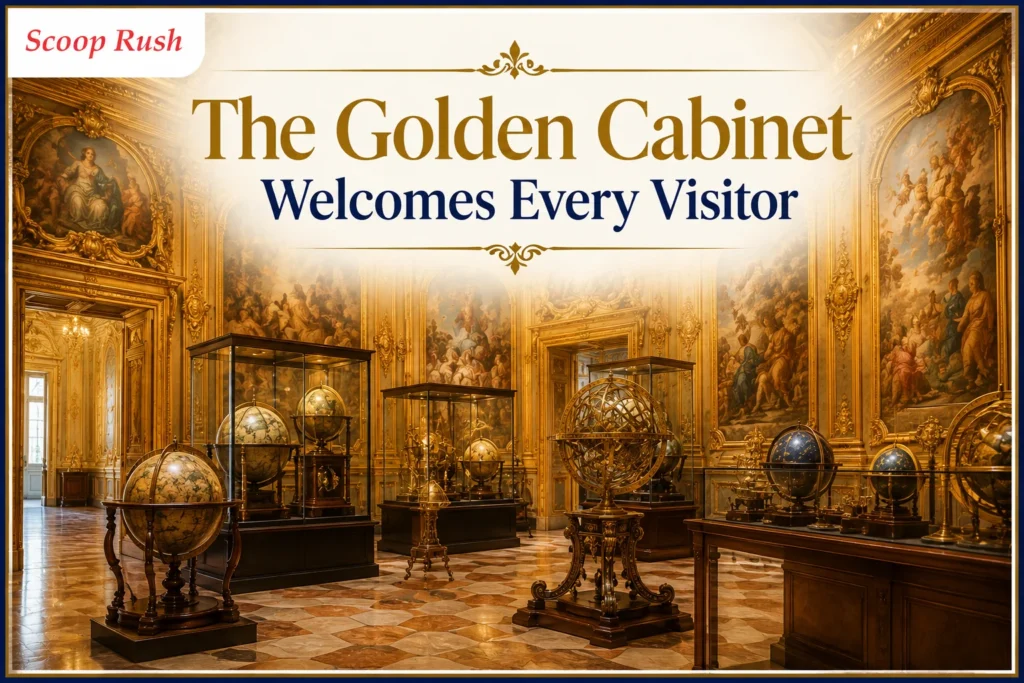
Visitors first walk into the museum’s Golden Cabinet. This lavish room features centuries-old frescoes inspired by Greek mythology. The artwork creates a striking backdrop for the globe collection nearby. It quickly sets the tone for the rest of the visit.
The Golden Cabinet also introduces several early scientific instruments. These objects link astronomy with changing ideas about the universe. Consequently, the museum feels much bigger than a simple map collection. It becomes a record of human curiosity and exploration.
Old Globes Show Gaps in World Knowledge
Some of the oldest globes reveal how incomplete world knowledge once was. One terrestrial globe shows Europe, Africa, and the Mediterranean in fine detail. However, North America appears mostly uncharted near the Arctic region. The same globe even shows a hypothetical southern continent that never existed.
Meanwhile, sea monsters fill unexplored areas of the Pacific Ocean. These details show how imagination filled the gaps left by science. A separate celestial globe blends real astronomy with mythological figures like Pegasus. Sadly, some globes also display racist colonial stereotypes and European flags across African coastlines, reflecting darker parts of history.
A Lunar Globe Captures a Historic Moment
One striking object dates back to 1961. It maps the visible side of the Moon in careful detail. However, the far side of the globe remains completely blank. At that time, humans simply had not seen it yet.
The museum also displays a newer lunar globe from 1963. This updated version finally includes the once-missing lunar surface. Together, these two globes show how quickly scientific knowledge can shift. The museum also holds a replica of the 1492 Behaim Globe, created before the Americas were known to Europeans.
Globes Moved From Luxury to Everyday Life

Globes originally belonged to wealthy merchants and aristocrats only. Their size and craftsmanship made them expensive luxury items. Over time, however, smaller and cheaper versions became widely available. This shift slowly changed who could actually own one.
Eventually, globes entered classrooms and family homes everywhere. Children began using them as fun, educational tools. Even today, physical globes still offer something digital maps cannot. They create a tangible, hands-on model of our entire planet.
New Exhibition Explores Globes in Culture
A new exhibition will open at the museum on September 24, 2026. It carries the title Globes in Everyday Life, Art and Culture. The exhibition explores globes beyond pure science and geography. It also examines their role in architecture, film, and popular culture.
One featured highlight involves Charlie Chaplin’s film The Great Dictator. Chaplin famously played with an inflatable globe in that scene. This moment helped turn globes into a lasting cultural symbol. For travel and culture fans, this exhibition adds fresh reasons to visit Vienna.
Hidden Globes Wait Across Vienna

The story does not end inside Palais Mollard alone. Around Vienna, roughly 50 globes decorate rooftops and building facades. Many of them stay hidden in plain sight across the city. Few tourists ever notice these small architectural details.
The museum provides a virtual map to help travelers find them. Visitors can explore the museum first, then hunt for globes outdoors. This playful activity connects the exhibits with the wider city streets. It turns a simple museum visit into a full Vienna adventure.
Why This Travel Destination Still Matters
Modern travelers can access digital maps within seconds today. Despite that convenience, physical globes still spark real curiosity. They offer a simple, tangible way to picture our planet. That timeless appeal keeps drawing visitors to this quiet museum.
The Vienna Globe Museum does not hide difficult history either. Some objects display colonial symbols and outdated stereotypes. The museum presents these details honestly alongside its scientific highlights. For travelers exploring Vienna, this honesty makes the visit even more meaningful.
Ultimately, this museum offers far more than old maps and spheres. It tells a story of discovery, imagination, and changing human understanding. Travelers who add it to their Vienna itinerary gain a fresh view of the world. In the end, a simple globe can still make the familiar planet feel new.
Conclusion
The Vienna Globe Museum proves that small, quiet attractions can leave a lasting impression. Its collection captures centuries of human curiosity in one peaceful setting. From ancient sea monsters to blank lunar surfaces, every globe adds a new layer to the story. For travelers planning a Vienna trip, this museum offers a rare chance to slow down and reflect.
With its upcoming exhibition and citywide globe trail, the museum keeps evolving too. It invites visitors to look beyond typical Vienna sightseeing spots. Whether exploring the Golden Cabinet or hunting rooftop globes outdoors, guests gain a deeper connection to the city. In short, this hidden gem deserves a place on every traveler’s Vienna itinerary.
FAQs
1. Where is the Vienna Globe Museum located?
The museum sits inside Palais Mollard in central Vienna, Austria. It stands close to several major tourist attractions in the city.
2. How many globes does the museum hold?
The Vienna Globe Museum displays more than 220 rare and antique globes. Many objects date from before the year 1850.
3. What makes this museum a unique travel stop?
Unlike typical Vienna attractions, this museum stays calm and uncrowded. It combines science, art, and history inside one peaceful gallery space.
4. When does the new exhibition open?
The exhibition Globes in Everyday Life, Art and Culture opens on September 24, 2026. It explores globes in film, art, and daily life.
5. Can travelers find globes outside the museum too?
Yes, around 50 globes appear on Vienna rooftops and building facades. A virtual map helps travelers locate them around the city.

