
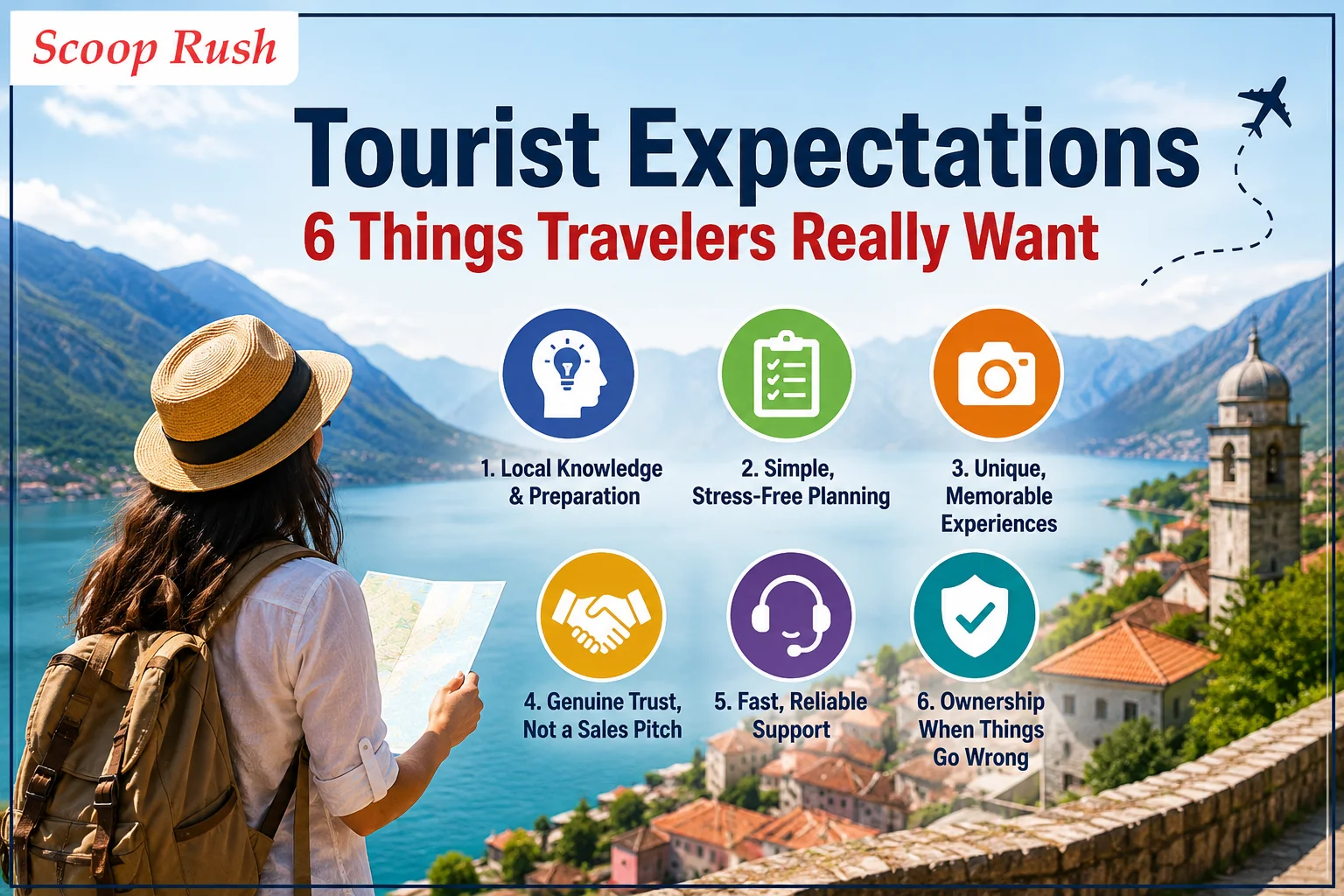
Travelers today want more than a cheap flight and a nice hotel room. They’re weighing every part of the travel experience how easy it is to book, how well a destination understands their needs, and how confident they feel when something goes wrong. Price still matters, but it’s rarely the deciding factor anymore.
For tourism businesses, hotels, tour operators, and travel agencies, that shift means one thing: service quality now competes directly with price and location. Here are six things that consistently shape whether a trip feels smooth or stressful.
1. Local Knowledge and Preparation
Nothing frustrates a traveler more than asking a simple question and getting a shrug in return. Tourists expect the people guiding their trip hotel staff, tour guides, travel agents to actually know the destination.
That means more than memorizing landmarks. It means:
- Recommending authentic local restaurants for food lovers
- Suggesting child-friendly attractions and transport options for families
- Advising adventure travelers on safety and suitable activities
- Knowing the guest’s itinerary and booking details before they even ask
A prepared team doesn’t just answer questions faster it builds trust before a trip even begins. When staff can anticipate problems instead of reacting to them, travelers feel like they’re in good hands.
2. Simple, Stress-Free Planning

Between flights, hotels, transfers, and tours, trip planning already involves a lot of moving parts. Tourists don’t want to decode complicated booking systems or industry jargon on top of that.
What travelers actually want:
- Clear, jargon-free itineraries
- Straightforward pricing and payment information
- Easy ways to make last-minute changes
- One point of contact instead of being bounced around
Simplicity shouldn’t stop once the trip starts, either. Clear directions, schedules, and contact details on the ground matter just as much as a clean booking process. The less mental effort a trip requires, the more travelers actually enjoy it.
3. Unique, Memorable Experiences
Landmarks still draw crowds, but many travelers are chasing something that feels personal the kind of authentic travel experience they can’t get from a guidebook.
This is where creativity pays off. Some ideas that resonate:
- A cooking class hosted by a local family
- A quiet viewpoint away from the usual tourist crush
- A small-group cultural experience with a local guide
None of this requires a big budget. Often it’s the small, thoughtful touches a handwritten welcome note, a detour to a spot only locals know that make an ordinary trip memorable enough to talk about later.
4. Genuine Trust, Not a Sales Pitch

Travelers can tell the difference between a business that’s trying to help them and one that’s trying to upsell them. Constant pressure to add extras or upgrade services erodes trust fast.
What builds loyalty instead:
- Listening to what the traveler actually wants
- Offering honest recommendations, even if they’re not the most expensive option
- Letting guests make their own decisions without pressure
This approach pays off over time. Travelers who feel respected are far more likely to book again and to recommend the business to friends and family. In tourism, word-of-mouth is still one of the most valuable forms of marketing.
5. Fast, Reliable Support
Even the best-planned trip can hit a snag: a delayed flight, a lost document, an unexpected question. What separates good customer service in tourism from bad is how quickly and clearly a business responds.
Travelers want to know:
- Who to contact when something goes wrong
- That they’ll get a response within a reasonable time
- Where to find help clearly listed on websites, booking confirmations, and apps
Even when a problem can’t be solved instantly, a quick update goes a long way. Silence is what turns a manageable issue into a bad review.
6. Ownership When Things Go Wrong
Delays happen. Booking errors happen. Most travelers understand that what they don’t forgive is being passed from department to department with no resolution in sight.
Accountability looks like:
- One staff member taking ownership of the issue, start to finish
- Regular updates if a fix takes time
- Confirmation once the problem is actually resolved
Handled well, a mistake can actually strengthen a traveler’s trust in a business. Handled poorly, it becomes the story they tell everyone about their trip.
Why This Matters for Tourism Businesses

These six factors point to the same conclusion: travel satisfaction is built on more than price and destination. It’s shaped by how prepared, clear, creative, trustworthy, accessible, and accountable a business is at every step of the journey.
For tourism businesses, the fix doesn’t always require a big investment. Start by walking through the customer journey booking, arrival, activities, departure and asking where confusion or friction shows up. Train staff to listen, know the destination well, and take ownership of problems. Small, consistent improvements at each stage tend to have an outsized effect on customer satisfaction and repeat bookings.
Great destinations attract visitors. Great service is what brings them back.
Conclusion
At the end of the day, travelers aren’t just booking a destination they’re booking a feeling. A smooth travel experience comes from the details most tourists never think to ask about: staff who know the destination, planning that doesn’t feel like a chore, moments that feel personal, and a business that owns its mistakes instead of hiding from them.
None of these six factors require a bigger budget. They require attention to the traveler’s questions before they’re asked, to the small frustrations that pile up during a trip, and to what happens when something inevitably goes wrong. Tourism businesses that get this right don’t just earn a good review. They earn a returning customer, and a traveler willing to recommend them to everyone they know.
FAQs
1. What do tourists want most from travel businesses?
Reliable service, clear communication, and experiences worth remembering. Price still matters, but service quality is often what determines whether someone returns or recommends a business to others.
2. Why is local knowledge important in tourism?
Staff who know the destination well can answer questions on the spot, tailor recommendations to individual interests, and prevent the small mix-ups that derail a trip.
3. How can travel businesses simplify the booking process?
Cut the jargon, keep itineraries clear, and make changes easy to request. A traveler shouldn’t need to decode a booking confirmation.
4. Why do travelers value unique experiences over standard tours?
Because they’re memorable and shareable. A hands-on, local activity often leaves a stronger impression than another stop on a standard sightseeing route.
5. How does accountability affect customer satisfaction?
It shows travelers their concerns are taken seriously. A single point of contact who follows an issue through to resolution can turn a bad moment into a reason to trust and return to a business.

