
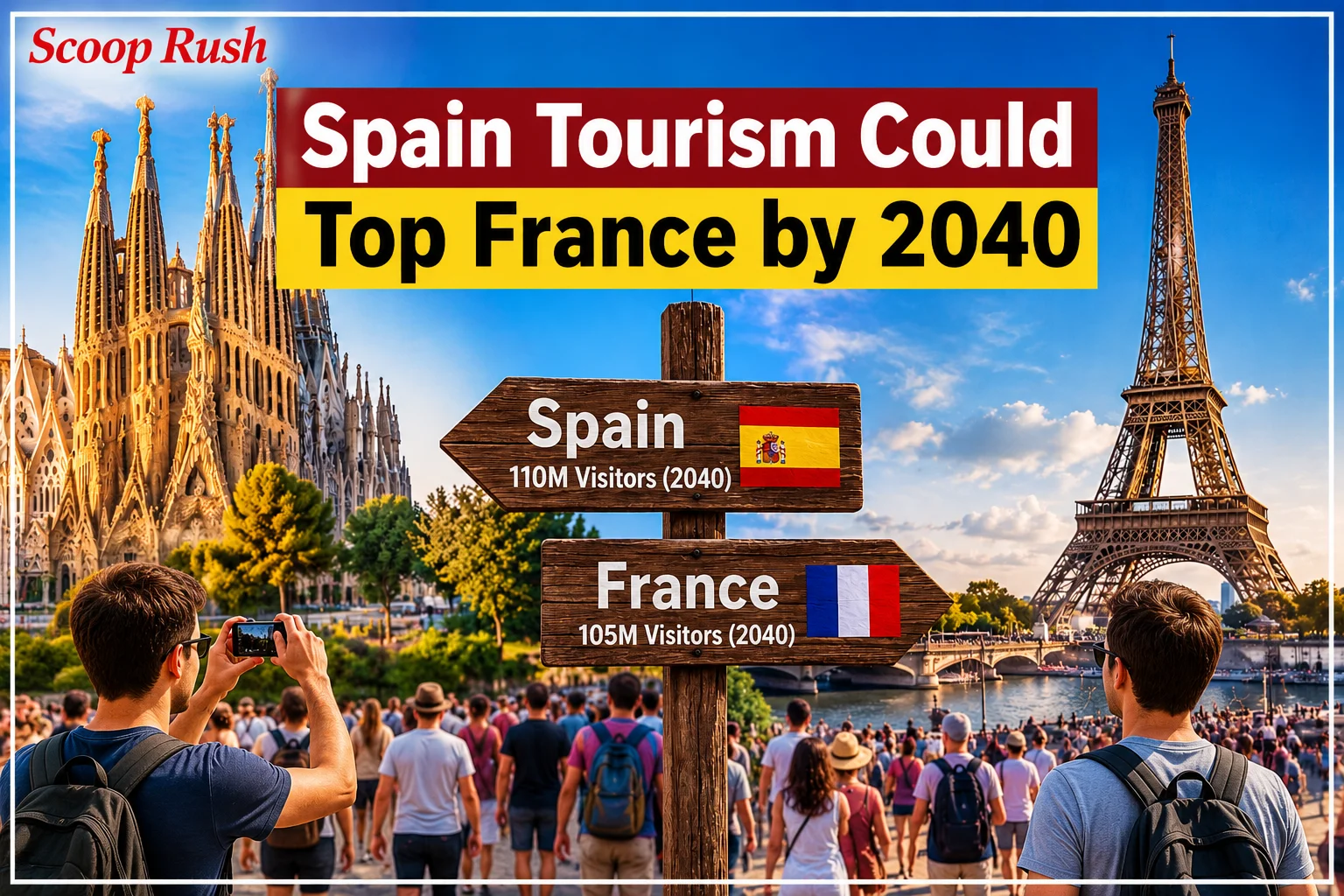
Spain tourism is on track to overtake France within the next fourteen years. A new study from Deloitte and Google predicts a major shift in global travel rankings. Spain could welcome 110 million international visitors annually by 2040. France may reach only 105 million visitors in that same year.
The forecast marks a turning point for Europe’s two biggest tourism rivals. France has led global tourism for decades. However, Spain keeps closing the distance every year. Recent visitor numbers already show how close the race has become.
Spain’s Rapid Tourism Growth

Spain tourism hit a new milestone in 2025. The country welcomed about 96.8 million international visitors. This marked a 3.2 percent rise from 2024. That year, Spain had recorded around 94 million foreign visitors.
Foreign tourists also spent heavily during their trips. Spending reached roughly €134.7 billion in 2025. This was a 6.8 percent jump from the previous year. These numbers show tourism now drives a huge share of Spain’s economy.
France Still Holds the Lead
France remained the world’s top destination throughout 2025. The country welcomed 102 million international tourists that year. This set a new national visitor record for France. It also kept France ahead of Spain by about 5.2 million visitors.
France’s appeal comes from its varied attractions. Paris draws millions of visitors every year on its own. Travelers also flock to French beaches, vineyards and historic towns. European tourists make up most of France’s foreign holidaymakers.
Why Experts Predict Spain Will Take the Lead
Deloitte and Google expect Spain’s gap with France to disappear by 2040. Their study points to Spain’s strong infrastructure and transport links. Spain’s airports connect the country to major global markets. Its mild climate also supports travel throughout most of the year.
These advantages could help Spain attract visitors beyond the busy summer months. Tourism officials also want to promote regions outside the usual hotspots. Northern Spain and inland cities could see much stronger growth. This shift could help Spain sustain its momentum toward 2040.
Global Tourism Set for Major Expansion

The Deloitte and Google study forecasts huge growth in worldwide travel. International trips could reach 2.4 billion by 2040. Global arrivals stood at nearly 1.5 billion back in 2019. That was before the Covid-19 pandemic disrupted travel worldwide.
Europe will likely remain the top tourism region overall. The study expects Europe to capture 38 percent of new international trips. That could add more than 362 million visitors between 2019 and 2040. Asia-Pacific should also see strong growth, gaining over 278 million new visitors.
Spain’s Overtourism Challenge
Spain’s tourism boom has brought real problems for local communities. Several popular destinations already struggle with overcrowding. Residents have staged protests against rising visitor numbers in recent years. Housing costs and strained public services remain major concerns for many Spaniards.
Barcelona faces some of the strongest pressure from tourism. The city plans to phase out tourist apartment licences by 2028. Officials hope this move returns thousands of homes to local residents. The Balearic Islands and Canary Islands have also introduced new rules to manage visitor behavior.
Spain’s Push for Sustainable Tourism
Spanish authorities now focus more on tourism quality than raw numbers. Officials want visitors to explore areas beyond the busiest cities. Gastronomy, nature trips and inland travel could support this new approach. Smaller cities may benefit greatly from this shift in focus.
Spain also plans to strengthen its existing infrastructure. More visitors will increase demand on housing and public transport. Water supplies and natural areas could also face added strain. Careful planning will be essential if Spain wants to manage this growth well.
Global Rankings Could Shift by 2040
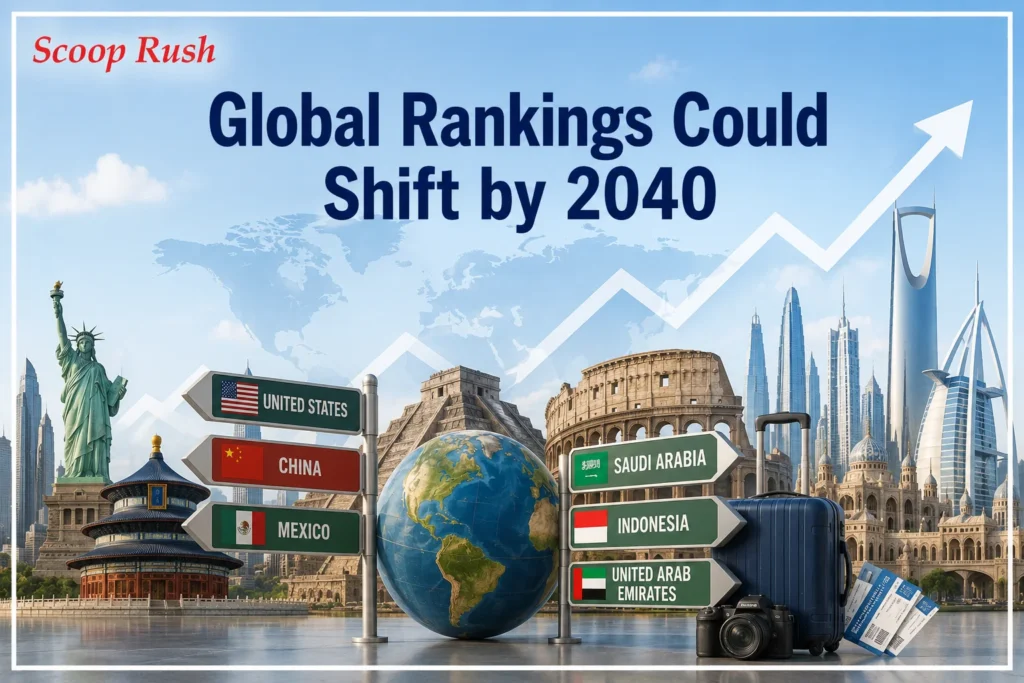
Spain and France are not the only countries facing change. The United States and China should stay among the top destinations. Mexico could rise to fifth place in the global rankings. Italy, meanwhile, could slip down to sixth place.
Other nations may also break into the top fifteen destinations. Saudi Arabia, Indonesia and the United Arab Emirates are investing heavily in tourism. These countries are building new infrastructure to attract international travelers. Their rise could make global tourism more diverse than ever before.
What This Means for Travelers
Spain’s rise offers new opportunities for travelers seeking fresh destinations. Visitors may find better deals and smaller crowds in emerging regions. Northern Spain and its inland cities could become popular alternatives. Off-season travel could also become more appealing as Spain spreads out demand.
The shift also signals a broader change in how people travel. Global tourism is becoming less centered on a handful of famous cities. New markets are opening up as infrastructure improves worldwide. This could reshape how millions of people plan their future trips.
The Road Ahead for Spain and France

Spain still needs to maintain its current pace of growth. The country must also solve the problems tied to overtourism. Housing, transport and water resources all need urgent attention. Success will depend on how well Spain balances growth with local needs.
France, meanwhile, is not standing still either. The country continues to invest in its diverse tourism offerings. Both nations will likely see steady visitor growth through 2040. The real question is which one manages that growth more effectively.
Conclusion
Spain tourism is moving closer to the top of the global travel rankings. Current growth already puts Spain within reach of France. The 2040 forecast suggests Spain could welcome 110 million international visitors annually. France could follow with around 105 million visitors.
However, becoming the world’s most visited country brings major responsibilities. Spain must manage overcrowding, housing pressure and environmental concerns. It also needs to spread visitors across more regions and seasons. If Spain balances growth with sustainability, its tourism future looks exceptionally strong.
FAQs
1. Will Spain really become the world’s most visited country?
According to Deloitte and Google, Spain could lead global tourism by 2040. The study forecasts 110 million visitors for Spain that year. France is expected to trail slightly behind at 105 million.
2. How many tourists visited Spain in 2025?
Spain welcomed about 96.8 million international visitors in 2025. This was a 3.2 percent increase over 2024. Tourism spending in Spain reached roughly €134.7 billion.
3. How many tourists visited France in 2025?
France welcomed 102 million international tourists in 2025, a new record. This kept France as the world’s leading tourist destination. France also recorded 743 million international overnight stays that year.
4. Why is Spain becoming more popular with international travelers?
Spain offers beaches, historic cities and strong cultural attractions. Its mild climate supports travel throughout most of the year. Excellent transport links also make Spain easy to reach.
5. Could overtourism hurt Spain’s chances of overtaking France?
Yes, overtourism already causes problems in several Spanish cities. Housing costs and overcrowding remain serious concerns for residents. Spain must manage this growth carefully to protect local communities.

