
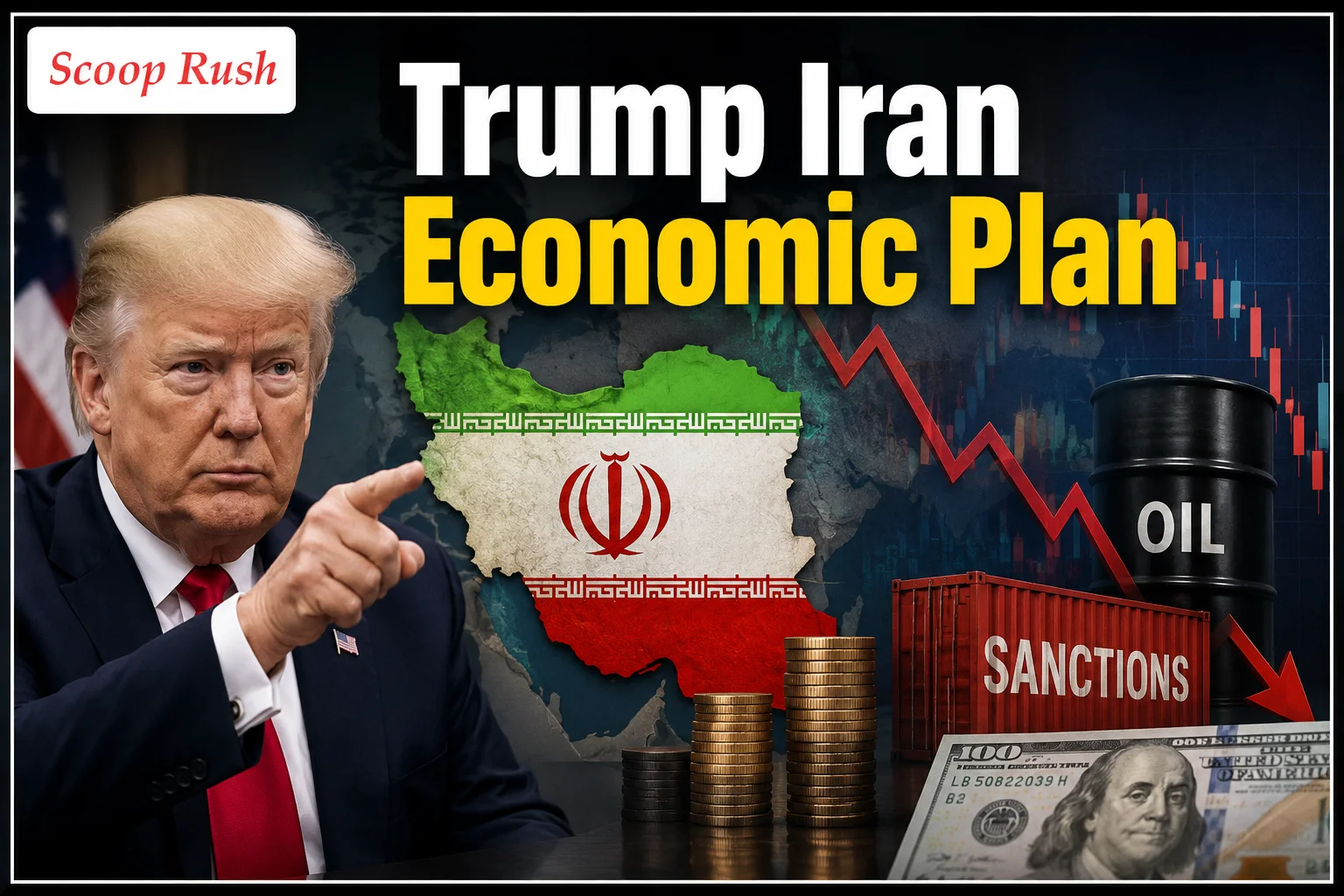
President Donald Trump has launched a new Trump Iran economic plan. He wants to cut off Tehran’s money supply. Trump calls it the “most crushing economic operation” ever aimed at a country.
This move shows a big shift in strategy. Washington is moving away from military pressure. Trump now hopes tighter finances can push Iran toward a deal. But many experts doubt it will work fast, since Iran has dodged sanctions for decades.
Trump Unveils a New Economic Offensive
Trump shared his plan on Truth Social. He described it as an “economic D-Day” against Iran. The message was blunt and direct.
He also warned other nations. Banks, businesses, airports, and governments that help Iran could face penalties. His administration wants to shut down oil smuggling, cash transfers, and shell companies. Talks with Tehran have stopped for now. Officials seem ready for a long economic fight instead.
The Plan Faces Big Obstacles
Sustained economic pressure could hurt Iran badly over time. But this kind of strategy needs months, sometimes years, to show results. Trump often prefers quick wins, which creates tension with this approach.
Iran also has practice handling sanctions. Tehran built alternative trade routes over many years. These networks help it sell oil quietly and move money around blocks. Washington needs strong international teamwork to close these gaps effectively.
The Strait of Hormuz Adds Fresh Risk
The Strait of Hormuz sits at the center of this standoff. A huge share of the world’s oil and gas passes through this narrow waterway. Iran has already disrupted traffic there before.
Any new disruption could send oil prices climbing fast. That would hit American drivers directly at the pump. Trump wants to weaken Iran without hurting his own voters. Balancing both goals will not be easy for his team.
China Complicates Washington’s Strategy
China buys a large share of Iran’s oil exports. This makes Beijing a major hurdle for Trump’s plan. The US already sanctioned several Chinese firms tied to Iranian oil.
China has pushed back hard against these moves. Officials in Beijing want diplomacy, not more pressure. Trump could add new penalties on Chinese banks. However, that risks a bigger fight with China right before Xi Jinping’s planned September visit.
Dubai Still Matters for Iran’s Money Flow
The UAE has long served as a financial hub for Iranian trade. Exchange houses and shell firms move money through Dubai easily. These channels make sanctions harder to enforce fully.
The UAE recently tightened its rules on Iran ties. This followed rising tension over Iranian missile threats. Still, Iran could shift to other financial hubs nearby. Gulf cooperation remains key for Washington’s success here.
Iran Has Survived Sanctions Before
Iran has lived under heavy sanctions for many years already. Its economy has suffered, and living standards have dropped sharply. Yet the government has not changed its core political path.
Iranian leaders often use sanctions to boost nationalist support at home. They frame US pressure as an attack on their sovereignty. Inflation and currency troubles keep hurting ordinary Iranians daily. Still, the regime shows real staying power against outside pressure.
Voters at Home Could Judge Trump’s Plan
The midterm elections in November raise the stakes for Trump. Voters will watch gas prices and grocery bills closely. Any spike tied to Iran tension could hurt him politically.
Democrats already criticize the economic fallout from this conflict. Representative James Walkinshaw warned about rising costs for families. If fuel prices stay high, this issue could shape election debates. Trump must convince voters the pressure campaign truly helps them.
Trump’s Negotiating Style Could Shift Things
Trump often uses economic threats to gain leverage in talks. He tends to apply maximum pressure before considering any deal. This pattern could easily repeat with Iran too.
Right now, talks with Tehran remain frozen completely. But conditions can change quickly in this kind of standoff. Rising oil prices might push Trump back toward negotiations. For now, his team seems committed to economic warfare instead.
A Full Blockade Needs Global Teamwork
A complete economic blockade would require broad international support. The US cannot control every financial route into Iran alone. Europe and Asia both play major roles here.
Gulf states could help by closing regional financial gaps further. However, Washington’s ties with several allies remain strained lately. Countries may back some pressure without agreeing to every US demand. This makes full cooperation harder for Trump to secure.
Iran Could Hit Back Through Shipping Routes
Iran holds real leverage near the Strait of Hormuz too. Tehran could disrupt shipping to shake global energy markets. This would raise both oil prices and insurance costs.
That scenario puts Trump in a tough spot. A military response risks widening the entire conflict further. Doing nothing could make him look weak instead. Iran may use this tension as a bargaining chip later.
Midterms Create a Tight Deadline
November elections leave Trump with limited time to prove results. Economic sanctions usually take months to show real impact. Voters, though, tend to expect quicker fixes than that.
If gas and food prices stay high, pressure on Trump will grow. Opponents could turn the Iran conflict into a campaign issue. Iran likely understands this political timeline as well. Tehran may simply wait out the pressure until after November.
Will the Plan Force Iran to Give In?
This plan could seriously damage Iran’s economy over time. Tighter sanctions may cut oil revenue and block international finance access. But history shows economic pain rarely forces quick political change.
Success depends heavily on strict global enforcement of these rules. China’s continued oil purchases could undercut the entire strategy. Gulf and European cooperation remains just as critical here. The Trump Iran economic plan faces a long and uncertain test ahead.
What Comes Next for Trump and Iran
Trump now faces a choice between patience and escalation. He could hold steady and wait for sanctions to bite. Or rising costs could push him back toward negotiations instead.
Iran faces tough choices too, with its economy already strained. Yet its leaders may value political survival over economic relief. The Strait of Hormuz will likely stay central to this story. The next few months will test both sides’ resolve fully.
Conclusion
Trump’s new economic strategy puts Iran under intense financial pressure. However, forcing Tehran to surrender will not happen quickly. Iran has survived decades of sanctions and continues to find ways around restrictions.
The biggest challenge may come from rising costs at home. Higher energy prices could increase pressure on American households before Iran changes course. China and other trading partners could also limit the plan’s effectiveness. For now, Trump has chosen economic pressure over another major military escalation. Whether he can maintain that approach will depend on Iran’s response, global energy markets, and the political pressure ahead of the US midterm elections.
FAQs
1. What is the Trump Iran economic plan?
It is a strategy to cut off Iran’s oil revenue and financial networks. Trump wants to block trade routes and punish countries that help Tehran evade sanctions.
2. Why is Trump focusing on economic pressure now?
Trump hopes financial pressure can force Iran toward a settlement. This avoids further military action while still pushing Tehran to negotiate.
3. Why does China matter so much in this plan?
China buys a large portion of Iran’s oil exports. Without Chinese cooperation, sanctions may lose much of their intended impact.
4. How could this plan affect gas prices in America?
Tension near the Strait of Hormuz could disrupt oil shipments. That disruption could push crude prices and gas prices higher for consumers.
5. Will Trump keep this economic pressure going long term?
It remains unclear if Trump will stay committed for months or years. Rising fuel prices before the midterms could change his approach quickly.

