
Travel fraud losses are draining American wallets faster than ever. A single fake hotel listing can wipe out an entire vacation budget in seconds. Now, a new report reveals exactly which states are hit hardest, and the numbers are alarming.
Washington tops the list, followed closely by Utah and Arizona. Online booking has made trip planning quick and simple. But that same convenience has opened the door wide for scammers, who now target travelers through fake listings and copycat websites.
Report Reveals a Sharp Rise in Losses
The new analysis studied Federal Trade Commission data from across the country. Researchers looked at total losses and losses per resident. They also tracked how losses changed year over year.
The results show a troubling trend for travelers. Americans reported $297 million in travel fraud losses between 2021 and 2025. That number jumped sharply from just $99 million in 2021.
Washington Leads the Nation in Travel Fraud Losses
Washington ranks first for travel fraud losses nationwide. Residents reported close to $9.7 million in total losses. That works out to more than $124,000 per 100,000 people.
The state also saw a steep yearly increase. Reported losses climbed 54 percent compared to the previous year. This surge pushed Washington to the top of the rankings.
Utah Ranks Second With High Losses Per Report
Utah holds second place in the new report. Residents reported almost $3.6 million in travel fraud losses. That equals roughly $105,000 per 100,000 residents.
Utah also stands out for its high losses per case. Victims lost about $6,907 on average per report. This figure beats the average loss seen in many other states.
Arizona, Arkansas and North Carolina Round Out the Top Five
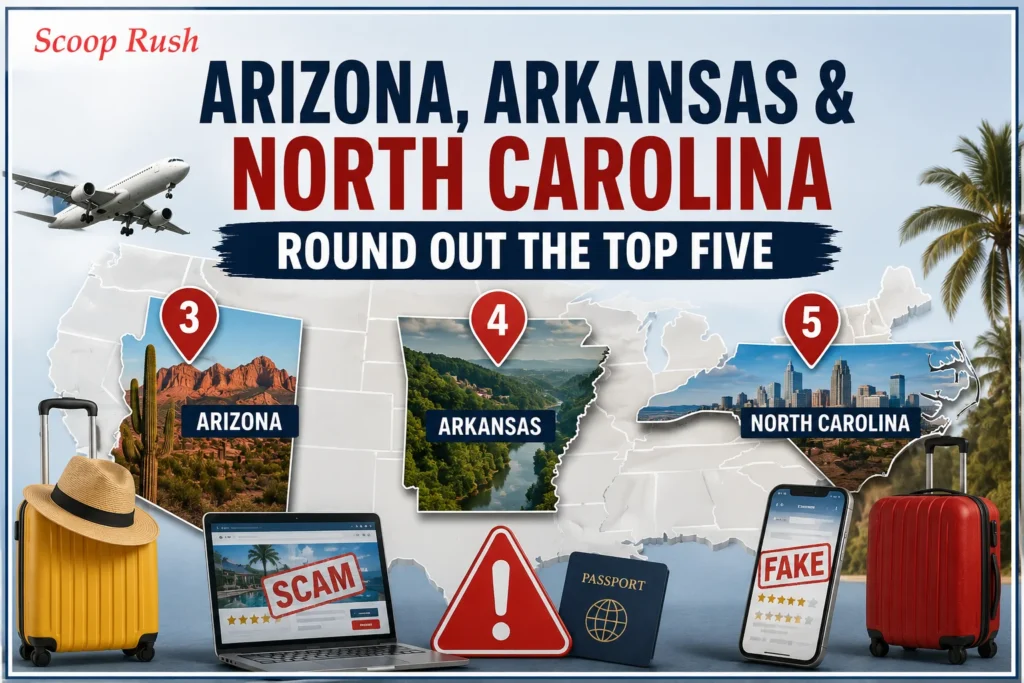
Arizona takes third place in the state rankings. The state reported more than $96,999 per 100,000 residents. Arkansas follows closely behind with similar losses.
North Carolina completes the top five states overall. Its losses also topped $92,000 per 100,000 residents. These rankings highlight how travel scams affect states nationwide.
Nebraska and Arkansas Post the Biggest Jumps
Some states saw especially large increases in reported losses. Nebraska recorded the sharpest year-over-year jump among top states. Its travel fraud losses rose by 159 percent.
Arkansas also posted a major increase during the same period. Losses there climbed 115 percent compared to last year. These jumps show how fast scam trends can shift.
California and Florida Report the Largest Total Losses
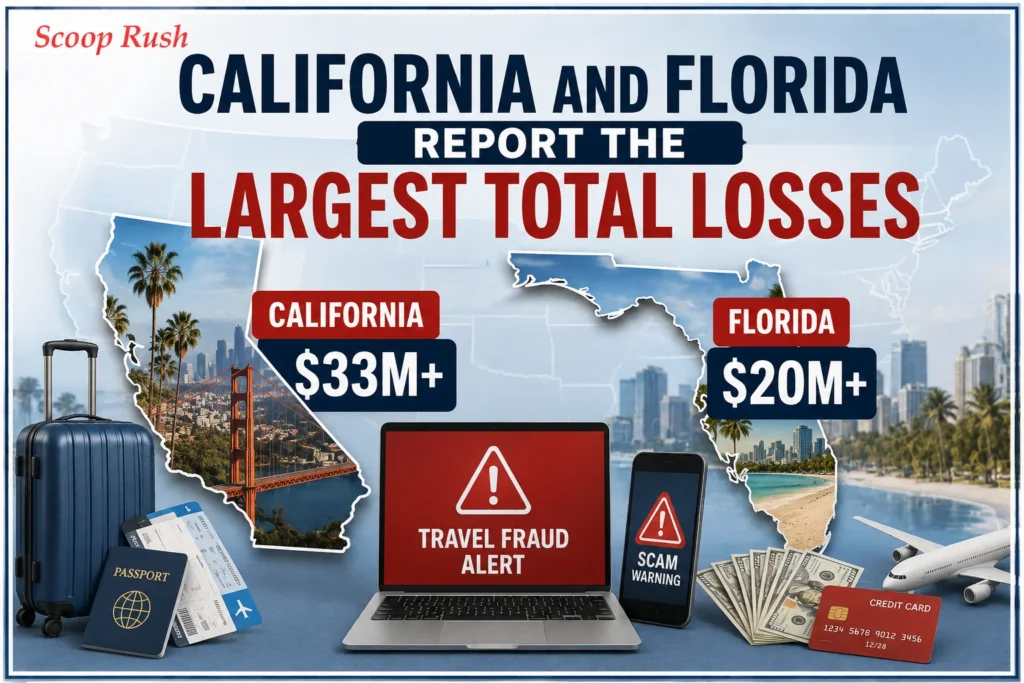
Bigger states often show larger overall loss totals. California residents reported about $33 million in travel fraud losses. Florida residents reported more than $20 million during the same period.
Larger populations naturally lead to more reported cases. This explains why populous states post higher raw totals. Earlier FTC data also showed California leading in quarterly losses, with residents there losing about $4,814 per report on average.
Travelers Are Changing Their Booking Habits
Growing fraud concerns are reshaping how Americans book trips. A survey of 1,000 travelers explored these shifting habits. Many respondents said they now take extra precautions before booking.
About 41 percent of travelers changed their booking approach. Among them, 80 percent now book directly with airlines or hotels. Another 63 percent said they spend more time researching companies before paying.
Why Fake Travel Listings Are So Convincing
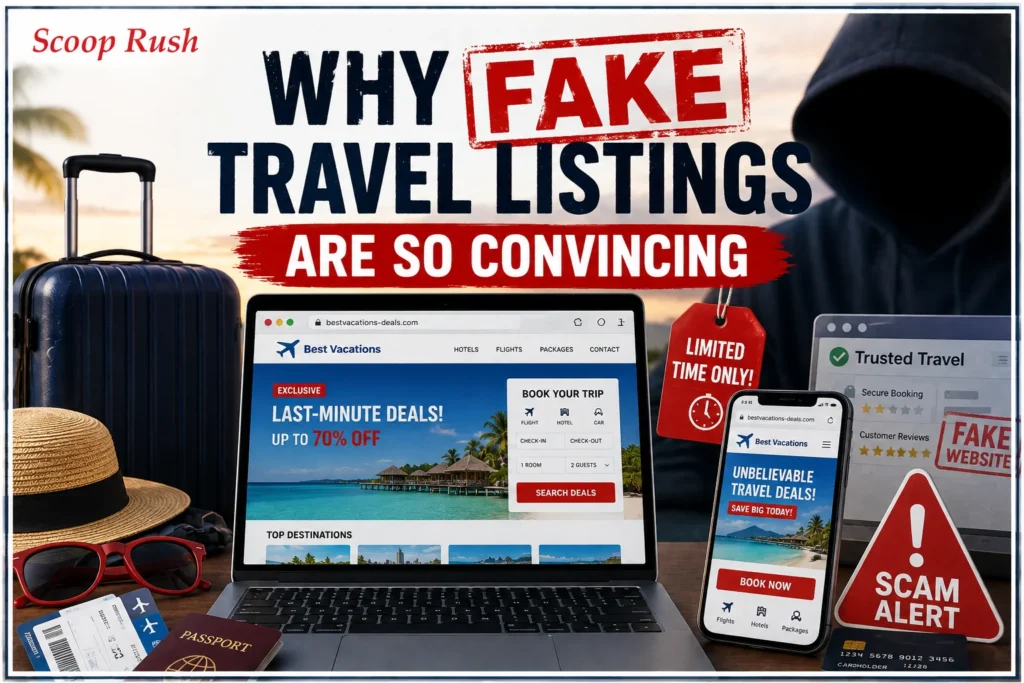
Scammers often exploit the excitement around vacation planning. Travelers may rush when they spot a tempting last-minute deal. Fraudsters use that urgency to push quick payments.
Fake booking pages can look almost identical to real ones. Some scammers even copy familiar travel brands and logos. A polished website design does not guarantee a company is legitimate.
How to Avoid Travel Fraud Before You Book
Travelers should always verify a company before sending payment. Search the business name along with words like “scam” or “complaint.” This simple step often reveals warning signs early.
Be cautious of unusual payment requests during booking. Scammers frequently ask for wire transfers, gift cards, or crypto. Booking directly through official airline or hotel sites adds extra protection.
Key Takeaways for Safer Travel Planning
Travel fraud losses have nearly tripled since 2021, reaching $297 million nationwide. Washington, Utah, Arizona, Arkansas and North Carolina lead the population-adjusted rankings. Nebraska and Arkansas saw the fastest growth in reported losses.
No state is fully safe from online travel scams. Every traveler should slow down before paying for a trip. Verifying listings and companies remains the best defense against fraud.
Conclusion
Travel fraud losses are no longer a small problem for U.S. travelers. The jump from $99 million in 2021 to $297 million by 2025 shows how fast these scams are spreading. States like Washington, Utah and Arizona prove that no region is immune to this growing threat.
The good news is that travelers now have more awareness than ever before. More people are booking directly, researching companies, and checking reviews before paying. Staying alert, verifying details, and trusting official sources remain the best ways to keep your next trip scam free.
FAQs
1. Which U.S. state has the highest travel fraud losses?
Washington ranks first with nearly $9.7 million in reported losses. That equals more than $124,000 per 100,000 residents. It also saw a 54 percent yearly increase.
2. Which states rank highest for travel fraud overall?
Washington leads the list, followed by Utah, Arizona, Arkansas and North Carolina. These rankings are based on losses adjusted for population size. They reflect data from the Federal Trade Commission.
3. Which state saw the biggest jump in travel scam losses?
Nebraska recorded the largest increase, rising 159 percent year over year. Arkansas followed closely with a 115 percent increase. Both jumps point to fast-changing scam trends.
4. How can I avoid fake travel websites?
Research any unfamiliar company before booking or paying. Search its name along with terms like “scam” or “complaint.” Booking directly through official airline or hotel sites is safer.
5. Are travel scams increasing across the United States?
Yes, reported losses have grown sharply since 2021. Total losses jumped from $99 million to $297 million. This rise affects travelers in nearly every state.

