

Tiny Tourism is gaining attention as travelers seek calmer and more local experiences. The trend encourages visitors to skip famous attractions and explore ordinary places instead. A recent Dublin experiment tested whether this approach could replace traditional sightseeing. The result offered a more balanced answer.
The experiment followed a simple idea. Travelers should experience a destination through everyday activities and local routines. That means shopping at supermarkets, using public transport, and exploring residential areas. It also means avoiding places that dominate social media.
However, the Dublin experience revealed a major weakness. Avoiding every famous attraction can leave travelers feeling disconnected from the city’s history. The experiment eventually led to a different idea called Medium Tourism. This approach combines major sights with quieter local experiences.
What Is Tiny Tourism?
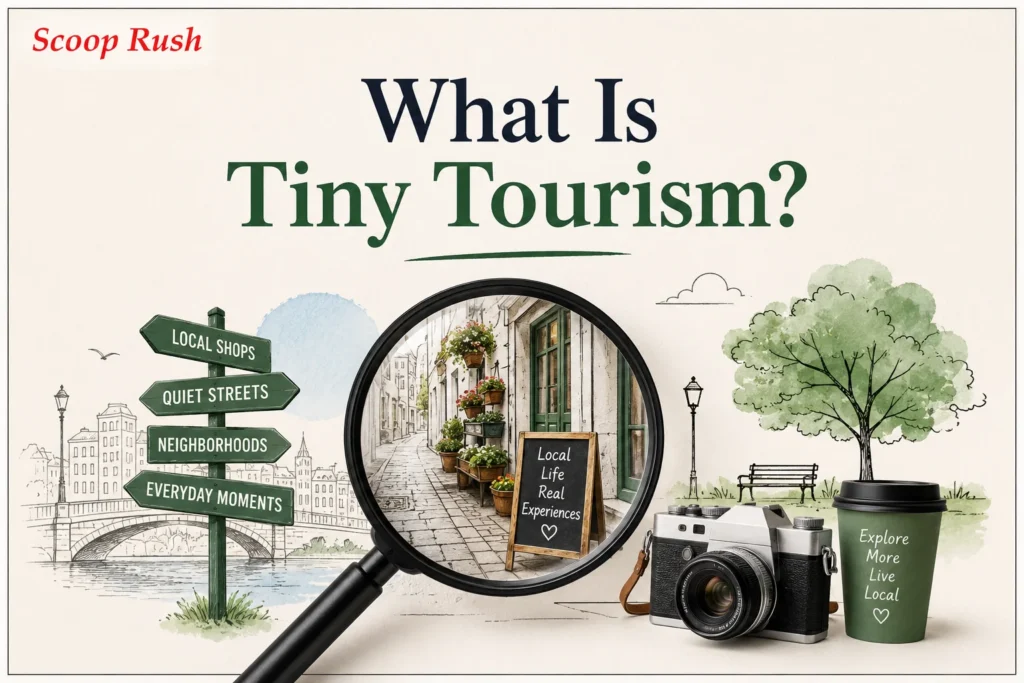
Tiny Tourism focuses on small experiences instead of famous tourist attractions. The concept came from UK creative platform It’s Nice That. Its basic rule asks travelers to avoid activities that feel traditionally touristy. Instead, they should notice ordinary details around them.
The concept also challenges social media driven travel. Viral locations often attract large crowds and create pressure on popular destinations. Tiny Tourism suggests treating viral content as a warning instead. Travelers can seek quieter streets, local shops, neighborhood parks, and everyday activities.
Why Tiny Tourism Appeals to Modern Travelers
Many travelers now want experiences that feel personal and less predictable. Famous landmarks can attract large crowds throughout the day. Queues and scheduled visits can also make travel feel rushed. Tiny Tourism offers a slower alternative that encourages curiosity.
The approach also creates opportunities for unexpected discoveries. A supermarket can reveal local food habits and popular flavors. A second-hand shop can offer unusual souvenirs and conversations. A neighborhood walk can reveal details that standard tours often overlook.
Dublin Becomes a Test Case
Dublin provided a useful setting for testing the concept. The city has famous attractions, busy tourist areas, and strong neighborhood culture. The traveler decided to avoid major attractions during a long weekend. Instead, she followed suggestions from Dublin’s local Reddit community.
The plan included thrift shopping and public transport. It also included supermarket browsing and visits to local pharmacies. These activities aimed to create a more ordinary Dublin experience. The traveler wanted to discover whether routine could replace traditional sightseeing.
Supermarkets Offer Unexpected Travel Experiences

The experiment began with a supermarket visit. The traveler initially doubted that grocery shopping could become a holiday activity. However, the colorful Taytos crisp selection quickly attracted attention. New flavors offered a small glimpse into local food culture.
The trip then moved toward Capel Street and second-hand shops. The traveler avoided a crowded tourist attraction along the way. A bric-a-brac shop provided unusual finds and a different shopping experience. Yet the traveler also noticed one problem with Tiny Tourism. Some activities could happen almost anywhere.
Everyday Experiences Can Still Feel Ordinary
A pharmacy visit provided the clearest example. The products looked similar to those available in Copenhagen. That discovery weakened the idea that every ordinary activity feels local. Some routines simply lack enough cultural difference to become meaningful travel experiences.
The same problem appeared during the search for local recommendations. The traveler spoke with people at an art shop. They suggested several independent galleries and ceramic studios. However, every suggested location had already closed. The experience showed the limits of relying on spontaneous local advice.
Temple Bar Challenges the Anti-Tourist Approach
The experiment also struggled when the traveler reached Temple Bar. The area had crowds, music, and groups celebrating outside pubs. The traveler originally planned to avoid the famous district. However, its lively atmosphere proved difficult to dismiss.
The experience changed the traveler’s view of famous tourist areas. Temple Bar clearly attracts visitors for a reason. The area has energy that can form part of Dublin’s identity. Avoiding it simply because tourists visit there seemed too restrictive. Tiny Tourism began to look less like a solution.
A Local Swim Reveals Tiny Tourism’s Strength
The strongest part of the experiment came outside central Dublin. The traveler and her daughter chose swimming instead of running. They took the DART train to Sandycove. They then visited the Forty Foot swimming spot along Dublin Bay.
The experience created genuine interaction with local swimmers. They exchanged stories and encouraged another swimmer before her jump. The activity also placed the travelers inside an everyday local routine. This moment showed Tiny Tourism at its best. It created a memorable experience without requiring a major attraction.
Why Tiny Tourism Cannot Replace Major Attractions
The Dublin experiment eventually exposed a major problem. The travelers still felt that something important was missing. On the final day, they visited Trinity College and its historic grounds. The visit connected them with Dublin’s literary and cultural history.
That experience changed the final verdict. Famous attractions do not automatically represent bad tourism. Some landmarks carry history that travelers cannot fully understand elsewhere. Completely avoiding those places can create an incomplete picture of a destination. The traveler concluded that Dublin needed both sides.
Medium Tourism Offers a Better Travel Balance
The experience inspired the idea of Medium Tourism. This approach does not reject famous attractions. Instead, it combines essential sights with slower local exploration. Travelers can visit major landmarks and still leave time for neighborhood discoveries.
The approach also removes unnecessary guilt from travel. Visitors should not feel wrong for enjoying popular attractions. They should simply avoid letting those attractions define every part of their trip. The Dublin experiment suggests that balance creates a richer travel experience.
What Travelers Can Learn From Dublin

Tiny Tourism works best when travelers use it as an approach. It encourages people to look beyond obvious attractions. It can also help visitors notice local routines and unexpected details. The strongest experiences may come from activities that travelers never planned.
However, travelers should not turn the concept into another checklist. Buying groceries or visiting a pharmacy does not guarantee authenticity. The value comes from curiosity and genuine engagement with the destination. Travelers should choose experiences that offer cultural or personal meaning.
Dublin Works Best With A Flexible Itinerary
Dublin’s compact center makes traditional sightseeing relatively manageable. Travelers can therefore combine major attractions with neighborhood exploration. One morning could include Trinity College or another historic landmark. The afternoon could then focus on quieter streets and local businesses.
Travelers can also explore beyond the central tourist zone. Dublin’s coastline offers another way to experience the city. The wider Dublin area includes coastal towns, natural landscapes, and local communities. Responsible tourism initiatives also encourage visitors to explore beyond the city center.
Tiny Tourism Can Help Reduce Travel Pressure
Tiny Tourism also raises an important question about overtourism. Popular attractions often receive huge visitor numbers. Concentrating tourists in the same locations can increase pressure on local communities. Spreading visits across neighborhoods can create a different tourism pattern.
Dublin already promotes experiences beyond its central attractions. Its coastal routes encourage visitors to explore areas around Dublin Bay. These approaches can distribute visitor activity more widely. They also allow travelers to experience different sides of the destination.
The Future May Belong To Balanced Travel
The Dublin experiment does not prove that Tiny Tourism fails. Instead, it shows where the concept works best. Small experiences can create memorable moments and local connections. They can also encourage travelers to slow down and observe their surroundings.
At the same time, major landmarks still matter. Trinity College helped reveal Dublin’s deeper cultural history during the experiment. The best approach may therefore combine both styles. Medium Tourism gives travelers freedom to explore without abandoning the city’s defining sights.
Conclusion
Tiny Tourism offers a useful challenge to traditional sightseeing. It asks travelers to look beyond famous landmarks and crowded attractions. Supermarkets, second-hand shops, commuter trains, and local activities can reveal another side of Dublin. These experiences can feel more personal and less predictable.
However, the Dublin experiment shows that travelers should not reject famous sights completely. Historic attractions often provide essential context about a destination. The strongest travel style may combine both approaches. Visit the important landmarks, then slow down and explore like a local. That balance creates the best case for Medium Tourism.
FAQs
5. What is Tiny Tourism?
Tiny Tourism encourages travelers to avoid traditional tourist activities. It focuses on ordinary routines and small local experiences instead. Travelers might visit supermarkets, explore residential streets, or use public transport. The goal involves seeing everyday life from a visitor’s perspective.
4. Does Tiny Tourism help travelers avoid overcrowding?
It can help travelers move away from heavily visited attractions. The approach encourages exploration across less crowded areas. However, it cannot eliminate tourism pressure by itself. Travelers still need to consider local communities and responsible behavior.
3. Did Tiny Tourism work in Dublin?
The Dublin experiment produced mixed results. Some activities created memorable and local experiences. Sea swimming at the Forty Foot became a particular highlight. However, avoiding major attractions eventually felt incomplete.
4. What is Medium Tourism?
Medium Tourism combines famous attractions with smaller local experiences. Travelers can visit important landmarks without spending every day sightseeing. They can then explore neighborhoods, local activities, and quieter areas. This approach offers more flexibility than strict Tiny Tourism.
5. Should visitors skip Dublin’s famous attractions?
No, visitors do not need to skip Dublin’s famous attractions. The experiment showed that major sights can provide important cultural context. Travelers can simply balance them with local exploration. This strategy allows visitors to enjoy Dublin without following a rigid tourist checklist.

