
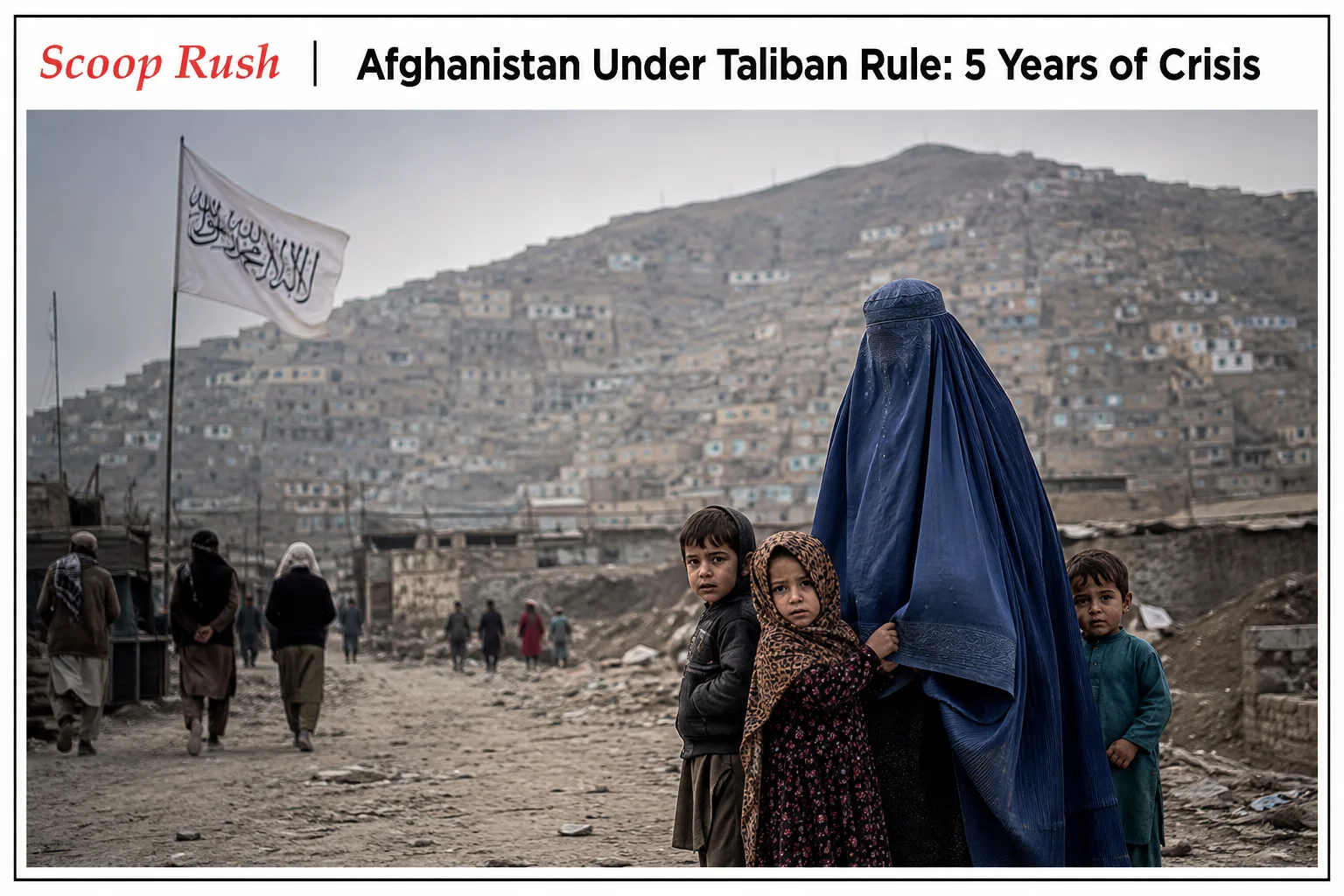
Five years after the Taliban returned to power, Afghanistan remains in crisis. Large-scale fighting has declined since the Taliban captured Kabul in 2021. However, poverty, hunger, unemployment, and repression continue to affect millions. Women and girls face the harshest restrictions across the country. At the same time, international aid has fallen sharply. These pressures have created a humanitarian crisis with few signs of improvement.
Afghanistan’s Economy Remains Under Severe Pressure
Afghanistan’s economy remains much weaker than before the Taliban takeover. Foreign aid once supported a large share of public spending. That financial support declined sharply after the Taliban seized power. The government now operates with far fewer resources. The Taliban’s 2023 budget stood at about $2.44 billion. That figure was less than half the previous government’s 2021 budget. Authorities also abolished the public pension system in 2024.
Unemployment has added another burden for Afghan families. Many people now depend on informal work to earn money. Food prices have also placed pressure on household budgets. Returning Afghans have increased competition for jobs and basic services. As a result, many families struggle to meet everyday needs. Economic growth has not yet translated into better living conditions for everyone.
Millions Face Hunger and Humanitarian Hardship
Afghanistan remains one of the world’s largest humanitarian emergencies. Around 21.9 million people need humanitarian assistance in 2026. That represents about 45 percent of the country’s population. Millions also face serious food insecurity and malnutrition. Children remain particularly vulnerable to hunger and disease. Humanitarian agencies remain essential for millions of struggling families.
However, international funding has fallen sharply in recent years. Aid organizations now have fewer resources to meet growing needs. Hundreds of healthcare facilities have closed or reduced services. This has made medical care harder to access in many areas. Poor families face the greatest difficulties when services disappear. The funding crisis has therefore made Afghanistan’s humanitarian situation even more severe.
Women and Girls Have Lost Fundamental Rights
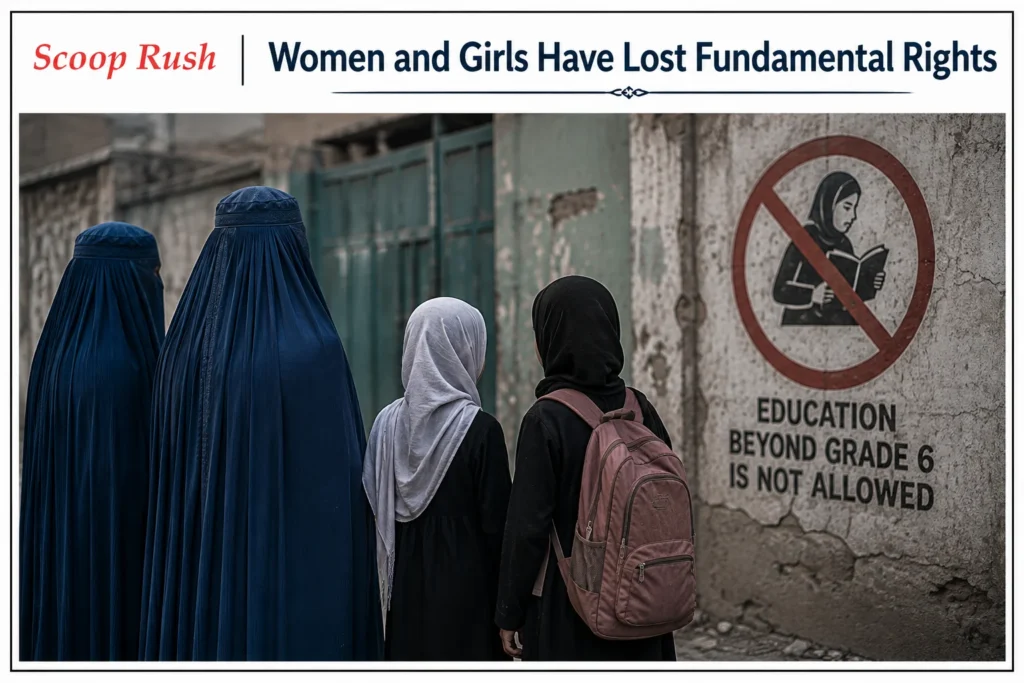
Women and girls face sweeping restrictions under Taliban rule. Girls cannot continue their education beyond the sixth grade. Universities also remain closed to Afghan women. About 2.4 million girls remain excluded from secondary education. The ban has already affected an entire generation of young women. Many girls now face adulthood without completing secondary education.
Women also face severe restrictions on employment and public life. Authorities have excluded women from many workplaces and public spaces. Movement restrictions can further limit their independence. Strict clothing rules also control how women appear publicly. These policies have reduced women’s participation in society and the economy. They have also increased isolation among Afghan women.
Education Bans Threaten Afghanistan’s Future
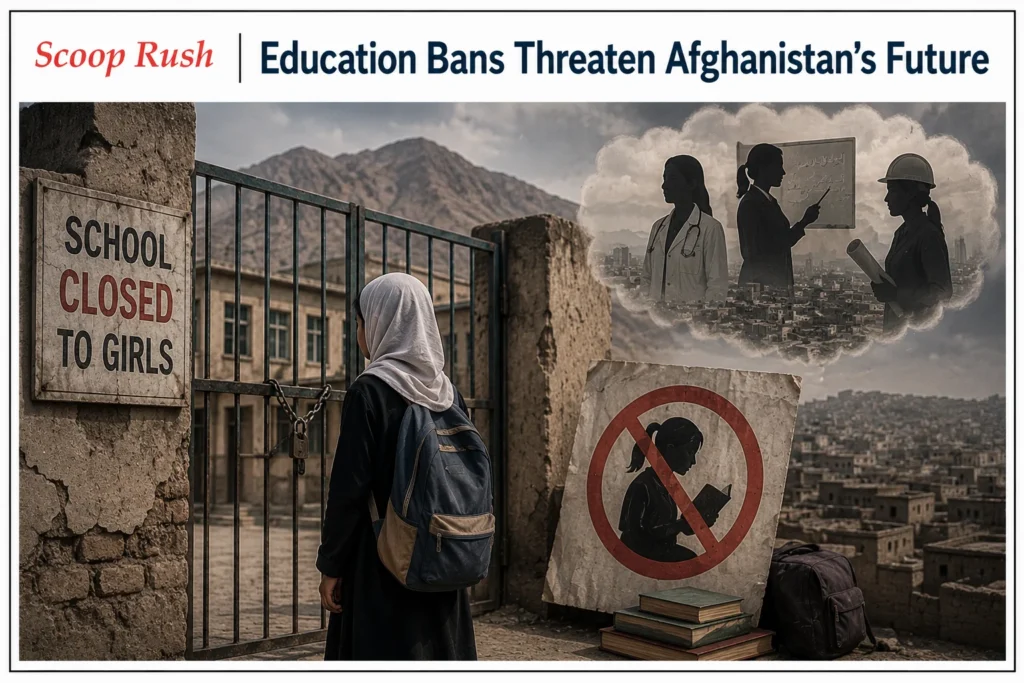
The education ban affects Afghanistan far beyond its schools. Girls who cannot study lose important opportunities for their futures. The country also loses potential doctors, teachers, engineers, and other professionals. This can worsen existing shortages across essential sectors. It can also reduce Afghanistan’s future economic potential. The effects could continue long after current restrictions end.
Education restrictions also increase pressure on families. Poor households may see fewer options for their daughters. Economic hardship can increase the risk of child marriage. Girls may lose both education and independence at an early age. These problems can reinforce poverty from one generation to another. For many families, the education ban has changed their entire future.
Poverty Forces Families Toward Desperate Choices
Afghanistan’s economic crisis has created difficult choices for families. Many households struggle to afford enough food and basic necessities. Some have already exhausted their savings and other resources. The situation becomes worse when adults cannot find stable work. Families with daughters can face additional financial pressure. In some cases, poverty has contributed to early and forced marriages.
The problem becomes harder when women cannot earn incomes. Families lose potential earnings when women cannot work freely. Girls also lose future opportunities when education ends early. These problems reinforce poverty across generations. Humanitarian aid can provide temporary relief for struggling families. However, long-term recovery requires jobs, education, and economic opportunity.
Security Has Improved but Afghanistan Remains Vulnerable
The Taliban has reduced much of the large-scale fighting seen before 2021. However, Afghanistan has not achieved complete security. ISIS-K remains a major threat in the country. Other armed groups also challenge Taliban control in some areas. These groups continue to create risks for civilians. Security threats therefore remain despite the decline in major warfare.
Relations with neighboring countries have also become increasingly difficult. Pakistan and Afghanistan have experienced serious tensions along their border. Disputes over militant activity have contributed to repeated clashes. Border closures have also disrupted trade and local livelihoods. These tensions create additional problems for communities near the frontier. They also add pressure to Afghanistan’s already weak economy.
Returning Afghans Add Pressure to the Crisis
Millions of Afghans have returned from neighboring countries in recent years. Pakistan and Iran have increased pressure on undocumented Afghan migrants. Many returnees arrive without stable jobs or housing. They also need food, healthcare, and other essential services. Afghanistan already struggles to provide these services to its population. Large-scale returns therefore create additional pressure on vulnerable communities.
The return of migrants also affects the job market. More workers compete for a limited number of jobs. Housing shortages can create further difficulties for returning families. Schools and healthcare facilities may also face additional demand. Humanitarian agencies must support returnees alongside existing vulnerable populations. This makes Afghanistan’s recovery even more difficult.
International Engagement With the Taliban Is Growing
The Taliban remains largely isolated from Western governments. However, some countries have expanded diplomatic and economic engagement. Russia formally recognized the Taliban government in 2025. China has also maintained diplomatic and economic relations with Afghanistan. Other countries have increased contact with Taliban officials. These developments show that international engagement is gradually changing.
Human rights remain the biggest obstacle to wider acceptance. Governments continue to face pressure over the treatment of women. The education ban remains a major international concern. Rights groups oppose normalizing Taliban rule without meaningful reforms. At the same time, governments want regional security and migration cooperation. This leaves Afghanistan caught between isolation and limited engagement.
Afghanistan Still Faces a Long Road to Recovery
Five years after the Taliban takeover, Afghanistan remains deeply fragile. The decline in large-scale fighting has brought some stability. However, stability has not ended poverty or humanitarian suffering. Women and girls continue to face severe restrictions. Millions remain dependent on humanitarian assistance. The economy also struggles with unemployment and limited opportunities.
Afghanistan needs lasting solutions rather than temporary relief. Families need jobs, food security, healthcare, and reliable public services. Women and girls need access to education and employment. Humanitarian agencies also need sufficient funding to reach vulnerable people. Without major changes, Afghanistan’s humanitarian and economic crisis will continue. The Taliban’s fifth year in power has brought stability without meaningful recovery.
Conclusion
Five years after the Taliban returned to power, Afghanistan remains trapped in a deep crisis. Reduced fighting has brought some stability, but millions still face poverty and hunger. Women and girls continue to lose basic rights, education, and economic opportunities. Aid cuts have also weakened healthcare and humanitarian support. These problems show that security alone cannot deliver meaningful recovery for Afghanistan.
The country now needs lasting economic and social reforms. Families need jobs, food security, healthcare, and reliable public services. Women and girls need access to education and employment. Humanitarian agencies also need enough funding to support vulnerable communities. Without meaningful progress, Afghanistan’s humanitarian crisis will continue to worsen despite the decline in large-scale conflict.
FAQs
1. When did the Taliban return to power?
The Taliban captured Kabul on August 15, 2021. The takeover followed the withdrawal of US and allied forces from Afghanistan. It marked the end of the previous Afghan government and began the Taliban’s current rule.
2. How many Afghan girls cannot continue their education?
About 2.4 million girls remain excluded from education beyond sixth grade. The Taliban continues to restrict secondary and higher education for girls. This has left Afghanistan with the world’s most restrictive education policy for girls.
3. How many Afghans need humanitarian assistance?
Around 21.9 million people need humanitarian assistance in 2026. That equals roughly 45 percent of Afghanistan’s population. Food insecurity, poverty, healthcare shortages, and displacement remain major concerns.
4. Has violence decreased under Taliban rule?
Large-scale fighting has declined significantly since 2021. However, Afghanistan still faces attacks from ISIS-K and threats from other armed groups. Border tensions with neighboring countries also create security concerns.
5. Why is Afghanistan still facing an economic crisis?
Afghanistan lost much of its foreign aid after the Taliban takeover. Unemployment, inflation, weak public services, and returning migrants add further pressure. Restrictions on women also limit the country’s workforce and economic potential.

