
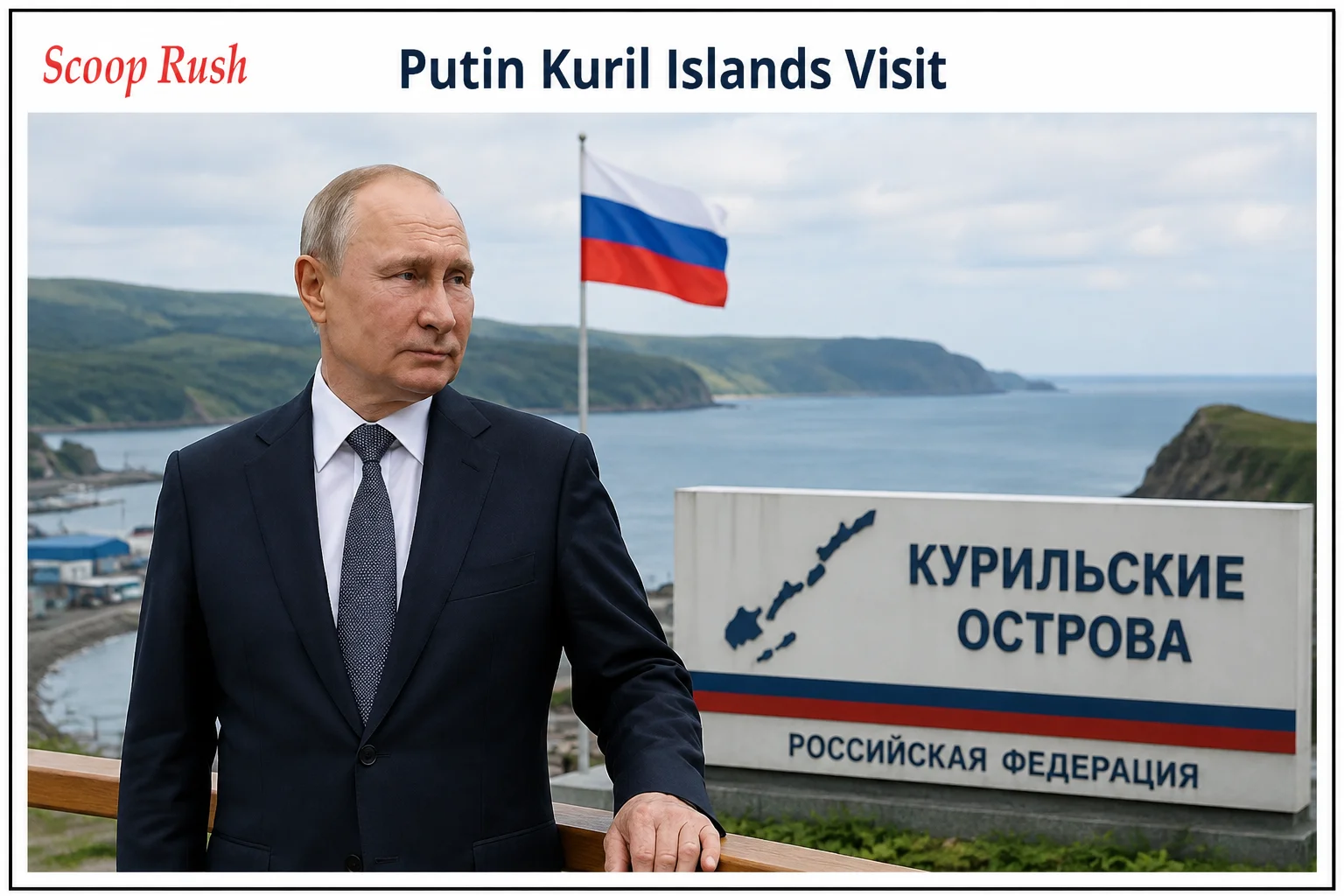
Russian President Vladimir Putin’s visit to the Kuril Islands has sparked a strong Japanese response. Putin visited Iturup on August 13, 2026, during a tour of Russia’s Far East. Japan calls the island Etorofu and considers it part of the Northern Territories. Tokyo described the visit as unacceptable and filed a formal diplomatic protest.
Putin toured a school, hospital, and fish processing facility during his trip. He also met residents and local officials on the Russian-controlled island. The visit marked his first trip to the disputed Kuril chain. It comes as relations between Moscow and Tokyo remain deeply strained.
Tokyo Strongly Rejects the Presidential Visit
Japanese Prime Minister Sanae Takaichi sharply criticized Putin’s arrival on Iturup. She said the trip conflicts with Japan’s longstanding position on the Northern Territories. Takaichi also warned that the visit could further damage public sentiment toward Russia.
Foreign Minister Toshimitsu Motegi also responded through diplomatic channels. He summoned Russian Ambassador Nikolai Nozdrev to Japan’s Foreign Ministry. Motegi lodged a formal protest and demanded that Moscow take Japan’s position seriously. Tokyo maintains that the four disputed islands belong to Japan.
Moscow Defends Its Control Over the Islands
Russia quickly rejected Japan’s objections to Putin’s trip. The Russian Embassy in Tokyo called the Japanese protest unfounded. It said the southern Kuril Islands form an integral part of Russia.
Moscow also defended Putin’s right to travel across Russian territory. Russian officials argued that foreign governments cannot control the president’s domestic movements. Foreign Ministry spokeswoman Maria Zakharova also strongly rejected Tokyo’s criticism. She reaffirmed Russia’s claim over the disputed islands.
The Territorial Dispute Dates Back to World War II
The dispute began during the final stages of World War II. Soviet forces seized the islands after Japan surrendered in August 1945. Russia has controlled the southern Kuril Islands since that period.
Japan claims four southern islands in the chain. They include Iturup, Kunashiri, Shikotan, and the Habomai islets. Japan refers to these territories collectively as the Northern Territories. Russia calls them part of the southern Kurils.
The Islands Have Blocked a Peace Treaty
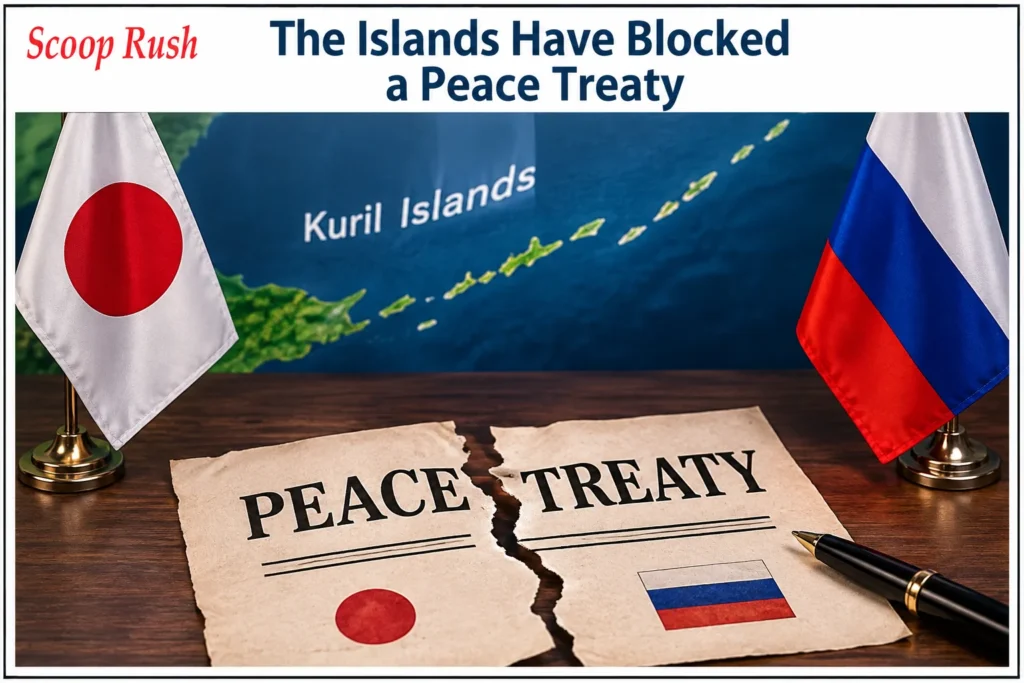
The territorial disagreement has affected Russia-Japan relations for decades. Both countries never completed a formal peace treaty after World War II. The disputed islands remain one of the main obstacles to such an agreement.
Tokyo has repeatedly linked a final settlement to progress over the territories. Moscow, however, rejects Japan’s sovereignty claims. Russian officials argue that postwar agreements support their control. As a result, negotiations have produced little lasting progress.
Previous Leaders Also Faced Tensions Over the Territory
Russian officials have visited the disputed islands before. Former President Dmitry Medvedev became the first Russian leader to visit the chain in 2010. His trip also caused a strong reaction from Japan.
Former Japanese Prime Minister Shinzo Abe later pursued closer relations with Moscow. Abe held several meetings with Putin about the territorial dispute. Those talks also supported humanitarian visits by former Japanese residents. The arrangements allowed some people to visit family graves on the islands.
Ukraine War Deepened the Diplomatic Divide
Relations changed sharply after Russia launched its full-scale invasion of Ukraine in 2022. Japan joined other countries in condemning Russia’s military campaign. Tokyo also introduced sanctions against Russia and several Russian individuals.
Moscow has strongly criticized Japan’s sanctions. Putin recently described Japan’s policy toward Russia as a major change. He also argued that Russia does not threaten Japan. The growing disagreement has made territorial negotiations even more difficult.
The Kuril Islands Hold Major Strategic Importance
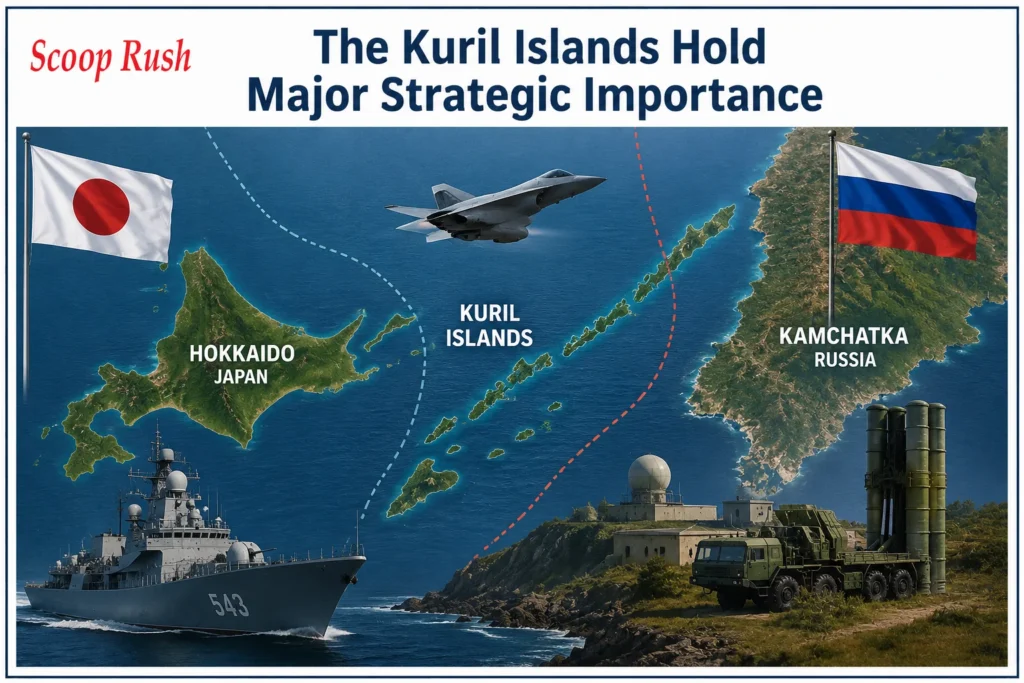
The islands occupy an important position in the northern Pacific region. They sit between Japan’s Hokkaido and Russia’s Kamchatka Peninsula. Their location gives Russia access to important Pacific waterways.
Russia has also strengthened its military presence across the island chain. Moscow regularly conducts military exercises around the region. Iturup has military infrastructure that supports Russian defense operations. Japan closely monitors these developments because of the islands’ location.
Economic Resources Add to Their Importance
The islands also have valuable natural resources and fishing grounds. Local waters support important fishing activity for the region. These economic interests add another dimension to the territorial dispute.
Russia has invested in infrastructure across the islands under its administration. Moscow has promoted economic development while maintaining its sovereignty claim. Japan continues to reject those efforts because it disputes Russia’s control.
Putin’s Visit Comes During a Sensitive Period
The timing of the visit adds further sensitivity to the dispute. Japan is preparing to mark the 81st anniversary of its World War II surrender. The historical connection makes territorial issues especially significant for Japanese officials.
Regional security concerns have also increased recently. Russia has conducted naval exercises near the disputed islands. North Korea has also launched missiles into nearby waters. These developments have added pressure to Japan’s already difficult security environment.
Russia and China Share Concerns About Regional Security
Russia and China have recently emphasized their opposition to changing the results of World War II. Their diplomats also criticized possible remilitarization in the Asia-Pacific region. The statements reflect broader disagreements over regional security.
China and Russia have strengthened their military cooperation in recent years. Joint naval patrols have included waters near the Kuril Islands. These activities have raised additional concerns in Japan. Tokyo continues to closely watch military developments around its northern waters.
Medvedev Delivers a Tough Message to Japan
Former Russian President Dmitry Medvedev also responded to Japan’s criticism. He firmly rejected Tokyo’s position on the disputed islands. Medvedev said the territories would remain under Russian control.
His comments reflected Moscow’s uncompromising approach to the territorial issue. Russian officials continue to reject any suggestion that Japan can determine the islands’ status. The strong rhetoric could further reduce space for diplomatic compromise.
Humanitarian Issues Remain Important for Japan
The territorial dispute has a deeply personal side for many Japanese families. Thousands of Japanese residents lived on the islands before Soviet forces took control. Many families were later forced to leave their homes.
Japan has previously worked with Russia to support visits by former residents. These trips allowed people to honor relatives buried on the islands. Such humanitarian arrangements became an important part of earlier diplomatic efforts. However, worsening relations have made these exchanges harder to maintain.
A New Diplomatic Settlement Appears Difficult
Putin’s visit does not suggest that Russia plans to change its position. Instead, his presence reinforces Moscow’s control over Iturup. Japan has also shown that it will continue defending its territorial claim.
A major breakthrough now appears difficult in the near future. The Ukraine war, sanctions, and regional military tensions have reduced trust. The latest dispute adds another obstacle to rebuilding relations between Moscow and Tokyo.
What Happens Next Between Russia and Japan?
Japan will likely continue raising the territorial issue through diplomatic channels. Tokyo has already made its opposition clear through its foreign ministry. Moscow, meanwhile, shows no sign of accepting Japan’s claims.
Future relations could depend on wider geopolitical developments. Any improvement would require both countries to rebuild diplomatic trust. Humanitarian cooperation could offer a limited path for dialogue. However, a permanent territorial settlement remains a much harder challenge.
Conclusion
Putin’s visit to the Kuril Islands has reopened one of East Asia’s longest territorial disputes. Japan considers the southern islands part of its Northern Territories. Russia maintains firm control and rejects Japan’s sovereignty claims.
The visit also comes during an especially difficult period for bilateral relations. Sanctions, the Ukraine war, and regional security concerns have weakened previous diplomatic efforts. For now, neither side appears ready to change its position. Therefore, the territorial dispute will likely remain a major barrier between Russia and Japan.
FAQs
1. Why did Japan condemn Putin’s visit to the Kuril Islands?
Japan considers the four southern islands part of its Northern Territories. Tokyo therefore viewed Putin’s visit to Iturup as a direct challenge to its territorial claim.
2. Which Kuril Island did Putin visit?
Putin visited Iturup, which Japan calls Etorofu. It is one of four southern islands claimed by Japan but currently controlled by Russia.
3. Why do Russia and Japan dispute the Kuril Islands?
The Soviet Union took control of the islands during the final days of World War II. Japan has disputed Russian control ever since and continues to claim four southern islands.
4. Has Putin visited the disputed islands before?
No. Putin’s August 2026 trip marked his first visit to the disputed Kuril Islands. Former Russian President Dmitry Medvedev visited Kunashiri in 2010.
5. Could the visit affect Russia-Japan relations?
Yes. The visit could further damage already strained relations. Japan has warned that the move could make future diplomatic cooperation and territorial negotiations more difficult.

