
A Rule That Just Won’t Stay Buried
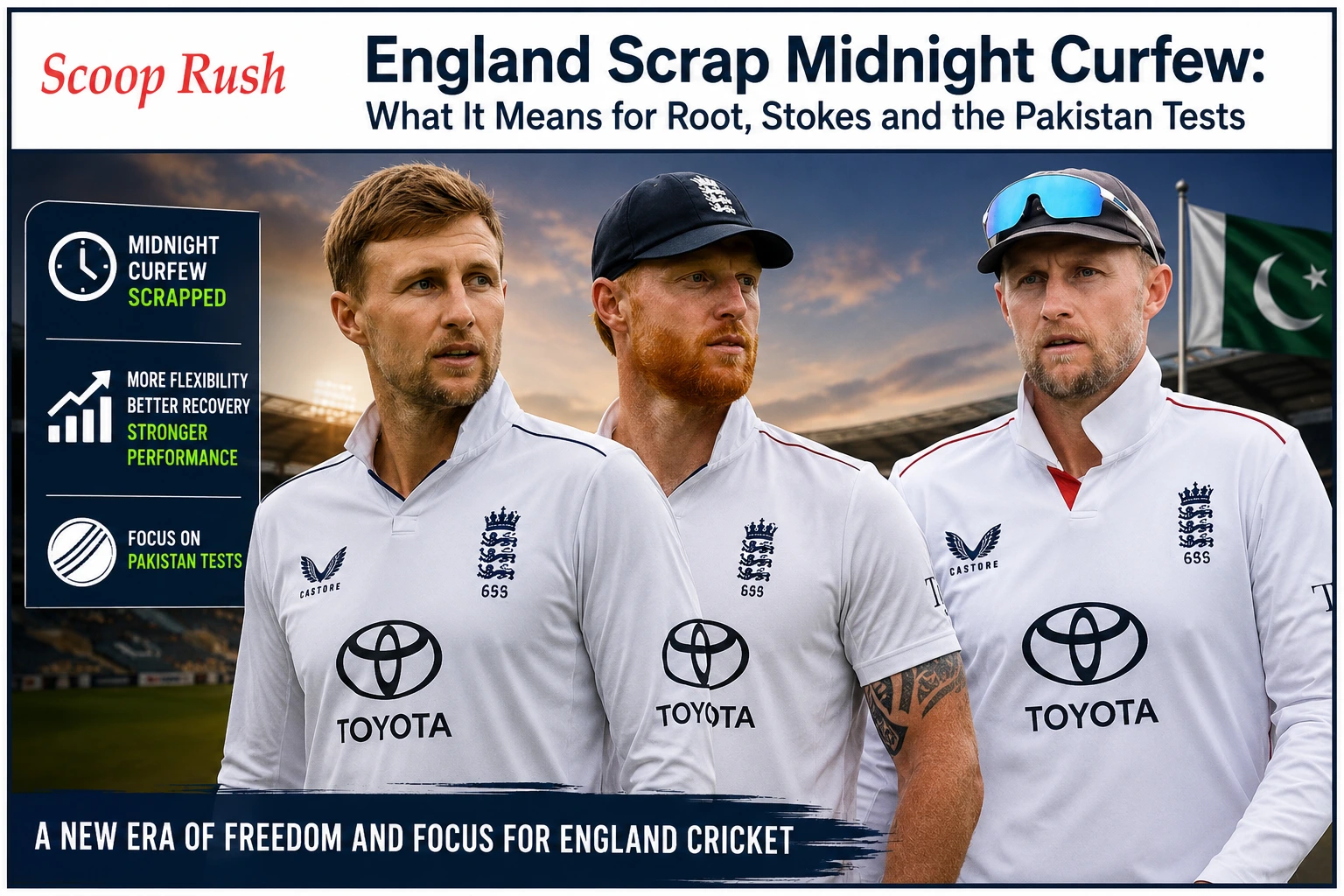
How does a debate about “when grown men should go to bed” survive for almost a decade? That’s the strange story behind England scrap midnight curfew headlines this week, the latest twist in a saga that has seen England introduce, break, defend, drop, and reinstate the same rule for years.
The England cricket curfew is back in the headlines. This time, the news is that Root and new head coach Stephen Fleming have scrapped it for good. The decision ends months of confusion, mixed messages, and off-field distractions.
This story matters because England’s results haven’t matched the freedom players are now getting. England have won only two of their last ten Tests. So the timing of this call has raised plenty of eyebrows. As England prepares to face Pakistan and then tackle a brutal run of fixtures, one question stands out. Can this team turn talk of trust and responsibility into real results on the field?
The Origins of the England Cricket Curfew
The story starts in 2017. Ahead of an Ashes tour, then-captain Joe Root defended his players’ right to be treated as adults. He said the squad knew how to behave and understood what representing the badge meant.
That tour became one of the messiest in recent English cricket history. Root’s squad travelled without Ben Stokes, who missed selection after an incident outside a Bristol nightclub. During the trip, Jonny Bairstow clashed with Australia’s Cameron Bancroft in a headbutt incident. Ben Duckett also tipped a drink over veteran bowler James Anderson. Most uncomfortably, a local journalist asked Moeen Ali, a practising Muslim, whether he and his teammates could manage to “stay out of the pub.”
That chaotic tour led the ECB to introduce a strict midnight curfew. The rule stayed in place for more than four years before officials finally dropped it in 2022.
Why the Curfew Returned in January
Trouble on another away Ashes tour brought the curfew straight back this year. Officials reintroduced it in January for the white-ball side, then extended it to the Test team at the start of the home summer.
Even the reinstated rule didn’t stop headline-grabbing incidents. After the first Test of the summer, captain Ben Stokes and fast bowler Gus Atkinson both broke curfew. Director of cricket Rob Key, frustrated after a difficult winter, even floated a total alcohol ban for the squad. Key also admitted that Atkinson genuinely didn’t know the curfew applied to him.
Head coach Brendon McCullum acknowledged “ambiguity” around the rules. Despite the confusion, officials cleared both Stokes and Atkinson of wrongdoing. Stokes later returned to the side before announcing his retirement.
England’s Curfew Guidelines Kept Changing
Just last month, England issued fresh guidance to players. The curfew stayed in place, but new advice discouraged alcohol on the days immediately before, during, and after a match. It looked like a middle-ground solution, avoiding the strictness of a full ban while keeping some structure.
Then came another twist. The ECB sacked Brendon McCullum as Test coach. In one of his final acts in that role, he relaxed the drinking guidelines so England’s T20 side could celebrate their series win over India. Rules were bending even while they remained technically active.
This constant back-and-forth explains why fans have struggled to keep track of England’s curfew rules. Officials kept adjusting, pausing, or ignoring guidelines depending on results and circumstances. As a result, the team projected an image of uncertainty off the pitch.
Root and Fleming End the England Cricket Curfew
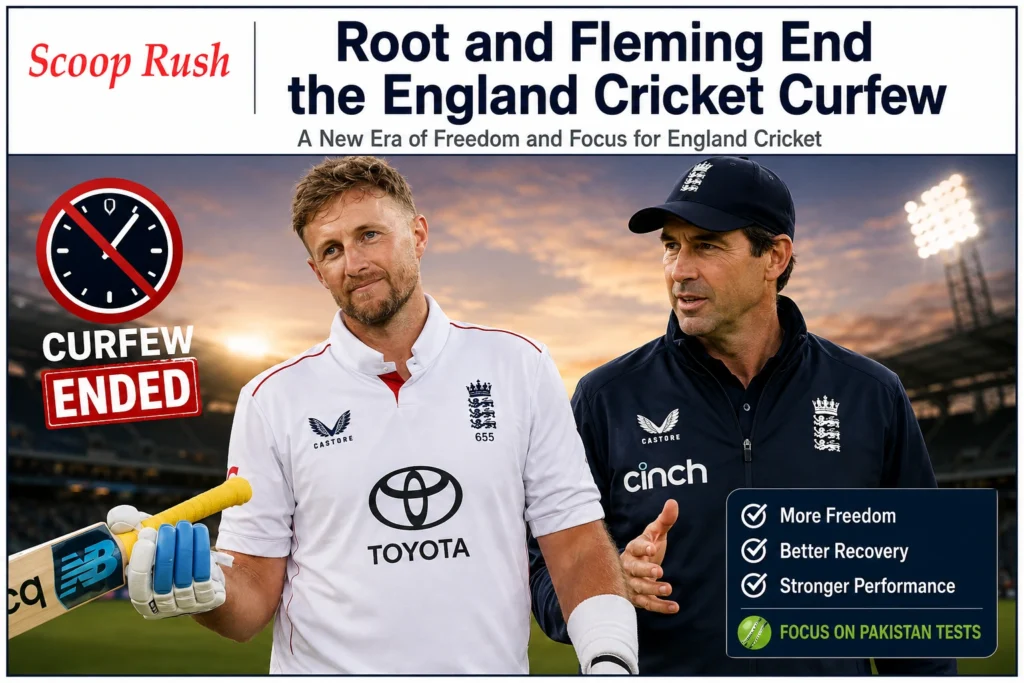
Now England has scrapped the curfew entirely. This time, the decision looks deliberate rather than another temporary fix. Root and Stephen Fleming, McCullum’s replacement as Test coach and a close friend of Root’s, made the call together.
The ECB reportedly sees Fleming as a steady, mature influence on the setup. Fleming’s decision to lift the curfew didn’t stop with the Test side either. It also applies to the white-ball team, still captained by Harry Brook and coached by McCullum.
Root explained the thinking plainly on Wednesday. He said players need to feel like grown adults off the field if teams expect them to take responsibility for it. It’s a simple philosophy. However, it puts real pressure on the players to prove it works.
Interestingly, McCullum has backed the shift toward personal responsibility, even though he enforced the curfew himself earlier in the year. That contradiction hasn’t gone unnoticed, and it adds another layer to an already complicated story.
Does England Really Have a Drinking Problem?
Ben Stokes has publicly rejected the idea that England has a unique drinking culture. Instead, he argues that cricket as a whole has an unhealthy relationship with alcohol, not just his own dressing room.
Some evidence backs that view. In 2022, England players celebrated a dramatic win over New Zealand at Trent Bridge with drinks on the balcony before heading out for food in Nottingham. That win helped kickstart the “Bazball” era. Similarly, after England’s iconic 2005 Ashes victory, celebrations continued with Andrew Flintoff leading the party atop an open-top bus through London.
Even during this past winter’s tour, Australia’s Travis Head reportedly drank more than most England players. But because Head kept scoring runs and Australia kept winning, the story barely registered. That contrast reveals a lot about how people judge these situations.
Former players often argue that today’s drinking culture pales next to stories from earlier eras involving figures like Ian Botham, Allan Lamb, and Phil Tufnell. However, that comparison might actually expose the real issue: cricket hasn’t modernised the way other major sports have. You won’t hear former heavy-drinking footballers like Paul Merson or Tony Adams claim today’s Arsenal stars could match them drink for drink.
Grassroots Cricket Shares the Same Culture
This isn’t purely an elite-level issue. Cricket’s relationship with alcohol runs from international stadiums down to local parks and clubs. Amateur league cricket has long involved a few post-match pints, much like Sunday league football trips to the pub or drinks at the tennis club after a match.
Still, wider cultural habits across amateur sport don’t excuse the pressure facing England’s national team. Fans hold professional athletes representing their country to a different standard, especially when results don’t match the freedom they’re getting.
Why Results Will Decide If the Curfew Call Was Right
Ultimately, lifting the England cricket curfew is a gamble, and only winning can justify it. If England start collecting victories, people will remember this as smart man-management from Root and Fleming. If losses continue, critics will likely call it another example of a team dodging accountability.
The timing raises the stakes. England play three Test matches against Pakistan starting next week, giving them a genuine chance to rebuild confidence and credibility. After that series, though, the road gets much harder. England will tour South Africa, the current world champions, this winter. They’ll then host Australia in a home Ashes series next summer, before touring India for five Tests in early 2028.
That schedule leaves little room for further off-field distractions. As many pundits point out, constantly changing team rules rarely builds a winning environment. The same logic applies to constantly changing an opening batting pair; neither approach produces consistent results. England now needs consistency, both in selection and in culture, if this new approach is going to work.
Final Thoughts on England’s Curfew Decision
Scrapping the England cricket curfew closes a long, messy chapter in English cricket. From the chaos of the 2017 Ashes tour to this year’s confusing mix of bans, guidelines, and exceptions, the story keeps circling back to one issue: results.
Treating players as responsible adults sounds reasonable in theory. However, that trust only holds up if performances on the field improve. For now, Root and Fleming are betting that removing restrictions will boost morale and accountability rather than generate more headlines for the wrong reasons.
As the saying goes in this saga, England can go to bed as late as they like, as long as they start winning first.
Frequently Asked Questions
1. Why did England scrap the cricket curfew?
England’s new leadership, captain Joe Root and Test coach Stephen Fleming, decided that treating players as responsible adults would build a better environment for on-field performance than strict late-night rules.
2. When did England first introduce the cricket curfew?
England introduced the curfew after incidents during the 2017 Ashes tour, including the Ben Stokes nightclub incident and other off-field controversies involving the squad.
3. Did Ben Stokes and Gus Atkinson break the curfew this year?
Yes. Both players broke the midnight curfew after the first Test of the summer. Director of cricket Rob Key later confirmed that Atkinson didn’t know the rule applied to him at the time.
4. Does scrapping the curfew apply to both the Test and white-ball teams?
Yes. The decision covers the Test side under Joe Root and the white-ball team, which Harry Brook captains and Brendon McCullum coaches.
5. What matches come next for England after lifting the curfew?
England begin a three-match Test series against Pakistan next week. They’ll then tour South Africa this winter, host Australia in a home Ashes series next summer, and tour India in early 2028.

