
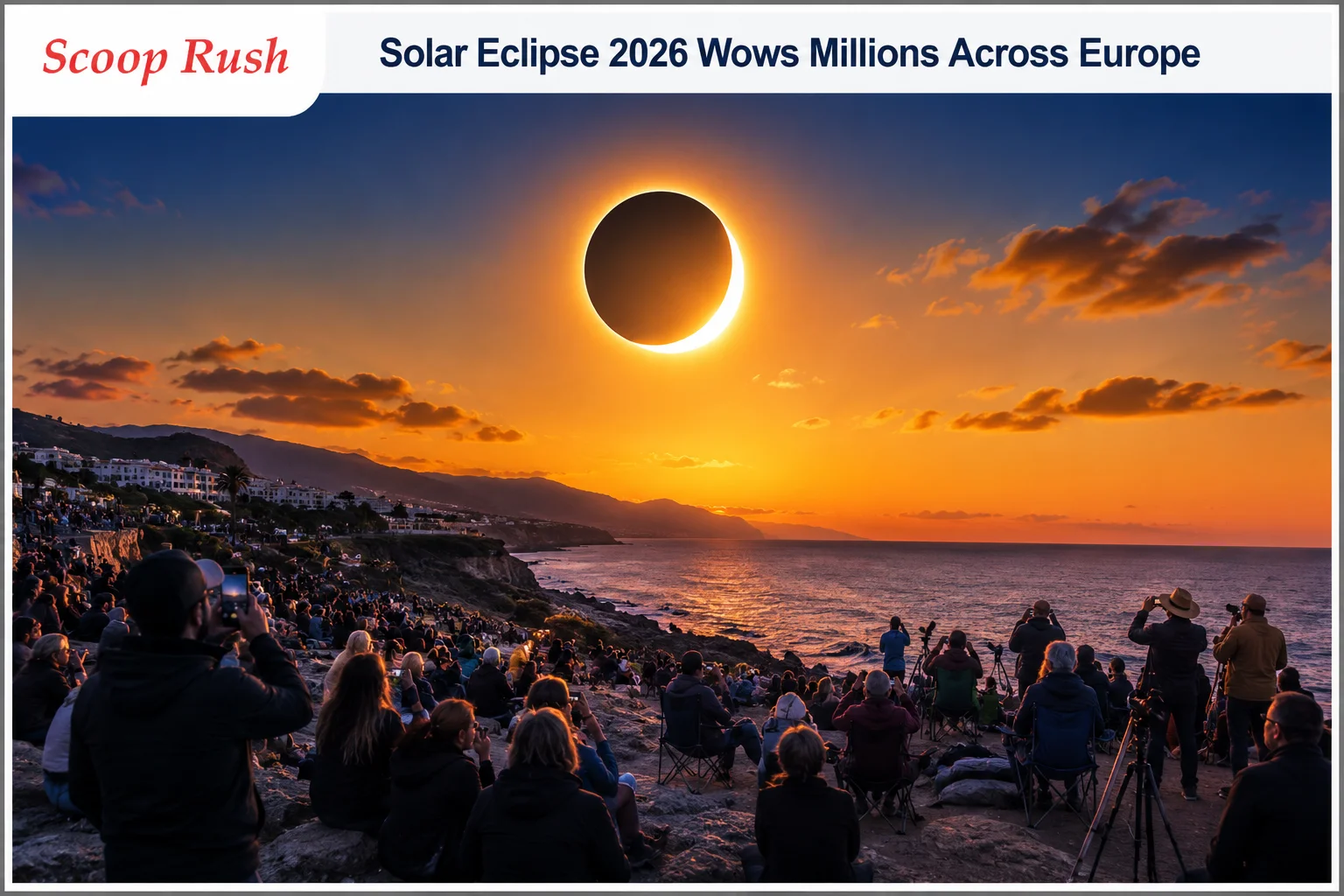
Millions of people across the UK and Europe watched the solar eclipse 2026 on August 12. The Moon moved between Earth and the Sun during the rare event. Britain saw a deep partial eclipse across much of the country. Meanwhile, Spain, Iceland, Greenland, and parts of Russia saw totality.
The event created dramatic changes in daylight across affected regions. The Sun slowly disappeared behind the Moon as the eclipse progressed. In some places, the sky became noticeably darker within minutes. Crowds gathered at landmarks, beaches, parks, and open spaces to watch.
For many viewers, the event became one of the biggest astronomical highlights in years. Clear skies also gave thousands of people excellent views. Others faced clouds but still gathered to experience the unusual atmosphere.
Britain Sees Its Deepest Eclipse in Years
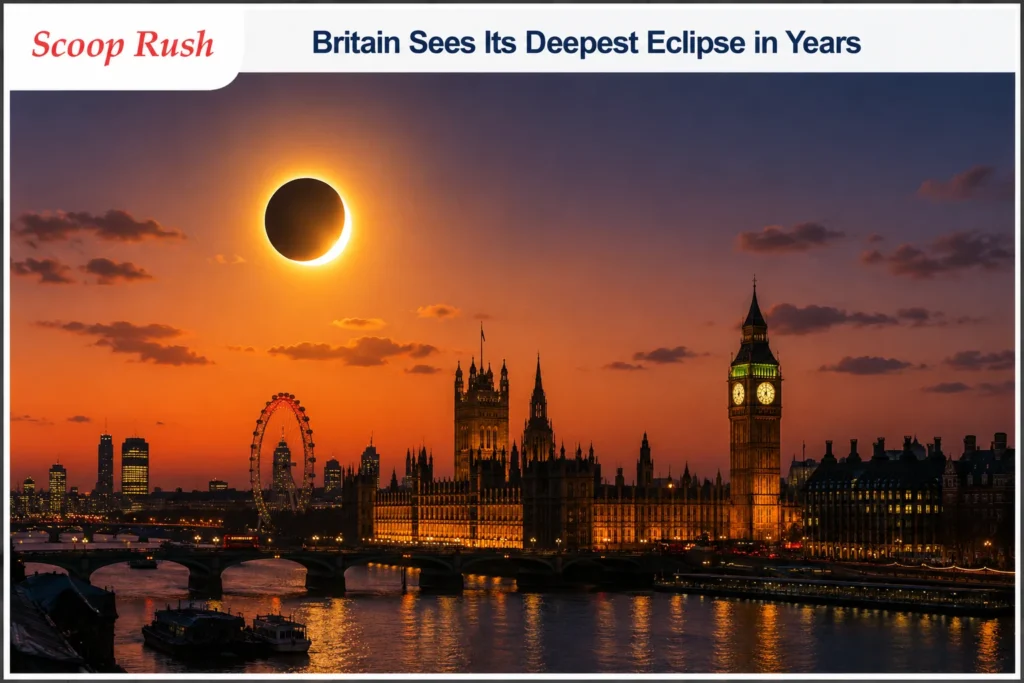
The UK experienced a partial eclipse rather than totality. The Moon covered more than 90% of the Sun across most of Britain. Cornwall recorded the highest coverage, reaching about 95% during the peak.
The eclipse began during the early evening across Britain. It reached its maximum shortly after 19:00 BST in many areas. As the Moon crossed the Sun, daylight gradually faded. The effect created an unusual twilight across towns and cities.
Spain Witnesses Brief Moments of Totality
Northern Spain provided some of the most spectacular views of the event. The Moon completely covered the Sun along the path of totality. This created a brief period of darkness during daylight hours.
The timing made the Spanish viewing experience especially memorable. Totality arrived close to sunset in several areas. Observers saw the Sun’s corona surrounding the dark Moon. The total phase lasted less than two minutes in many locations.
Iceland and Greenland Entered Complete Darkness
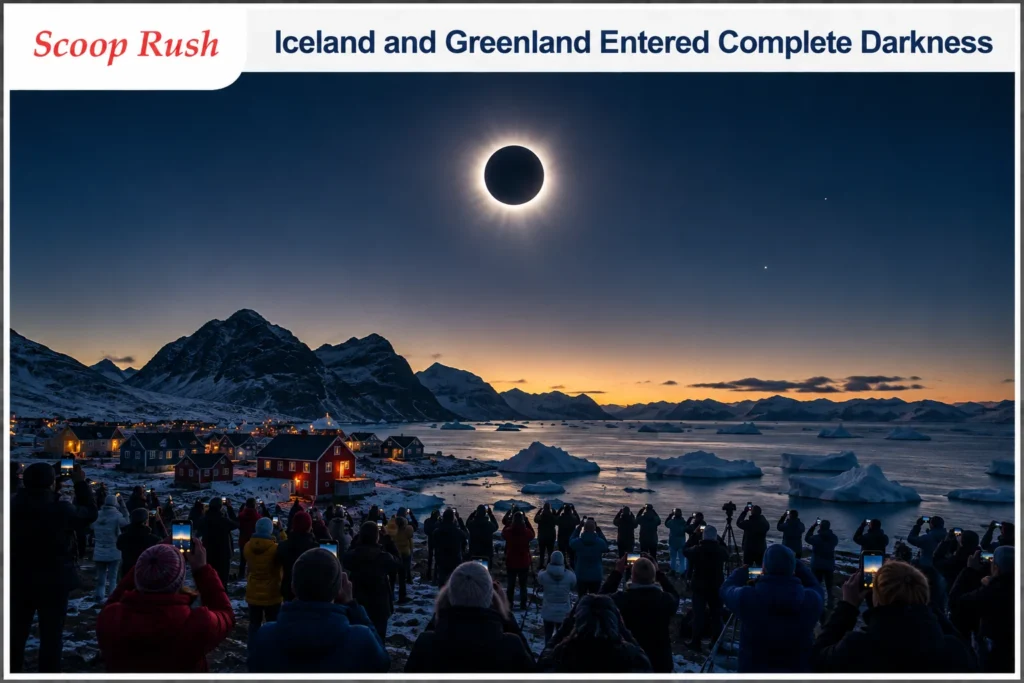
Iceland and Greenland also fell within the path of totality. Observers there watched the Moon completely cover the Sun. The sky darkened dramatically as sunlight disappeared.
The total phase lasted longer in some northern locations. Crowds gathered in areas with clear views of the sky. Many viewers captured photographs before and after totality. However, the brief period of complete darkness remained the main attraction.
The Moon Slowly Covered the Sun
The eclipse began as a partial event across the wider viewing region. The Moon first appeared to take a small bite from the Sun. That covered portion gradually increased as the eclipse progressed.
Near maximum eclipse, the remaining sunlight formed a narrow crescent. The sky then became darker in locations with high coverage. Viewers could follow the Moon’s movement without seeing any sudden change.
Totality Revealed the Sun’s Hidden Atmosphere
Totality offered observers a rare view of the solar corona. The Moon blocked the Sun’s bright surface during this brief stage. This allowed the much fainter outer atmosphere to become visible.
The corona appeared as a bright glow around the Moon. Some viewers could also spot pink solar prominences. These structures extend from the Sun’s surface into its surrounding atmosphere. Their appearance added another striking detail to the eclipse.
A Rare Sunset Created Stunning Views
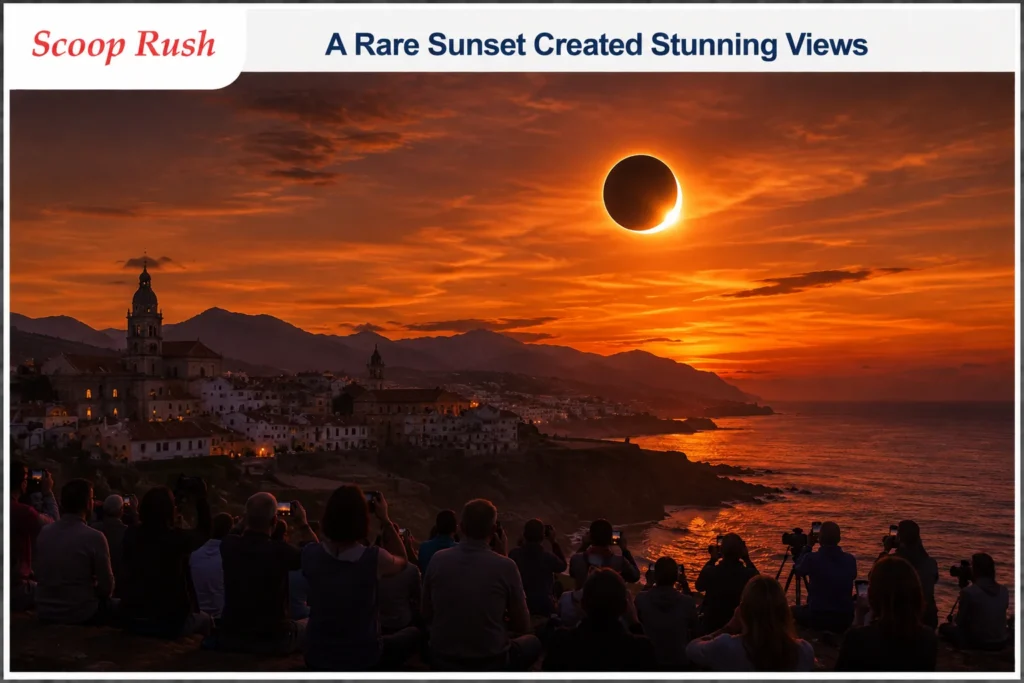
Parts of Spain experienced an unusual sunset eclipse. The event occurred while the Sun moved closer to the horizon. This created a striking combination of sunset colors and eclipse darkness.
The low position of the Sun also produced memorable photographs. Landscapes appeared beneath the darkened sky during the event. Some observers saw a reddish glow around the covered Sun. The unusual timing made the Spanish eclipse particularly distinctive.
Crowds Gathered Across European Viewing Sites
Large crowds watched the eclipse from popular locations across Europe. Astronomy enthusiasts planned their viewing spots well before the event. Families and groups also gathered in parks, gardens, beaches, and public spaces.
In Britain, some areas faced cloudy conditions. Northern England, Scotland, and Northern Ireland saw more cloud than southern areas. However, many people still caught glimpses through breaks in the clouds.
Safe Viewing Remained Essential
Looking directly at the Sun can seriously damage the eyes. People needed certified solar eclipse glasses during the partial phases. Ordinary sunglasses cannot provide enough protection from intense sunlight.
Viewers also needed special precautions with cameras and telescopes. They should never look through optical equipment without suitable solar filters. During totality, people could briefly remove their eclipse glasses. They needed to put them back on before sunlight returned.
Why Total Eclipses Remain So Special
A total solar eclipse requires precise alignment between three celestial bodies. The Moon must pass directly between Earth and the Sun. Its apparent size must also cover the Sun from the viewer’s location.
That alignment makes totality relatively rare for individual places. A total eclipse happens somewhere on Earth roughly every 18 months. However, one specific location can wait centuries for another total eclipse.
Europe Has Another Major Eclipse Ahead
Eclipse watchers will not have to wait long for another major event. A total solar eclipse will cross southern Europe on August 2, 2027. Southern Spain will fall within the path of totality.
The eclipse will also cross parts of North Africa and the Middle East. However, Britain will not experience totality during that event. The UK will instead wait much longer for its next total solar eclipse.
The UK Faces a Long Wait for Totality
The 2026 event became Britain’s most dramatic eclipse since 1999. Most of the country saw more than 90% of the Sun covered. That made the event particularly significant for British observers.
Britain will see another substantial partial eclipse in 2081. The country will not experience its next total solar eclipse until 2090. That long wait explains why so many people treated the 2026 event as special.
What Made the Event So Memorable
The eclipse transformed an ordinary summer evening into a rare astronomical experience. Millions watched the Moon gradually cover the Sun. The changing light created an unusual atmosphere across affected regions.
For those inside the totality path, the experience became even more dramatic. The sky darkened, the corona appeared, and the Sun briefly disappeared. Across Europe, the event created lasting memories for experienced astronomers and first-time viewers alike.
Conclusion
The solar eclipse 2026 gave millions across the UK and Europe a remarkable celestial experience. Britain witnessed a deep partial eclipse, while parts of Spain, Iceland, and Greenland saw totality. The changing light and brief darkness created unforgettable moments for viewers.
The event also highlighted the rarity of total solar eclipses. While another major eclipse will cross southern Europe in 2027, Britain faces a much longer wait. For many viewers, the 2026 eclipse will remain a memorable reminder of the wonders above our skies.
FAQs
1. What was the solar eclipse 2026?
The event occurred on August 12, 2026. The Moon passed between Earth and the Sun. Different regions experienced either a partial or total eclipse.
2. Where did people see a total eclipse?
Totality crossed parts of Russia, Greenland, Iceland, Spain, and Portugal. Northern Spain offered especially dramatic views near sunset. Many other European countries saw only a partial eclipse.
3. How much of the Sun did Britain see covered?
Most parts of the UK saw more than 90% coverage. Cornwall experienced the highest coverage at roughly 95%. London reached around 91% during the maximum.
4. Was it safe to look at the eclipse?
People needed certified solar eclipse glasses during partial phases. Regular sunglasses could not protect their eyes adequately. Viewers also needed proper solar filters for cameras and telescopes.
5. When is the next total eclipse in Europe?
Southern Europe will see another total solar eclipse on August 2, 2027. The path will cross southern Spain and several parts of North Africa. This event will offer another major opportunity for eclipse watchers.

