
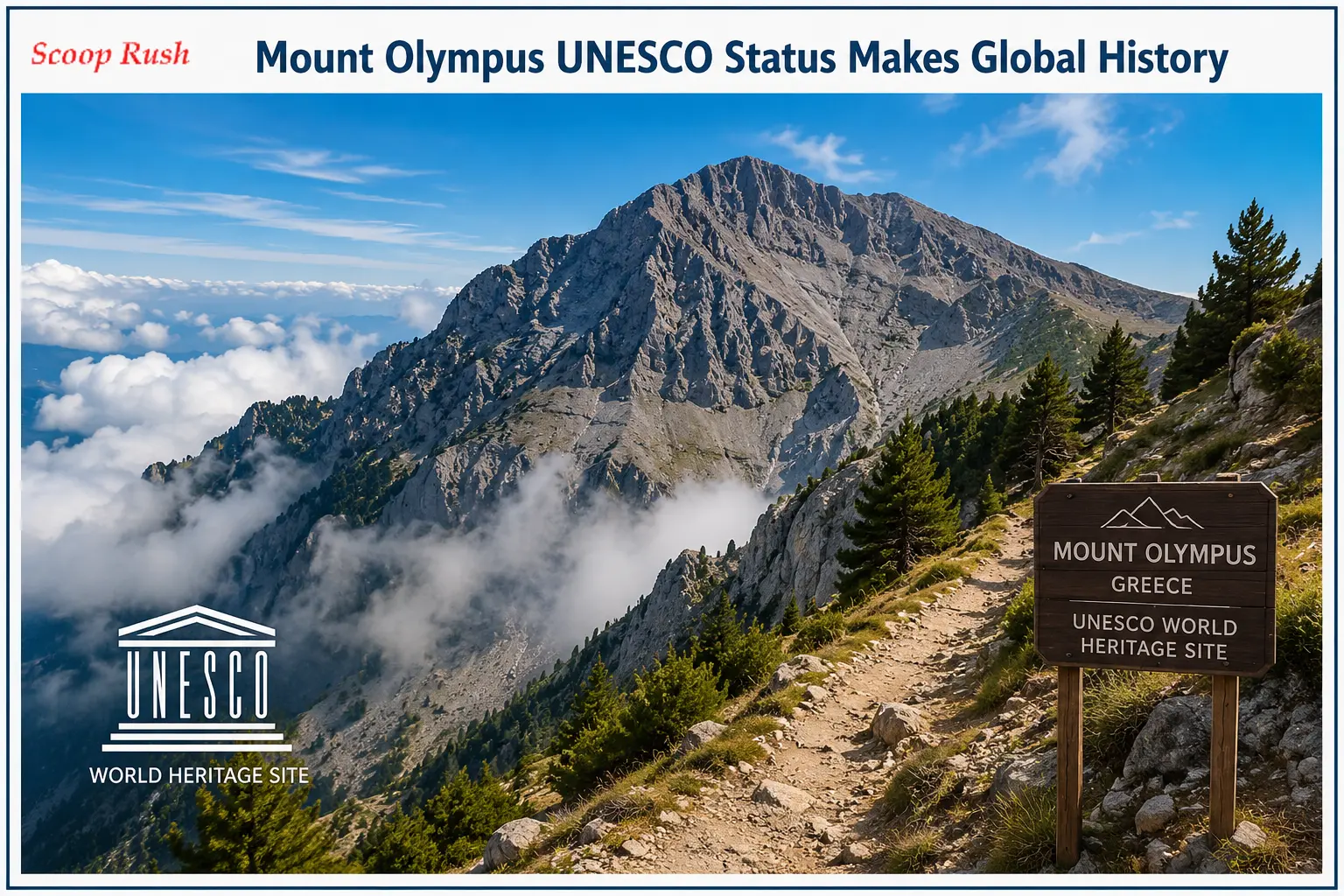
Mount Olympus UNESCO recognition has given Greece’s legendary mountain a major new distinction. UNESCO added the mountain to its World Heritage List in 2026. The decision recognizes Olympus for its natural and cultural importance.
Rising to about 2,917 meters, Mount Olympus stands as Greece’s highest mountain. Its dramatic peaks overlook northern Greece near the Aegean coast. The mountain also holds a unique place in ancient Greek mythology.
For centuries, stories linked Olympus with Zeus and the other Olympian gods. Today, its forests, cliffs, gorges, and alpine landscapes attract visitors from around the world. The UNESCO decision now brings greater international attention to this famous destination.
Why Mount Olympus Matters to Greece
Mount Olympus has played an important role in Greek culture for thousands of years. Ancient Greeks believed the mountain served as the home of the Olympian gods. Zeus stood as the most powerful figure among these legendary deities.
The mountain also carries major environmental importance. Its varied elevations support different habitats and plant communities. Together, its mythology and natural landscape create a destination unlike many other mountains in Europe.
UNESCO Recognition Covers Nature and Culture
The new UNESCO status recognizes both the cultural and natural value of Olympus. This mixed recognition reflects the mountain’s unusual combination of mythology, landscape, biodiversity, and history.
UNESCO recognition also strengthens the international profile of the area. The designation highlights why protecting Olympus matters. It can also encourage visitors to explore the mountain responsibly and respect its fragile environment.
A Mountain With a Long Conservation History
Mount Olympus already had important environmental protection before gaining World Heritage status. Greece created Olympus National Park in 1938. It became the country’s first national park.
UNESCO also recognized the area as a biosphere reserve in 1981. The latest designation builds on those earlier protections. It places Olympus among internationally recognized cultural and natural landmarks.
Mytikas Remains Greece’s Highest Peak
Mytikas forms the highest point of Mount Olympus. The summit reaches approximately 2,917 meters above sea level. Reaching it remains a major goal for experienced hikers and mountaineers.
Another famous peak is Stefani, which rises close to Mytikas. Many people know it as the Throne of Zeus. Its steep profile creates one of the mountain’s most recognizable views.
Olympus Offers Remarkable Natural Diversity
Mount Olympus contains several distinct landscapes within a relatively small area. Lower slopes feature thick forests and flowing streams. Higher areas gradually change into rocky alpine terrain.
The mountain also supports a large variety of plants and wildlife. Several plant species found there are rare or locally unique. Birds of prey and other wildlife also live across its protected habitats.
Hiking Trails Attract Adventure Travelers
Hiking remains one of the best ways to experience Mount Olympus. Several trails begin around Litochoro, a town located near the mountain. Routes range from easier walks to demanding alpine climbs.
The Enipeas Gorge provides one of the most popular hiking experiences. The route passes through forests, rocky sections, streams, and waterfalls. It offers visitors a scenic introduction to the mountain without requiring a summit attempt.
Experienced Hikers Can Reach Higher Peaks
More demanding routes lead toward the mountain refuges and upper peaks. One popular route begins at Prionia before climbing toward higher elevations. Hikers can continue toward the Plateau of the Muses and the summit area.
The final approach toward Mytikas requires greater experience and confidence. Rocky terrain and sudden weather changes can increase the difficulty. Visitors should choose routes according to their abilities and current mountain conditions.
When Should Travelers Visit Olympus?
The warmer months generally provide the most suitable conditions for mountain trips. June through October usually offers better access to higher trails. Mountain weather can still change quickly during summer.
Spring and autumn can provide excellent conditions on lower routes. However, snow can remain at higher elevations during these periods. Winter travel requires specialist knowledge, proper equipment, and careful planning.
Safety Remains Important on Mountain Routes
Mount Olympus offers spectacular scenery, but visitors should not underestimate its terrain. Hikers should check weather forecasts before starting their routes. They should also carry enough water, food, navigation tools, and suitable clothing.
Conditions can change rapidly at higher elevations. Fog, strong winds, rain, and snow can create serious challenges. Less experienced travelers should consider guided hikes for difficult routes.
Litochoro Provides a Popular Gateway
Litochoro serves as one of the main gateways to Mount Olympus. The town sits close to several hiking routes and mountain access points. It also gives visitors a convenient base for exploring the surrounding region.
Travelers can combine outdoor activities with local culture during their stay. Nearby attractions include archaeological sites, traditional settlements, and regional museums. This makes the area suitable for visitors seeking more than mountain adventures.
Ancient History Adds Another Layer
The connection between Olympus and ancient Greece extends beyond mythology. The nearby archaeological site of Dion offers important evidence of ancient religious life. Ancient Greeks used Dion as a major sacred center dedicated to the gods.
Visitors can explore archaeological remains around the site today. Temples, theatres, public buildings, and other ruins reveal the area’s historical importance. A trip to Olympus can therefore combine hiking with archaeological exploration.
Popular Culture Brings More Attention
Mount Olympus is also benefiting from renewed international interest in Greek mythology. Christopher Nolan’s The Odyssey has placed ancient Mediterranean stories back into the global spotlight.
However, Mount Olympus itself did not serve as a filming location for the movie. Production took place across several countries, including Greece. The renewed interest still gives destinations connected with Greek mythology additional visibility.
UNESCO Status Could Support Responsible Tourism
The new recognition could encourage more international travelers to visit the region. That growth could benefit local businesses and communities around Olympus. However, increased tourism also creates challenges for a sensitive mountain environment.
Visitors should follow marked trails and respect local regulations. They should avoid disturbing wildlife and damaging plants. Carrying waste back down the mountain also helps protect the landscape.
Protecting Olympus Becomes More Important
International recognition brings greater attention to conservation. That attention can support efforts to protect habitats and historic sites. It can also encourage better management as visitor numbers increase.
The challenge will involve balancing tourism with environmental protection. Olympus needs careful planning as more travelers discover its landscapes. Responsible tourism can help preserve the mountain for future generations.
A New Chapter for Greece’s Legendary Mountain
The UNESCO designation gives Mount Olympus another major place on the world tourism map. Its importance comes from more than its height or dramatic scenery. The mountain connects mythology, history, biodiversity, and outdoor adventure.
For Greece, the recognition celebrates a landmark with deep cultural roots. For travelers, it offers another reason to explore northern Greece. As interest grows, protecting Olympus should remain as important as promoting it.
FAQs
1. Why is Mount Olympus famous?
Mount Olympus is famous for its connection with ancient Greek mythology. Greeks believed Zeus and the other Olympian gods lived there. It is also Greece’s highest mountain.
2. What is the highest point of Mount Olympus?
Mytikas is the highest peak of Mount Olympus. It reaches about 2,917 meters above sea level. Experienced hikers often consider reaching it a major achievement.
3. Can tourists hike Mount Olympus?
Yes, tourists can hike many trails around Mount Olympus. Some routes suit casual hikers, while others require mountaineering experience. Visitors should choose routes based on their fitness and skills.
4. What is the best time to visit Olympus?
Summer generally offers the best conditions for higher mountain routes. June through October usually provides easier access to the peaks. Weather conditions can still change quickly.
5. Is Mount Olympus protected?
Yes, Mount Olympus has several layers of protection. Greece established the national park in 1938. UNESCO also recognized it as a biosphere reserve before its World Heritage designation.

