
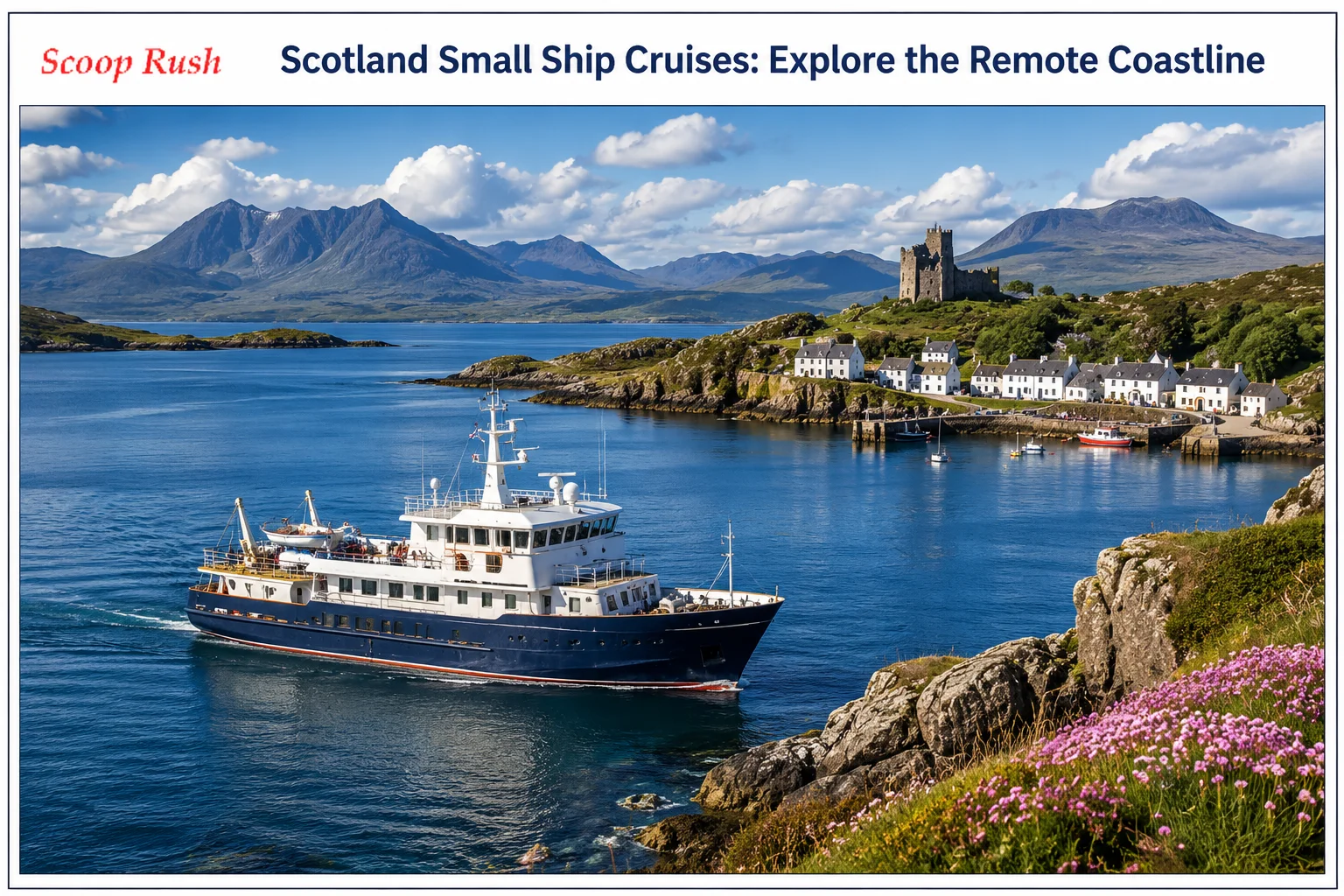
Scotland small ship cruises are giving travellers a new way to explore the country’s coastline. These smaller vessels can reach narrow waterways and secluded anchorages. They also visit remote islands, coastal villages, and areas beyond many large cruise routes. The result is a quieter and more personal travel experience.
Unlike mega cruises, these journeys focus on scenery, wildlife, local food, and exploration. Passengers spend less time in crowded ports and more time near nature. Small groups also create a relaxed atmosphere onboard. This makes small-ship travel increasingly appealing to travellers seeking authentic Scottish experiences.
Small Vessels Open Access to Remote Scotland
Large cruise ships need suitable ports and wider waterways. Their size limits access to many smaller Scottish lochs and anchorages. Smaller vessels can operate in tighter spaces where conditions allow. This gives passengers opportunities to explore places that larger ships may bypass.
A maritime distinction involving vessels carrying up to 12 passengers also helped small operators develop. These vessels can receive different regulatory treatment from larger cruise ships. However, the rule represents only part of the industry’s development. Operators also built demand through personalised service and remote itineraries.
Scotland’s Islands Offer a More Intimate Experience
Scotland’s islands are among the biggest attractions for small-ship travellers. The Small Isles offer rugged landscapes, beaches, and close-knit communities. St Kilda provides dramatic sea cliffs and important seabird habitats. Orkney combines remote scenery with remarkable prehistoric sites.
Small vessels can also explore lesser-known islands and coastal settlements. Some itineraries travel toward remote communities around Orkney. Others visit islands around the Firth of Clyde. These journeys allow visitors to experience quieter parts of Scotland away from major cruise crowds.
Wildlife Encounters Make the Journey Special
Scotland’s coastline provides excellent opportunities for wildlife encounters. Travellers may see dolphins, porpoises, seals, and otters near the water. Sea eagles can also appear above the rugged coastline. Some journeys may encounter minke whales, humpback whales, or orcas.
Small vessels can offer greater flexibility when wildlife appears nearby. Skippers may adjust routes when conditions and safety allow. However, wildlife sightings always depend on nature and weather. No cruise can guarantee encounters with specific species.
Life Onboard Feels More Personal
Small passenger numbers create a very different atmosphere from mega cruises. Guests share the journey with a limited group of travellers. Crew members can provide more individual attention throughout the trip. This can make the experience feel relaxed and welcoming.
Some operators also encourage interaction between guests and crew. Activities may include fishing, wildlife watching, or informal conversations with the skipper. Shared meals provide another opportunity to connect. These simple details help create a more personal journey.
Local Food Adds Character to the Experience
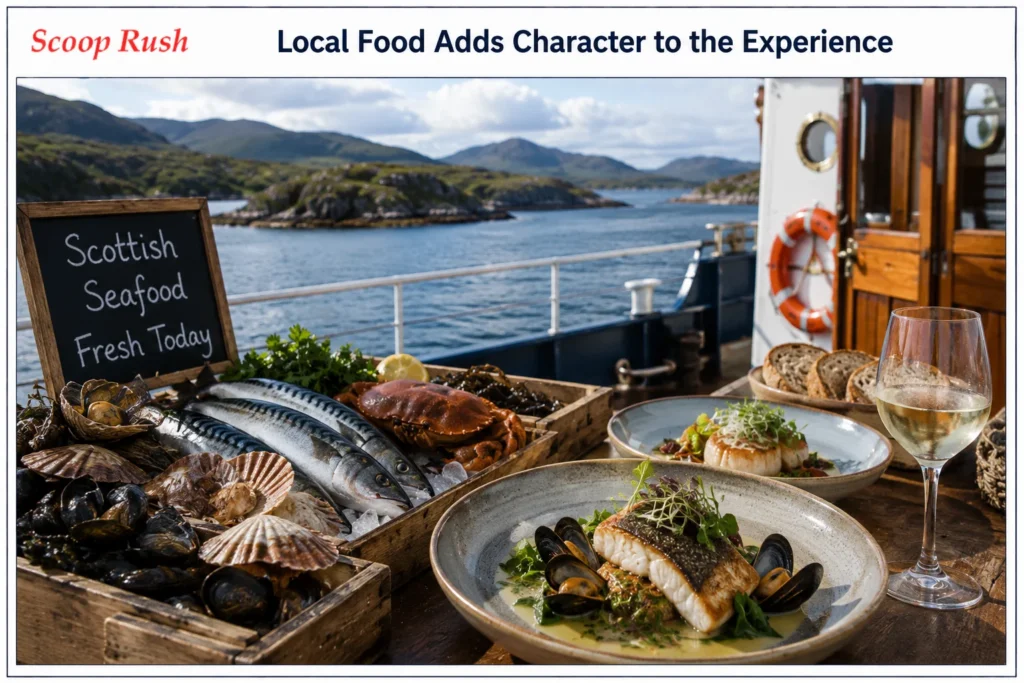
Food is another important part of Scotland’s small-ship experience. Operators often focus on fresh Scottish ingredients and local suppliers. Seafood can come from nearby fishermen or local fishmongers. Chefs can then prepare these ingredients onboard.
Some journeys may include locally sourced mussels, fish, and other produce. Certain trips also offer opportunities to catch mackerel with the crew. These experiences connect meals with Scotland’s coastal communities. They also give travellers a taste of the region’s local produce.
Coastal Villages Bring Travellers Closer to Local Life
Small ships can visit villages that large cruise ships often bypass. Tobermory and Plockton are examples of scenic coastal communities. Visitors can explore local shops, traditional pubs, and walking routes. These stops add cultural experiences to the journey.
Smaller groups can also make visits feel more relaxed. Travellers have more freedom to explore without large crowds. They can discover local traditions and enjoy the character of each community. This helps make the destination feel more personal.
The Caledonian Canal Offers Another Perspective
Some small vessels travel beyond Scotland’s open coastline. They can navigate suitable sections of the historic Caledonian Canal. The waterway crosses the Highlands and connects several major bodies of water. Its scenery provides another highlight for small-ship travellers.
Selected journeys can also include Loch Ness. However, access depends on the vessel, itinerary, and current conditions. Smaller boats can navigate sections that larger cruise ships cannot. This creates opportunities to combine famous Highland landscapes with quieter waterways.
Oban Plays an Important Role in Small-Ship Travel
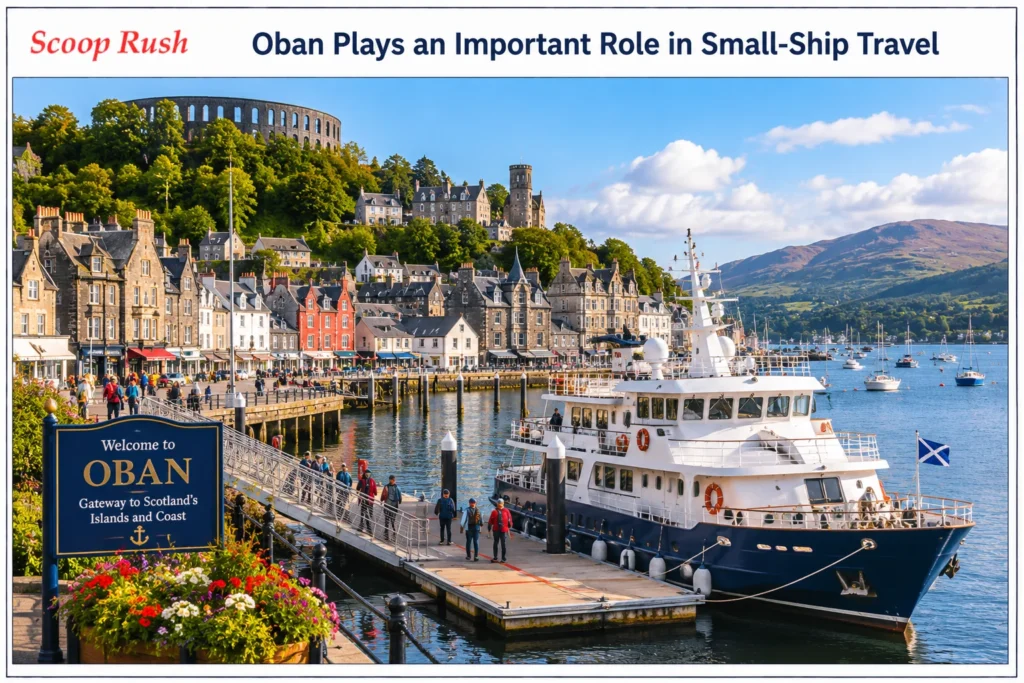
Oban has become closely associated with Scotland’s small-ship cruising industry. Its location provides access to western islands and coastal waterways. Several operators have developed journeys from the area. This has helped establish Oban as an important base for coastal exploration.
The growth of the industry has also encouraged investment in facilities. Custom-built pontoons have helped accommodate small vessels. Operators have expanded their fleets and developed new itineraries. As demand grows, Oban continues to connect travellers with Scotland’s remote coast.
Small Cruises Can Benefit Coastal Communities
Small-ship tourism can bring spending to remote Scottish communities. Visitors may use local restaurants, shops, guides, and attractions. Operators also purchase food and supplies from nearby businesses. This can help distribute tourism income beyond major cities.
However, responsible tourism remains important in remote areas. Coastal communities may have limited infrastructure and services. Wildlife habitats can also be sensitive to increased activity. Operators and visitors therefore need to respect local communities and natural environments.
Small Ships Offer a Different Kind of Luxury
Traditional cruise ships often focus on entertainment and large onboard facilities. Small vessels take a more personal approach to comfort. Their focus often includes quality food, scenery, wildlife, and service. The smaller setting can create a more exclusive atmosphere.
Some vessels provide comfortable cabins, ensuite facilities, and panoramic windows. Others offer additional amenities for relaxing during the journey. However, the main attraction is often the access they provide. Travellers can explore remote landscapes while enjoying a comfortable onboard experience.
Demand for Small Coastal Cruises Is Growing
More travellers now seek experiences that feel quieter and more authentic. Scotland’s coastline offers ideal conditions for this type of travel. Its islands, lochs, villages, and wildlife provide varied experiences. Small vessels can combine several of these attractions in one itinerary.
Operators continue to develop routes across Scotland’s coastal and inland waters. Weather and sea conditions can influence individual journeys. This means flexibility remains an important part of the experience. Travellers should also check each operator’s itinerary before booking.
Why Small-Ship Travel Stands Out in Scotland
Scotland small ship cruises offer a different way to experience the country’s remote coastline. Their smaller vessels can reach waterways and communities beyond many large cruise routes. They also provide closer connections with wildlife, food, and local culture. The journey becomes part of the destination itself.
The industry’s growth reflects changing travel preferences and Scotland’s unique geography. Travellers can explore dramatic landscapes without the atmosphere of a mega cruise. They can also discover quieter communities and remote islands. For visitors seeking a more intimate Scottish adventure, small ships offer an appealing option.
Conclusion
Scotland small ship cruises provide a slower and more personal way to explore Scotland. Travellers can discover remote islands, narrow waterways, wildlife, and coastal villages. Smaller groups also create a relaxed atmosphere onboard. Local food and community visits add further depth to the journey.
The appeal goes beyond the size of the vessels. These cruises combine comfort with access to places that larger ships often cannot reach. Responsible travel remains essential as demand grows. For travellers seeking Scotland’s quieter side, small-ship cruising offers a memorable coastal experience.
FAQs
1. What are Scotland small ship cruises?
They are cruises using compact vessels with small passenger groups. They focus on remote scenery, wildlife, food, and local experiences.
2. Why can small ships reach remote areas?
Their smaller size allows them to navigate narrower waterways and anchorages. Large cruise ships cannot access many of these locations.
3. Which places can these cruises visit?
Routes can include the Small Isles, St Kilda, Orkney, and the Firth of Clyde. Some itineraries also include Loch Ness and the Caledonian Canal.
4. What wildlife might passengers see?
Travellers may encounter otters, seals, dolphins, porpoises, and sea eagles. Some journeys may also encounter whales and orcas.
5. Are small cruises suitable for luxury travellers?
Yes. Some vessels offer comfortable cabins, ensuite facilities, quality dining, and personalised service. The smaller setting creates a quieter luxury experience.

