
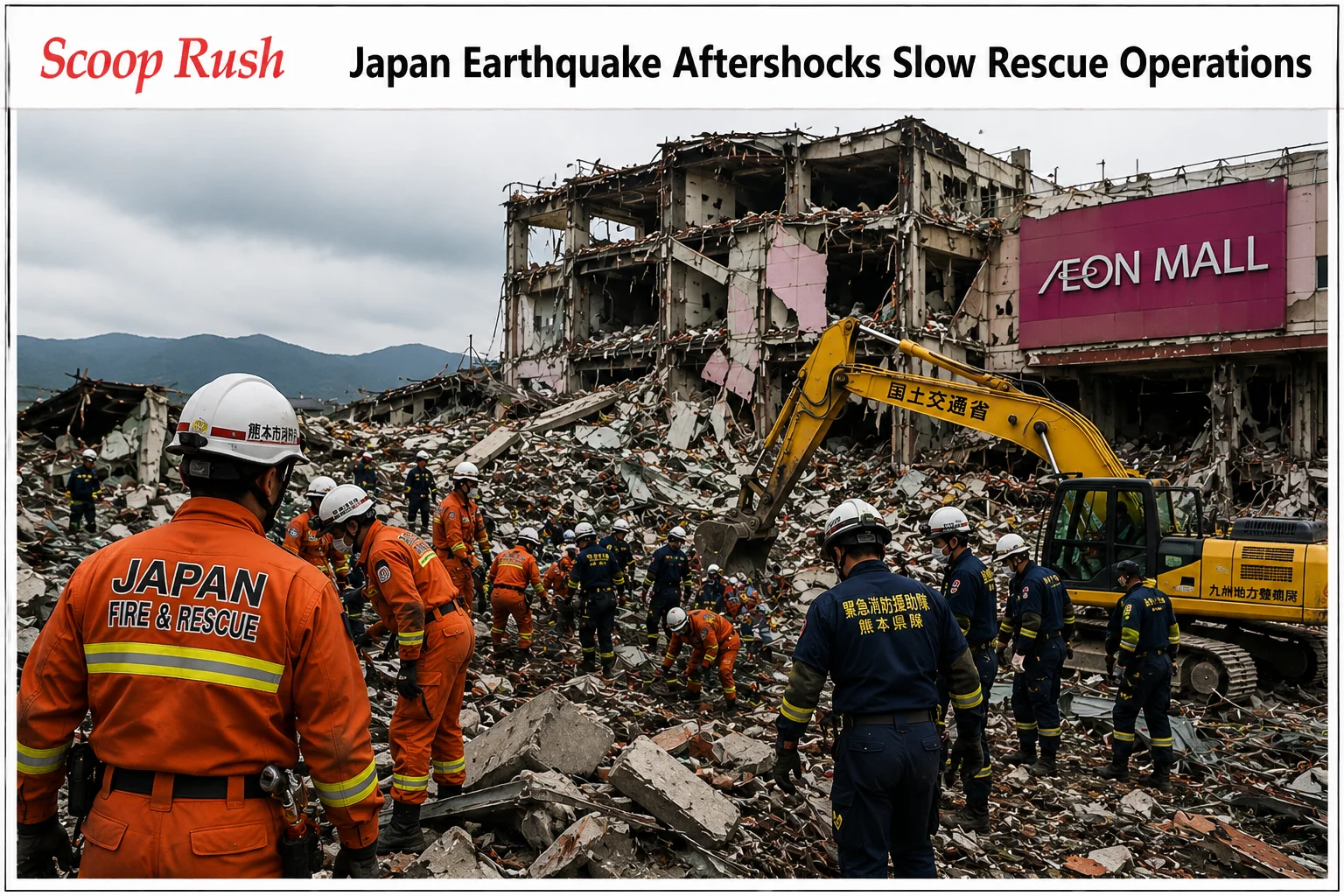
Japan earthquake aftershocks continue to shake southwestern Kyushu after Tuesday’s deadly quake. More than 100 aftershocks have struck the region. At least 13 people have died. Rescue teams still search for survivors under collapsed buildings. Officials also warn that more strong tremors could follow in the coming days.
The earthquake struck near Kumamoto on Kyushu Island with a shallow epicenter, making the shaking especially intense. Homes, roads, factories, and public buildings suffered heavy damage across the region. Authorities continue assessing losses while emergency teams restore essential services. Meanwhile, thousands of residents remain displaced as officials monitor the ongoing Japan earthquake aftershocks and warn people to stay prepared for additional strong tremors.
Japan Earthquake Aftershocks Continue Across Kyushu
The Japan Meteorological Agency reported more than 100 aftershocks after the powerful earthquake. The main quake measured 7.1 by Japan’s scale. The United States Geological Survey later estimated it at 6.8.
Officials urged residents to stay alert for another week. They warned that strong aftershocks could reach the highest seismic intensity in affected areas. Many families remain in evacuation centers because of the ongoing danger.
Japan Earthquake Aftershocks Slow Rescue Operations
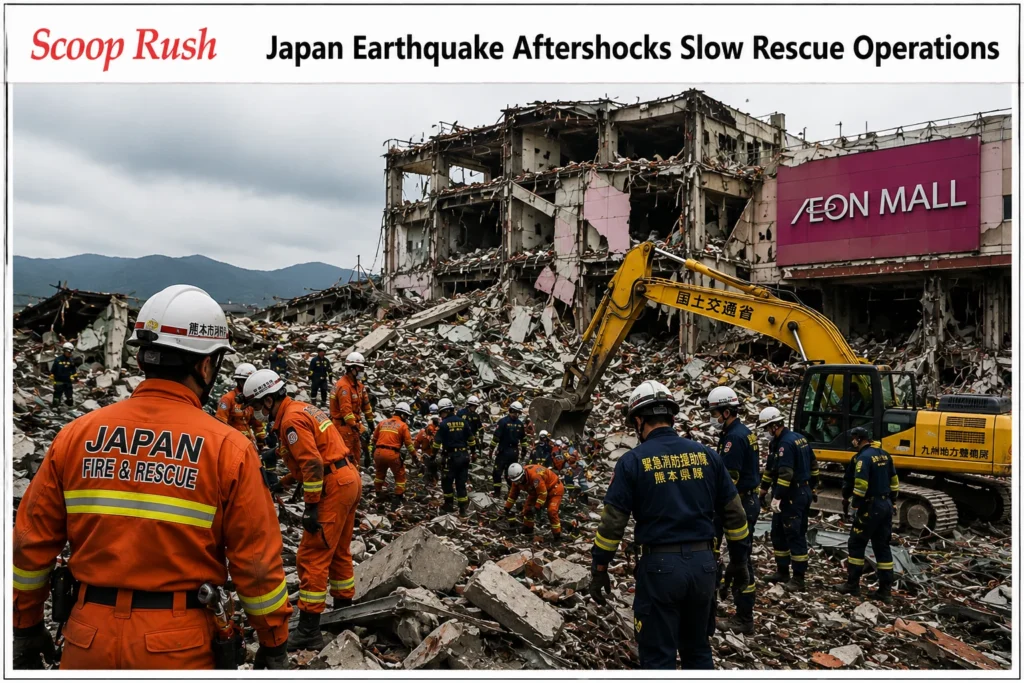
Rescue crews continue searching through damaged buildings in Kumamoto Prefecture. Teams work at a paper factory and the heavily damaged Aeon Mall in Kashima. Prime Minister Sanae Takaichi called the operation a race against time.
More than 4,600 emergency personnel now support rescue efforts. However, frequent aftershocks force crews to pause work. High temperatures near 35°C also increase the risk of heat-related illness.
Aeon Mall Explosion Leaves Deaths and Missing Workers
The Aeon Mall in Kashima suffered major structural damage after the earthquake. An explosion struck the shopping center about an hour later. Authorities continue investigating whether a gas leak caused the blast.
Three people died in the explosion. Several others suffered injuries. Three workers remain missing as rescue teams carefully remove debris. Company officials confirmed that customers had already evacuated before the explosion.
Factory Collapse Adds to the Rising Death Toll
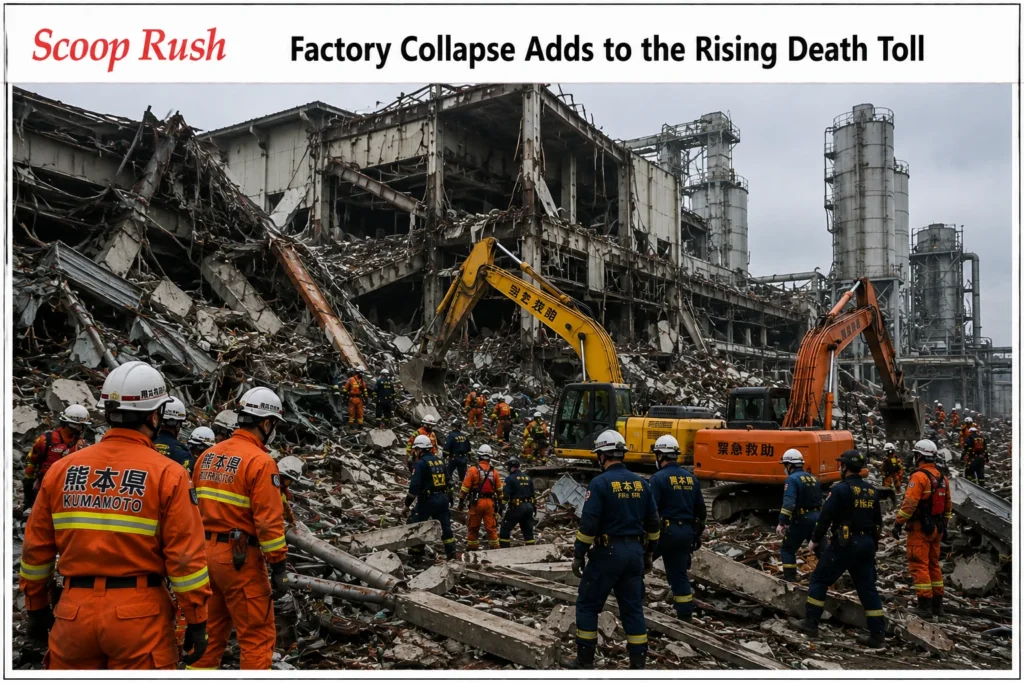
A paper factory in Yatsushiro City also suffered severe damage. The earthquake caused major structural failures across the site. Rescue teams continue searching damaged sections of the factory.
Several workers lost their lives in the collapse. Others remain missing as emergency teams continue recovery efforts. Officials expect operations to continue until every missing person receives an account.
Roads, Utilities and Transport Face Heavy Damage
The shallow earthquake damaged roads, bridges, and public infrastructure across Kumamoto Prefecture. Several buildings caught fire after the shaking. Historic landmarks also suffered structural damage.
More than 36,000 homes remain without electricity. Some communities also lost water services. Train operations stopped for safety inspections, while several companies temporarily suspended factory production.
Hospitals and Communities Face Growing Challenges
Hospitals near the epicenter treated dozens of injured people after the earthquake. Some medical facilities faced power outages and limited emergency capacity. Medical staff continue treating patients despite difficult conditions.
Thousands of residents remain inside evacuation centers across several prefectures. Authorities continue delivering supplies, including air conditioning units, to help people cope with the extreme summer heat.
Japan Earthquake Aftershocks Disrupt Businesses and Industry
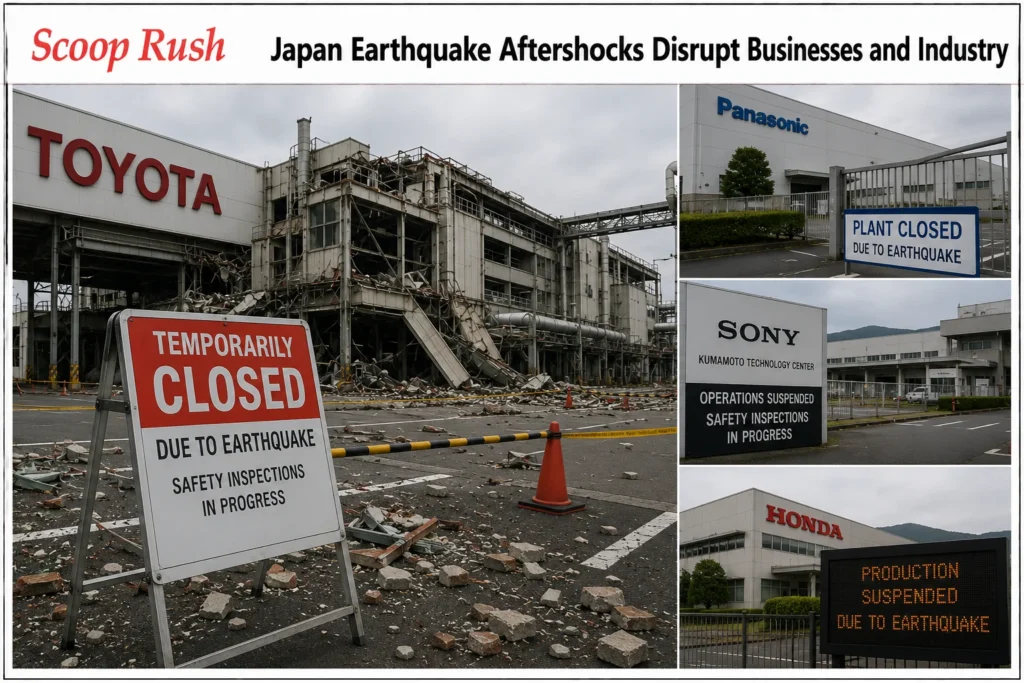
The powerful earthquake forced several major companies to suspend operations across Kyushu. Automobile, electronics, and manufacturing plants paused production to inspect facilities and protect workers. Many businesses also closed temporarily because of damaged infrastructure.
Some factories resumed limited operations after safety checks. However, others remained shut because of structural damage and disrupted supply chains. Officials continue inspecting industrial sites before allowing full production to restart.
Japan Earthquake Aftershocks Damage Historic Landmarks
The earthquake also damaged several historic and cultural sites across Kumamoto Prefecture. Parts of temples, shrines, and older buildings collapsed during the strong shaking. Crews secured dangerous areas to prevent further accidents.
Kumamoto Castle, which still undergoes repairs from the 2016 earthquake, suffered additional damage. Preservation experts will inspect affected landmarks before restoration work begins. Authorities hope to protect these important cultural sites from further aftershock damage.
Japan Earthquake Aftershocks Highlight Japan’s Seismic Risk
Japan experiences frequent earthquakes because it lies along the Pacific Ring of Fire. The country has advanced warning systems and strict building standards. These measures help reduce damage and save lives during major earthquakes.
Despite strong preparedness, powerful earthquakes still create serious challenges for communities. Officials encourage residents to follow emergency guidance and prepare disaster kits. The latest Japan earthquake aftershocks remind people that strong tremors can continue long after the main quake ends.
Officials Warn Japan Earthquake Aftershocks May Continue
The Japan Meteorological Agency expects aftershocks to continue during the coming days. Officials also warned about possible landslides in damaged areas. Residents should avoid unstable buildings whenever possible.
Japan experiences frequent earthquakes because it sits along the Pacific Ring of Fire. Even so, officials say this disaster caused widespread destruction across Kyushu. Rescue teams remain focused on finding survivors as recovery continues.
Conclusion
The Japan earthquake aftershocks continue creating serious challenges for rescue teams and local communities. More than 100 tremors have followed the deadly quake, slowing emergency operations across Kyushu. Thousands of residents remain displaced while officials monitor the risk of additional strong earthquakes.
Authorities continue searching for missing people despite dangerous conditions and extreme heat. Recovery efforts will likely continue for several days as emergency crews restore essential services and assess the full scale of the damage.
FAQs
1. What caused the Japan earthquake aftershocks?
Aftershocks naturally follow a major earthquake. They happen as the Earth’s crust adjusts after the main seismic event.
2. How many people died in the Japan earthquake?
Officials confirmed at least 13 deaths. Rescue teams continue searching for missing people, so the number may change.
3. Why did the Aeon Mall explode after the earthquake?
Authorities are investigating the cause. Early reports suggest a possible gas leak triggered the explosion.
4. Are more Japan earthquake aftershocks expected?
Yes. The Japan Meteorological Agency warns that strong aftershocks could continue for several more days.
5. How has the earthquake affected daily life in Kyushu?
The earthquake damaged roads, homes, and public services. Thousands remain in evacuation centers, while power and transportation disruptions continue.

