

King Charles Scotland Treasure is the remarkable story of how King Charles III helped save one of Scotland’s most significant historic estates. In 2007, Dumfries House faced an uncertain future after its owners decided to sell the property. The planned auction threatened to split up its priceless furniture and artwork, putting centuries of history at risk.
King Charles, then Prince of Wales, led a £45 million rescue that secured the estate and preserved its unique collections. Today, Dumfries House is more than a beautifully restored country house. It serves as a major visitor attraction, an education center, and the headquarters of The King’s Foundation, benefiting both local communities and future generations.
King Charles Scotland Treasure Rescue Saved Dumfries House
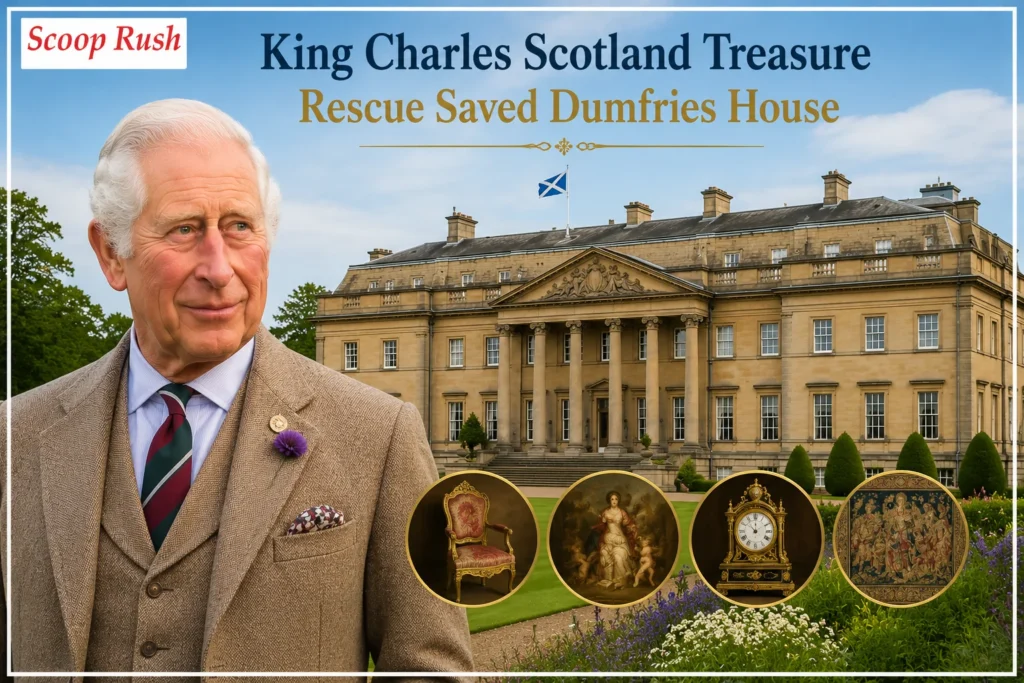
In 2007, the Marquess of Bute placed Dumfries House on the market because maintaining the estate had become increasingly expensive. The proposed sale included an auction of its valuable furniture, raising concerns that the historic collection would be scattered around the world.
Recognizing the importance of the estate, King Charles quickly organized a rescue plan. He brought together charitable organizations, financial supporters, and preservation experts to secure £45 million. The successful purchase kept the mansion and its original collections together, preserving an important part of Scotland’s cultural heritage.
King Charles Scotland Treasure Preserved Historic Collections
Completed in 1759, Dumfries House is one of Scotland’s finest examples of Palladian architecture. Designed by renowned Scottish architects Robert and John Adam, the mansion has remained remarkably unchanged for more than two centuries.
Its greatest treasure is the internationally recognized Thomas Chippendale furniture collection, considered one of the finest in the world. Visitors can also admire Flemish tapestries, antique clocks, historic paintings, decorative art, and several watercolor works created by King Charles III, adding another personal connection to the estate.
King Charles Scotland Treasure Became A Learning Center
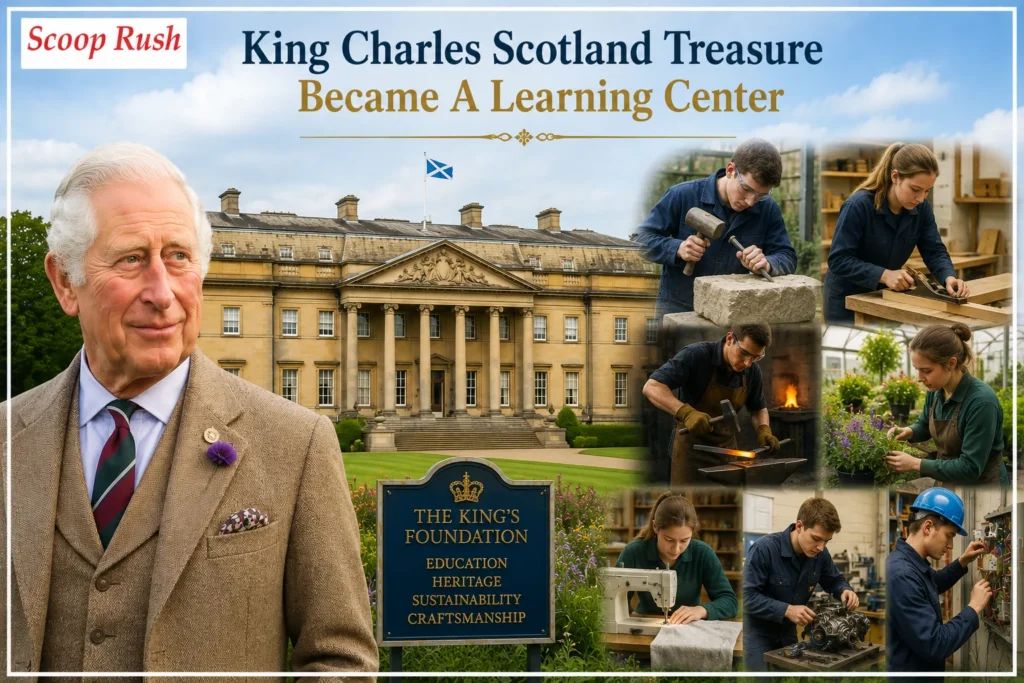
Saving Dumfries House protected far more than a historic building. The estate became the headquarters of The King’s Foundation, an organization dedicated to education, sustainability, heritage conservation, and traditional craftsmanship.
Students and apprentices receive practical training in stonemasonry, joinery, blacksmithing, carpentry, horticulture, textiles, and engineering. These hands-on programs help preserve traditional skills while creating valuable career opportunities for people of all ages.
King Charles Scotland Treasure Revived The Local Community
For many years, East Ayrshire faced economic challenges following the decline of its mining industry. The restoration of Dumfries House brought fresh investment and renewed interest in the surrounding region.
Today, thousands of visitors, students, and volunteers visit the estate every year. Their presence supports local hotels, restaurants, shops, and service providers while creating employment opportunities and encouraging sustainable economic growth across the community.
King Charles Scotland Treasure Welcomes Visitors Year Round
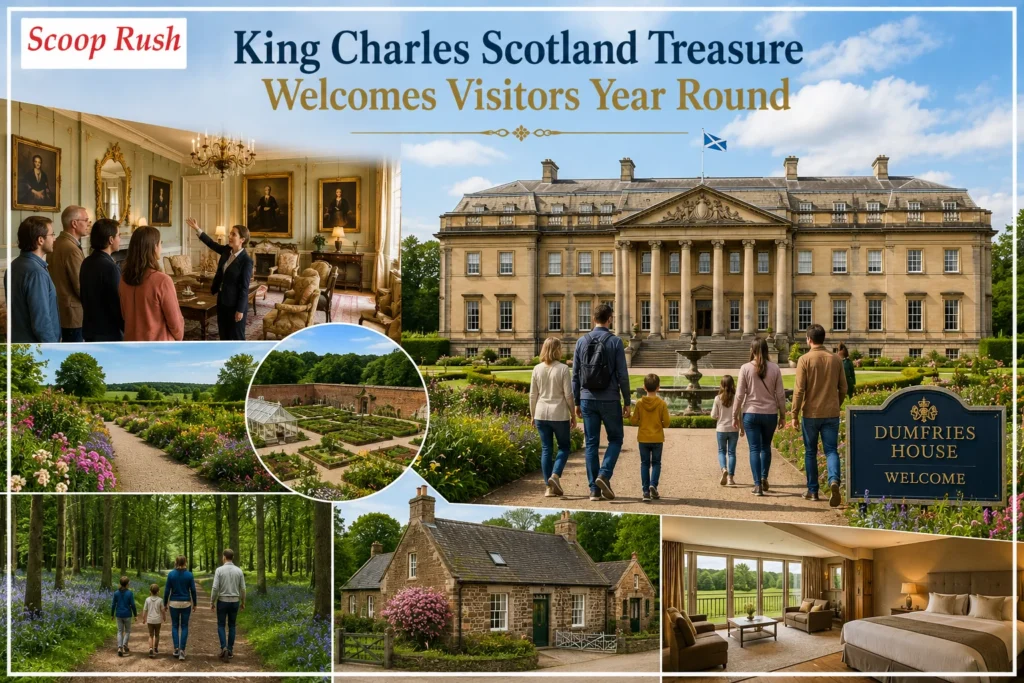
Dumfries House is now one of Scotland’s most welcoming heritage destinations. Guided tours allow visitors to explore elegant drawing rooms, dining halls, historic bedrooms, and carefully preserved interiors filled with remarkable furniture and artwork.
Outside the mansion, guests can enjoy landscaped gardens, woodland walking trails, the Queen Elizabeth II Walled Garden, and family-friendly outdoor spaces. Visitors looking for a longer experience can also stay in estate cottages or the Dumfries House Lodge.
King Charles Scotland Treasure Boosts Tourism
The remarkable rescue of Dumfries House has transformed it into an important tourism destination. Travelers from across the United Kingdom and overseas visit the estate to experience its architecture, collections, and peaceful surroundings.
The growing number of visitors continues to benefit nearby businesses. Local accommodation providers, cafés, restaurants, and independent shops all gain from the steady flow of tourists throughout the year.
King Charles Scotland Treasure Protects Traditional Crafts
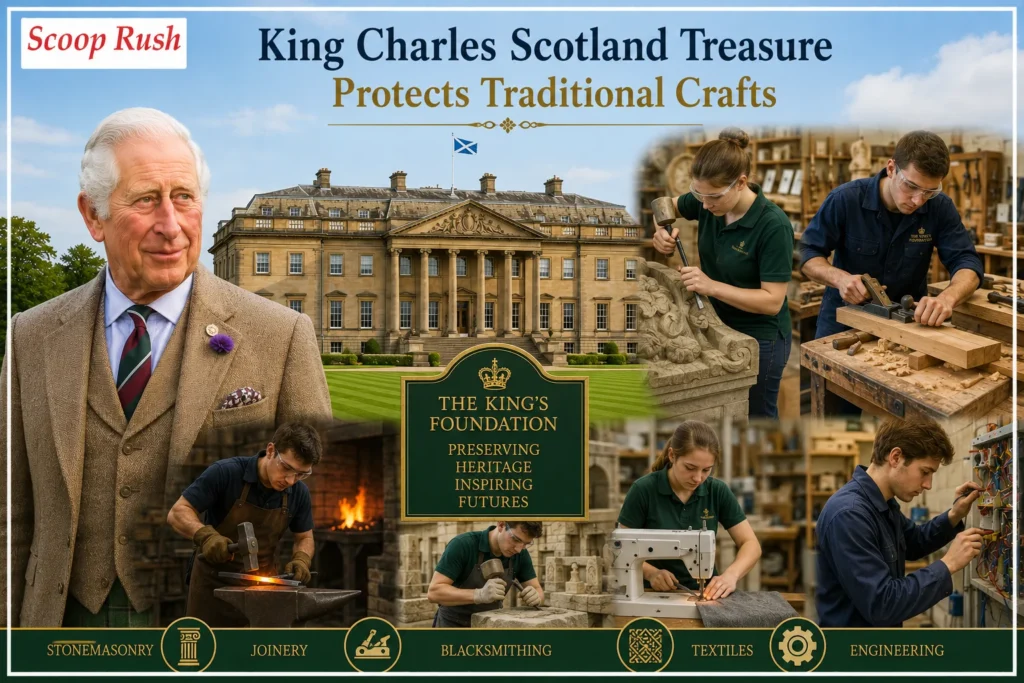
One of the estate’s greatest achievements is its commitment to preserving traditional building and craft skills. Through The King’s Foundation, experienced professionals teach techniques that have been passed down for generations.
Students learn practical restoration methods that help protect Britain’s historic buildings. These programs ensure that valuable craftsmanship remains available for future conservation projects while supporting careers in skilled trades.
King Charles Scotland Treasure Sets A Heritage Example
The success of Dumfries House has become an inspiring example for other heritage conservation projects. Rather than simply restoring an old building, the estate demonstrates how historic properties can become active centers for education, tourism, and community development.
Its balanced approach shows that protecting cultural heritage can also create long-term economic and social benefits. The model developed at Dumfries House continues to influence conservation efforts across Britain.
Why Dumfries House Matters Today
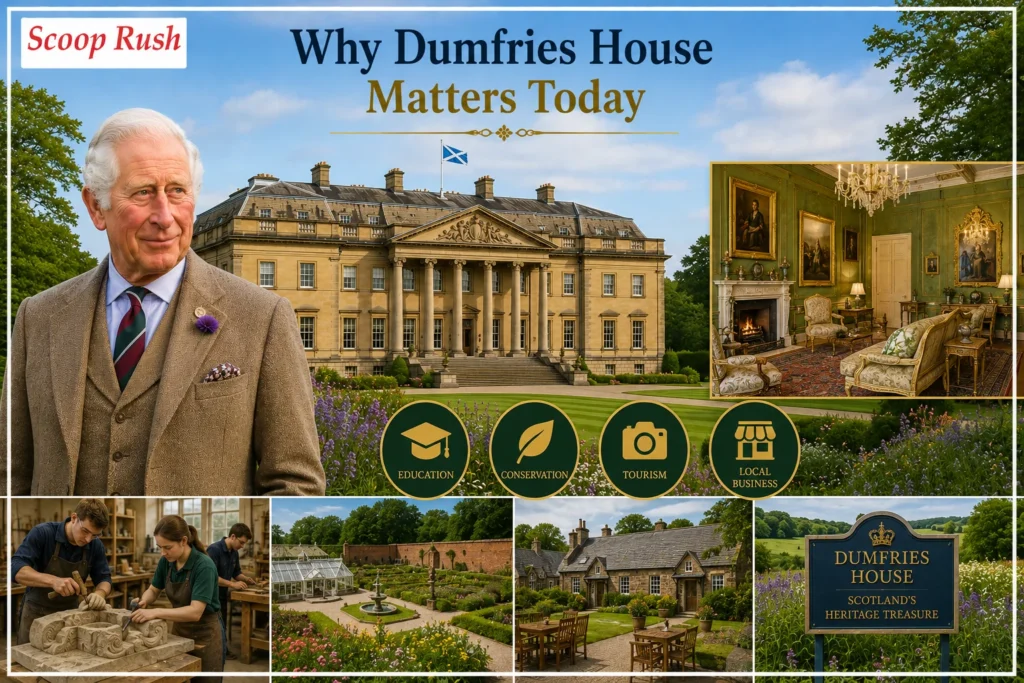
Nearly two decades after its rescue, Dumfries House stands as one of Britain’s greatest heritage success stories. Instead of disappearing into private collections, its historic interiors and priceless furniture remain accessible for everyone to enjoy.
The estate continues to support education, conservation, tourism, and local businesses while preserving Scotland’s architectural legacy. Its transformation proves that investing in heritage can create opportunities that extend far beyond preserving old buildings.
The Lasting Legacy Of King Charles’ Vision
King Charles’ decision to save Dumfries House was about more than protecting a historic mansion. It reflected a long-term vision of combining heritage preservation with education, sustainability, and community development.
Today, the estate continues to inspire visitors while helping people develop practical skills and appreciate Britain’s rich cultural history. Its ongoing success highlights how thoughtful conservation can benefit both present and future generations.
Conclusion
King Charles Scotland Treasure demonstrates how one timely decision preserved an irreplaceable part of Scotland’s history. Without the 2007 rescue, Dumfries House and its priceless collections could have been permanently separated. Instead, the estate has become a thriving center for heritage, education, and tourism.
Today, Dumfries House welcomes visitors from around the world while supporting local communities and protecting traditional craftsmanship through The King’s Foundation. Its remarkable transformation shows that preserving history can also create lasting opportunities for future generations.
FAQs
1. Why did King Charles save Dumfries House?
King Charles III led the rescue of Dumfries House in 2007 after it faced auction. His efforts ensured the historic mansion and its valuable collections remained together instead of being sold separately.
2. Where is Dumfries House located?
Dumfries House is located near Cumnock in East Ayrshire, Scotland. The historic estate covers around 2,000 acres and welcomes visitors throughout the year.
3. What makes Dumfries House unique?
The estate is famous for its elegant Palladian architecture and one of the world’s finest collections of Thomas Chippendale furniture. It also features historic artwork, beautiful gardens, and carefully preserved interiors.
4. What is The King’s Foundation?
The King’s Foundation is a charitable organization based at Dumfries House. It promotes education, sustainability, heritage conservation, and practical training in traditional crafts and skills.
5. Can visitors tour Dumfries House?
Yes. Visitors can book guided tours of the mansion, explore the gardens and walking trails, visit seasonal attractions, and even stay overnight in accommodation located on the estate.

