

England are no longer outsiders hoping for a miracle. The England World Cup 2026 Semi-Final appearance is the latest sign of a team that now expects to compete with the best in the world.
A decade ago, England were struggling to make an impact at major tournaments. The disappointment of Euro 2016, where they were eliminated by Iceland, summed up years of frustration. Today, the picture is completely different. England have become regular contenders, reaching the latter stages of major competitions with impressive consistency.
Their dramatic 2-1 extra-time victory over Norway has secured another World Cup semi-final place. More importantly, it has reinforced the belief that England belongs among football’s elite.
Why the England World Cup 2026 Semi-Final Matters
The significance of this achievement goes far beyond one tournament.
England’s recent record shows a remarkable transformation. Since Euro 2016, the men’s national team has reached at least the semi-finals in four of the last five major tournaments. Few nations can match that level of consistency.
This latest success comes after another intense knockout match. England defeated Norway 2-1 after extra time, with Jude Bellingham once again delivering when his team needed him most.
As a result, England now prepares for a huge semi-final showdown against Argentina. The match also brings the possibility of the first senior international meeting between England and Lionel Messi.
However, regardless of what happens next, England’s place among the world’s strongest football nations is no longer in doubt.
From Tournament Disappointments to Regular Contenders

For many years, England’s history in major tournaments was defined by near misses and heartbreak.
After reaching the semi-finals of the 1968 European Championship, England waited until the 1990 World Cup to reach another major tournament semi-final.
The years in between were filled with disappointment. England failed to qualify for several major competitions and repeatedly fell short when expectations were high.
Famous Heartbreaks That Defined Previous Generations
Many England supporters remember painful moments that shaped the team’s reputation.
The 1998 World Cup exit against Argentina remains one of the most discussed defeats in English football history.
Similarly, England’s quarter-final loss to Portugal in 2006 added another chapter to a long list of frustrations.
The defeat to Brazil in the 2002 World Cup also left lasting memories, particularly Ronaldinho’s famous free-kick that helped eliminate England.
Furthermore, failing to qualify for Euro 2008 represented another major setback for a nation with enormous football resources.
For decades, England struggled to convert talent into tournament success.
England’s Modern Golden Era
The current generation has changed that narrative.
England have now reached two European Championship finals and multiple World Cup semi-finals within a relatively short period.
A young England fan today has grown up watching the national team regularly challenge for trophies. That experience is very different from previous generations, who often expected disappointment.
Gareth Southgate’s Role in the Transformation
Much of England’s modern success began under former manager Gareth Southgate.
Southgate guided England to the Euro 2020 final, where they lost to Italy on penalties. He then led the team to another European Championship final in 2024, where Spain claimed a 2-1 victory.
Although trophies remained elusive, Southgate established a culture of consistency and belief.
Most importantly, he helped England become a team capable of competing deep into tournaments on a regular basis.
Thomas Tuchel’s Next Challenge
Now the responsibility belongs to Thomas Tuchel.
The German coach inherited a squad filled with world-class talent and strong tournament experience.
His task is straightforward but extremely difficult. He must take England from consistent contenders to champions.
The upcoming clash with Argentina represents the next major test in that journey.
Jude Bellingham and Harry Kane Leading the Charge
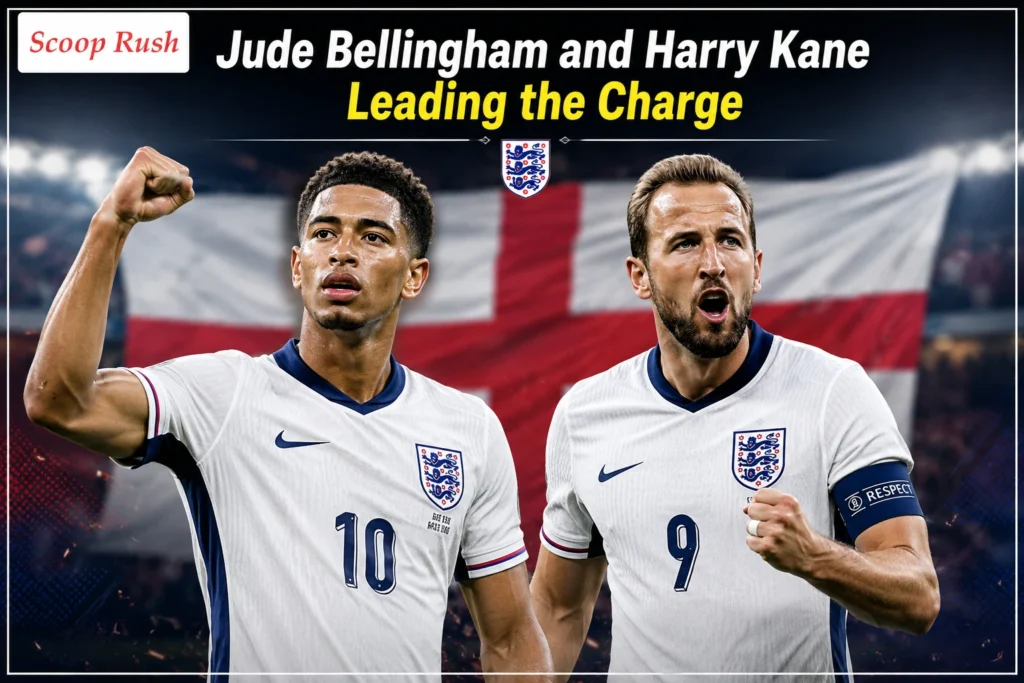
Two players have stood at the center of England’s World Cup campaign.
Jude Bellingham and Harry Kane have delivered crucial goals throughout the tournament.
Together, they have scored 11 of England’s 13 goals at the World Cup.
That level of contribution highlights their importance to the team’s success.
Jude Bellingham’s Growing Influence
Bellingham continues to establish himself as one of world football’s brightest stars.
His performances have combined technical quality, leadership, and a remarkable ability to influence important matches.
Against Norway, he once again played a decisive role as England secured their place in the semi-finals.
Despite his young age, Bellingham has become one of the team’s most important figures.
Harry Kane’s Leadership and Experience
Meanwhile, Harry Kane remains England’s captain and leading attacking threat.
His experience has proven invaluable throughout the tournament.
Kane has consistently delivered goals in major competitions and continues to lead by example.
However, one objective still remains.
The England captain is still chasing the major international trophy that would define his legacy.
How England Built a Sustainable Production Line of Talent
England’s rise has not happened by chance.
Behind the scenes, years of planning and investment helped create the foundations for today’s success.
The Elite Player Performance Plan
In 2011, English football introduced the Elite Player Performance Plan, commonly known as EPPP.
The initiative aimed to improve academy development across the country.
Significant investment allowed clubs to upgrade facilities, improve coaching standards, and create better environments for young players.
The plan was designed as a long-term project rather than a quick solution.
Today, many of England’s leading players have benefited from that system.
The Importance of St George’s Park
Another major step came with the opening of St George’s Park in 2012.
The national football center became the hub of England’s player development pathway.
Young players, coaches, and national teams gained access to world-class facilities.
Consequently, England established a more unified approach to developing talent.
The benefits are now visible throughout every level of the national team structure.
The New Generation Driving England Forward

England’s squad reflects the success of those development programs.
Several key players emerged through the academy system created during the last decade.
Young Stars Already Making an Impact
Jude Bellingham, Declan Rice, Bukayo Saka, and Elliot Anderson are among the standout names who developed within modern English football structures.
Their technical ability and tactical understanding have strengthened England’s competitiveness.
Furthermore, the talent pool extends far beyond the starting lineup.
England possesses enough depth to leave out several high-profile players while still competing at the highest level.
That level of competition within the squad demonstrates the strength of the current generation.
More Talent Waiting in the Wings
The production line continues to deliver exciting prospects.
Alex Scott, Josh King, Ethan Nwaneri, and Rio Ngumoha were included in England’s pre-tournament training group.
Meanwhile, Arsenal teenager Max Dowman has already attracted attention through his impressive achievements at youth level.
These emerging talents suggest England’s success could continue for years to come.
A Different Mentality in Major Tournaments
One of the biggest changes has been England’s mentality.
Previous generations often struggled to overcome adversity in major matches.
The current team appears far more resilient.
That resilience was evident during England’s 3-2 victory over Mexico earlier in the tournament.
Despite being reduced to ten men following Jarell Quansah’s dismissal, England found a way to win.
In past years, many supporters might have expected another painful exit.
Instead, this team responded positively under pressure.
That ability to remain composed during difficult moments is a hallmark of successful international teams.
England vs Argentina: The Next Big Test

The reward for defeating Norway is a semi-final against Argentina.
It promises to be one of the most anticipated matches of the tournament.
Argentina remains one of the strongest teams in world football and possesses vast experience on the biggest stage.
Additionally, the prospect of facing Lionel Messi adds even more excitement to the occasion.
England knows the challenge ahead will be immense.
However, they also understand that they have earned their place among the final four teams.
For a squad filled with confidence and quality, the opportunity is one they will embrace.
One Final Step Remains
England’s recent achievements deserve recognition.
The team has transformed from occasional challengers into regular contenders.
Semi-finals and finals are no longer rare events. Instead, they have become realistic expectations.
Nevertheless, the ultimate goal remains unfinished.
England has demonstrated consistency, resilience, and talent throughout this era.
They have built a strong foundation through youth development, coaching improvements, and long-term planning.
Now they need the trophy that would complete the story.
If England can overcome Argentina and continue their journey, they will move one step closer to achieving what generations of supporters have dreamed about.
For now, the England World Cup 2026 Semi-Final stands as further evidence that England belongs among football’s elite nations.
Conclusion
England’s rise over the last decade represents one of the most significant transformations in international football. From the disappointment of Euro 2016 to another World Cup semi-final appearance, the team has evolved into a consistent tournament force.
Strong leadership, improved player development, and the emergence of stars such as Jude Bellingham and Harry Kane have helped drive that progress.
The upcoming semi-final against Argentina presents another major challenge. However, England now approaches these occasions with belief rather than fear.
The foundations have been built. The talent is in place. The only thing missing is the trophy that would define this remarkable era.
FAQs
1. Who will England face in the FIFA World Cup 2026 semi-final?
England will face Argentina in the FIFA World Cup 2026 semi-final after defeating Norway 2-1 after extra time.
2. How many major tournament semi-finals have England reached since Euro 2016?
England have reached at least the semi-finals in four of the last five major international tournaments since Euro 2016.
3. Who are England’s key players at the 2026 World Cup?
Jude Bellingham and Harry Kane have been England’s standout performers, scoring the majority of the team’s goals in the tournament.
4. What is the Elite Player Performance Plan (EPPP)?
The EPPP is a long-term academy development program introduced in 2011 to improve youth coaching, facilities, and player development across English football.
5. Why is England’s current era considered historic?
England have consistently reached the latter stages of major tournaments, including multiple finals and semi-finals, making this one of the most successful periods in the national team’s history.

