
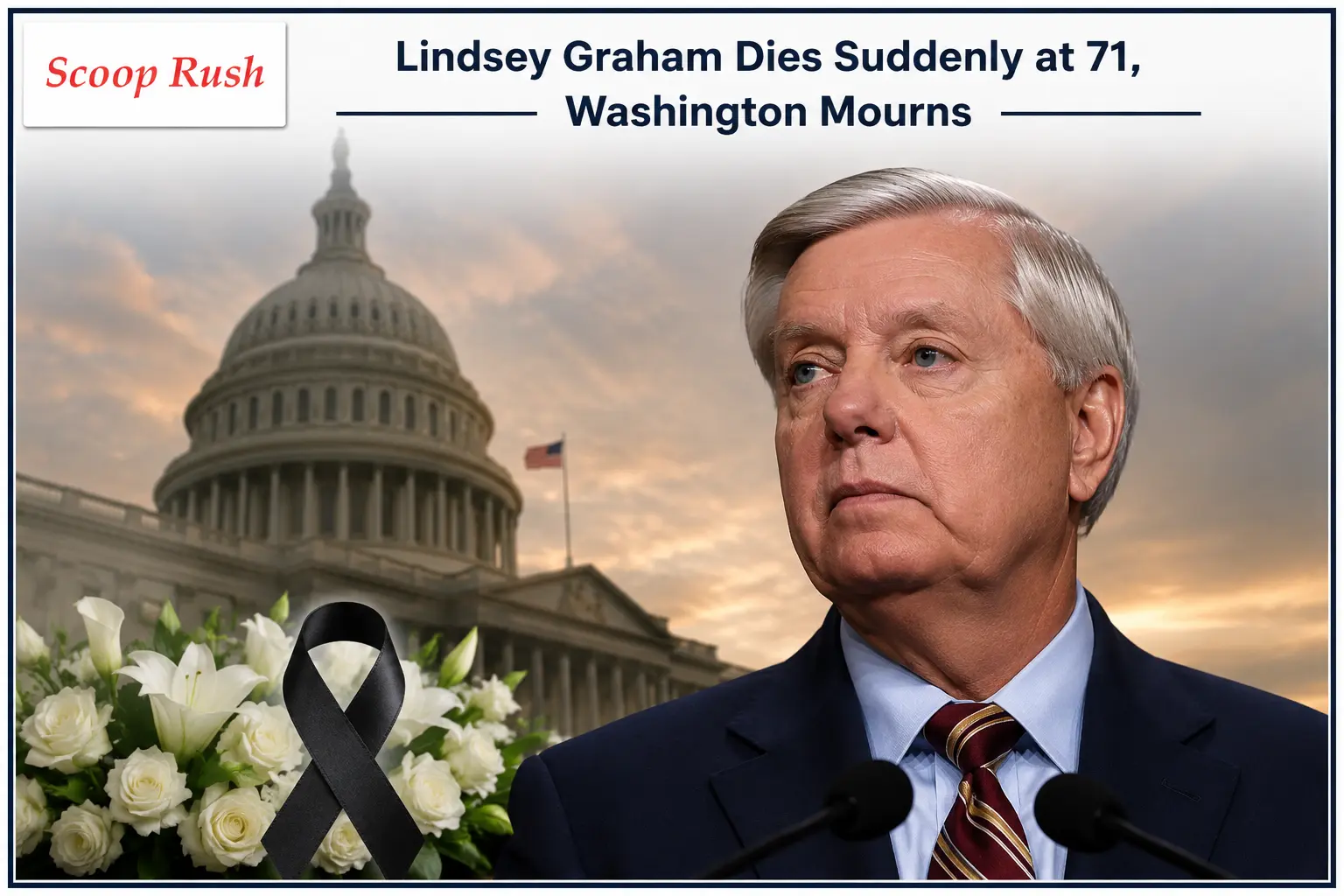
The Lindsey Graham death shocked Washington after the longtime Republican senator died suddenly on July 11 at age 71. His office said he suffered a brief and sudden illness. A preliminary medical examiner’s report identified an aortic dissection caused by arteriosclerotic cardiovascular disease as the cause of death. The South Carolina senator had returned from overseas just hours before his death.
Graham represented South Carolina in the U.S. Senate for more than two decades. During that time, he became one of the Republican Party’s most recognizable lawmakers. He earned national attention through his strong views on defense, foreign policy, and national security. His sudden passing surprised political leaders across the United States because he had remained active until his final day.
Lindsey Graham Death Came After Busy Overseas Schedule

Lindsey Graham spent his final days on an important overseas trip. He joined a bipartisan delegation at the NATO summit in Ankara, Turkey, where lawmakers discussed global security and international cooperation.
Before returning to Washington, Graham also traveled to Kyiv. He met Ukrainian President Volodymyr Zelenskyy to discuss the ongoing war with Russia. The visit marked his tenth trip to Ukraine since the conflict began. He planned to return to Senate work immediately after Congress resumed its session.
Lindsey Graham Death Followed Sudden Medical Emergency

Emergency crews responded to Graham’s Washington residence on Saturday evening after receiving a report of cardiac arrest. First responders performed CPR as they worked to save his life.
Later, Graham’s office released the preliminary findings from the medical examiner. Officials said an aortic dissection caused by arteriosclerotic cardiovascular disease led to his death. Investigators will complete toxicology and laboratory testing before issuing the final death certificate. Authorities have not indicated any evidence of suspicious circumstances.
Lindsey Graham Death Shocked Washington Leaders
News of Lindsey Graham’s death quickly spread throughout Washington. Lawmakers from both political parties expressed sadness and praised his decades of public service.
President Donald Trump described Graham as one of the greatest senators he had known. Senator Roger Wicker called him irreplaceable, while Senator Mike Lee remembered his humor and enthusiasm. South Carolina Senator Tim Scott said the state had lost a dedicated statesman and a trusted friend.
Lindsey Graham Death Ends Long Senate Career

Lindsey Graham entered the U.S. Senate in 2003 after serving several terms in the House of Representatives. Throughout his career, he remained active on issues involving national defense, military affairs, and the federal judiciary.
He also became one of the Senate’s most visible public figures. Graham frequently appeared on television to discuss major political events and foreign policy challenges. His influence extended beyond Congress through his close relationships with both American and international leaders.
Lindsey Graham Death Highlights His Foreign Policy Legacy
Foreign policy defined much of Lindsey Graham’s political career. He consistently supported military aid for Ukraine and often visited the country during its war with Russia.
Graham also backed Israel during conflicts in the Middle East and called for a tougher approach toward Iran. Supporters viewed him as a strong advocate for American security interests. Critics argued that his positions encouraged greater military involvement overseas. His foreign policy legacy remained one of the most debated parts of his career.
Lindsey Graham Death Marks End of Close Trump Alliance
Lindsey Graham did not always support Donald Trump. During the 2016 Republican presidential campaign, he openly criticized Trump’s leadership and political style.
However, their relationship changed after Trump entered the White House. The two developed a close political partnership and often worked together on major policy issues. Graham later became one of Trump’s strongest allies in the Senate and frequently defended the administration’s agenda.
Lindsey Graham Death Leaves Senate Seat Vacant
Graham planned to seek another Senate term in the 2026 midterm elections. His unexpected death now leaves South Carolina’s Senate seat temporarily vacant.
Governor Henry McMaster will appoint an interim senator to serve until the next Congress begins. State voters will later choose a permanent replacement according to South Carolina election law. Political leaders expect Republicans to remain strong contenders for the seat.
Lindsey Graham Death Leaves Lasting Political Legacy
Lindsey Graham spent more than thirty years in national politics. He built a reputation as an outspoken lawmaker who rarely avoided difficult debates. Friends respected his willingness to work across party lines, while critics often challenged his foreign policy positions.
One of his final priorities involved a bipartisan sanctions bill targeting Russia. Lawmakers say they will continue pushing the legislation forward in the weeks ahead. His influence on American foreign policy and national security debates will likely remain part of his political legacy for years.
FAQs
1. What caused Lindsey Graham’s death?
A preliminary report from the medical examiner found that Lindsey Graham died from an aortic dissection caused by arteriosclerotic cardiovascular disease. Officials will complete toxicology and laboratory testing before releasing the final death certificate.
2. What was Lindsey Graham doing before he died?
In the days before his death, Graham attended the NATO summit in Ankara, Turkey, with a bipartisan congressional delegation. He also visited Kyiv, where he met Ukrainian President Volodymyr Zelenskyy. After returning to Washington, he planned to resume Senate work and appear on NBC’s Meet the Press.
3. Why was Lindsey Graham considered a controversial politician?
Graham strongly supported military aid to Ukraine, backed Israel during conflicts in the Middle East, and called for tougher action against Iran. Supporters praised his national security stance, while critics opposed many of his foreign policy positions.
4. Who will replace Lindsey Graham in the U.S. Senate?
South Carolina Governor Henry McMaster will appoint an interim senator to fill the vacant seat. Voters will later elect a permanent replacement under the state’s election process.
5. What is Lindsey Graham’s political legacy?
Lindsey Graham served South Carolina in the U.S. Senate for more than twenty years. He became one of the Republican Party’s leading voices on defense, foreign policy, and national security. His close alliance with President Donald Trump also shaped many major political debates during his later years.

