
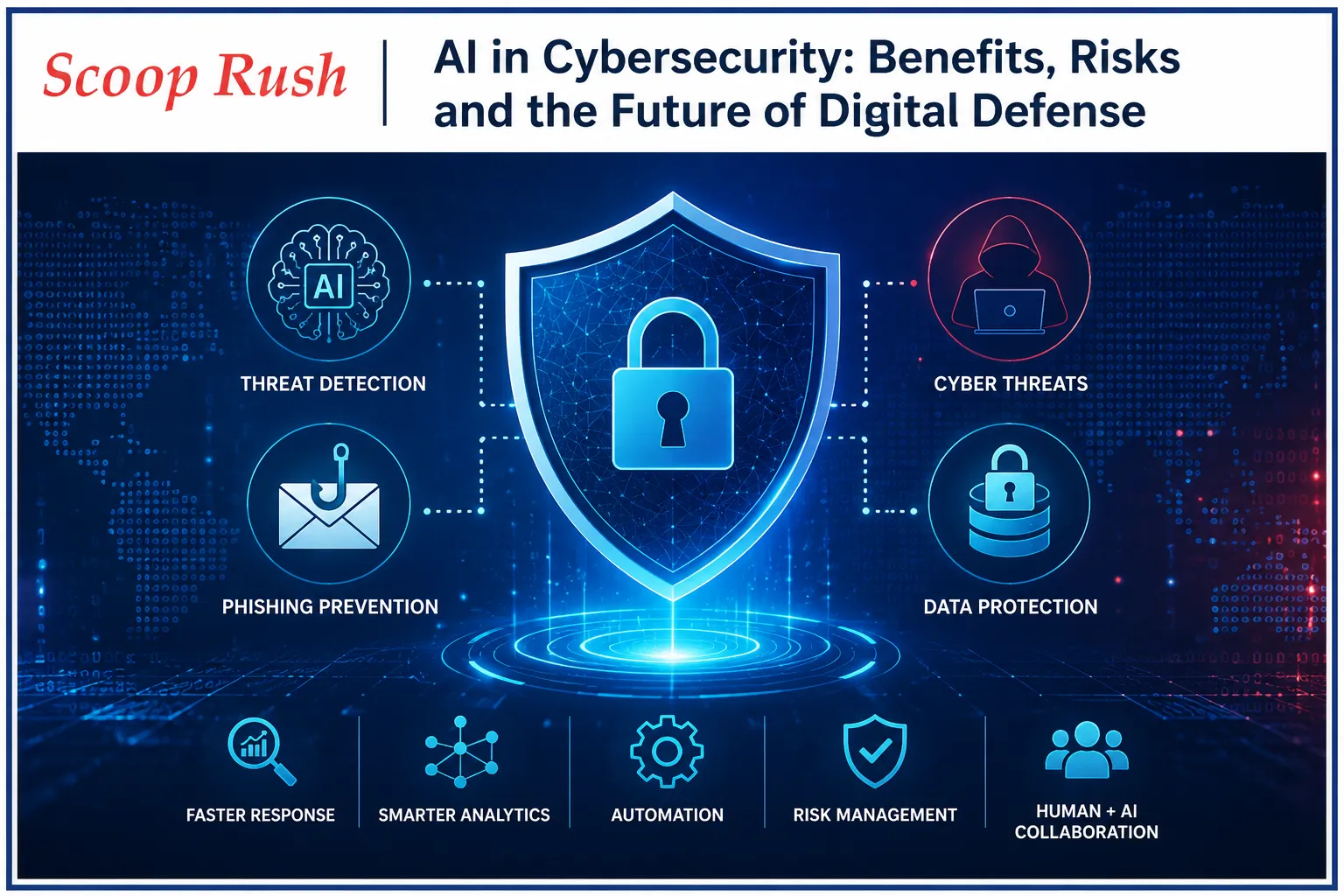
Artificial intelligence is changing the way organizations protect themselves from cyber threats. But as AI becomes more powerful, it is also creating new security challenges that could affect the future of digital defense.
Introduction: Why AI in Cybersecurity Matters Today
AI in cybersecurity is becoming one of the most important developments in modern digital protection. Organizations are using artificial intelligence to analyze large amounts of security data, identify suspicious behavior, improve response speed, and protect sensitive information.
However, AI is creating a new cybersecurity challenge because attackers are also using advanced technologies to improve their methods. This creates a growing balance between AI-powered defense and AI-driven threats.
Modern organizations generate huge amounts of security information every day. Human security teams cannot always process and analyze all this information quickly. Therefore, AI has become an important solution for detecting threats faster and helping cybersecurity professionals make better decisions.
The future of cybersecurity will depend on how organizations manage AI benefits while controlling new risks. Strong security practices, monitoring, and responsible AI use will become essential as this technology continues to expand.
What Is AI in Cybersecurity?
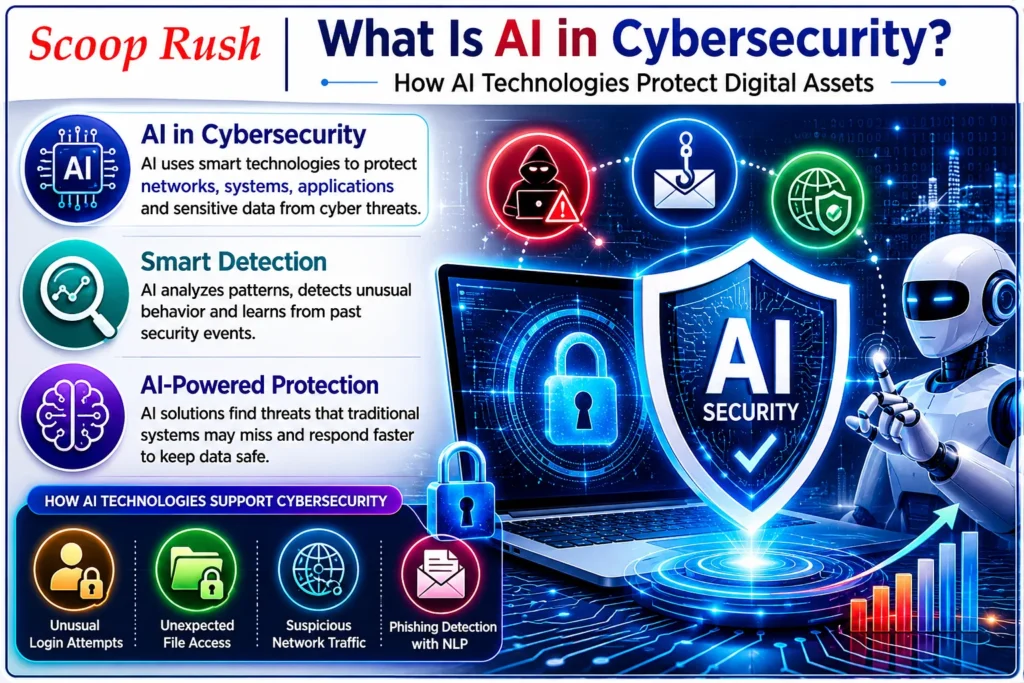
AI in cybersecurity refers to the use of artificial intelligence technologies to protect networks, systems, applications, and sensitive data from cyber threats.
Unlike traditional security systems that mainly depend on fixed rules, AI can analyze patterns, detect unusual behavior, and learn from previous security activities.
As a result, AI-powered security systems can identify threats that may not match traditional attack methods.
How AI Technologies Support Cybersecurity
Machine learning plays an important role in AI security because it allows systems to improve by studying previous cyber activity.
For example, AI can identify:
- Unusual login attempts
- Unexpected file access
- Suspicious network traffic
Additionally, natural language processing helps AI analyze emails, messages, and reports. This allows security systems to identify possible phishing attempts and suspicious communication.
Why AI Is Becoming Central to Security Work
Cyber attackers are becoming faster and more advanced. Meanwhile, organizations are managing cloud environments, remote employees, connected devices, and large digital systems.
Traditional cybersecurity methods often struggle to manage this increasing complexity. Therefore, AI is becoming important because it supports continuous monitoring and faster threat analysis.
How AI Helps Security Teams
AI helps security teams by:
- Detecting unusual activity quickly
- Reducing unnecessary security alerts
- Identifying new attack patterns
- Supporting faster incident response
- Improving data protection
However, organizations must carefully manage AI adoption because every new technology can introduce additional security risks.
The Benefits of AI in Cybersecurity
AI provides several advantages for modern cybersecurity teams. It improves threat detection, strengthens security operations, and helps organizations respond to attacks more effectively.
Faster Threat Detection and Response
One of the biggest benefits of AI in cybersecurity is speed.
Security teams often receive thousands of alerts every day. Therefore, identifying the most serious threats can become difficult.
AI can analyze large amounts of security data and highlight suspicious activities that require immediate attention.
For example, AI can detect unusual traffic patterns, abnormal account behavior, and possible malware activity.
As a result, security professionals can respond faster before attackers create more damage.
Detecting Threats Without Known Attack Signatures
Traditional security tools usually search for known attack patterns. However, attackers continue creating new techniques that may avoid traditional detection.
AI uses behavioral analysis to identify unusual actions instead of depending only on previously known threats.
This helps organizations detect:
- New phishing methods
- Unknown malware behavior
- Suspicious user activity
- Unusual access attempts
Therefore, AI provides a more flexible approach to modern cybersecurity.
Reducing Security Alert Fatigue
Security teams often handle a large number of alerts. Many of these alerts may not represent serious threats.
AI helps by filtering unnecessary warnings, grouping similar incidents, and providing additional context.
As a result, analysts can focus on important security problems and improve efficiency.
Improving Data Protection
Although AI creates new risks, it can also improve data protection when used correctly.
AI-powered systems can identify sensitive information, monitor data movement, and reduce accidental exposure.
For example, AI can detect when confidential information is shared through AI applications or when sensitive data appears in unsafe locations.
Therefore, AI can become both a security challenge and a security solution.
Using AI to Fight AI-Based Attacks
Cyber attackers are increasingly using automation and AI to improve their operations.
They can use AI to create more convincing phishing messages, automate attacks, and increase attack speed.
Because of this, defenders also need AI-powered solutions that can operate at a similar speed.
The Risks of AI in Cybersecurity
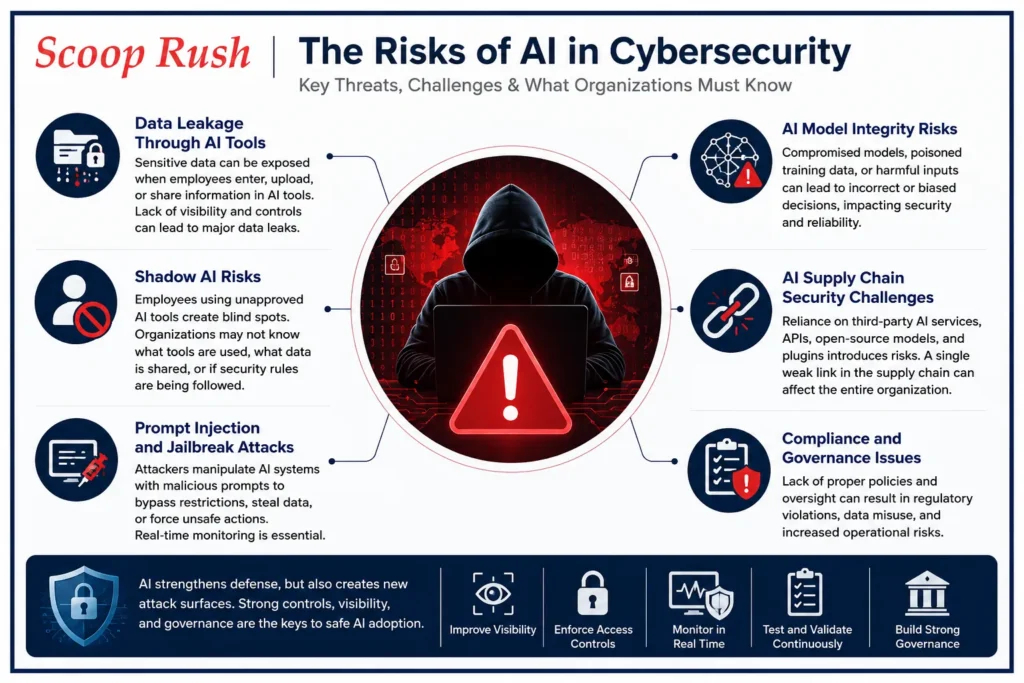
While AI improves cybersecurity, it also introduces new risks. Organizations need to understand these challenges before expanding AI adoption.
Data Leakage Through AI Tools
One major concern is sensitive information exposure through AI systems.
Employees may enter confidential information into AI applications, upload files, or share data without understanding how that information is processed.
Furthermore, AI integrations may store conversations or transfer information through external services.
Without proper controls, organizations may lose visibility into where their data goes.
Shadow AI Risks
Shadow AI happens when employees use AI tools without approval from security teams.
This creates problems because organizations may not know:
- Which AI tools employees are using
- What information is being shared
- Whether those tools meet security requirements
As a result, companies may face compliance problems and increased security risks.
Prompt Injection and Jailbreak Attacks
Generative AI systems can be manipulated through specially designed instructions known as prompt injection attacks.
Attackers may attempt to:
- Override AI instructions
- Extract sensitive information
- Force unsafe actions
The risk becomes higher when AI systems connect with business tools or automated workflows.
Therefore, organizations need real-time monitoring and security controls.
AI Model Integrity Risks
AI systems depend on models, training data, and algorithms to make decisions.
However, these models can become security risks if attackers manipulate the information used for training or create hidden weaknesses.
If an AI model learns from incorrect information, it may produce inaccurate security decisions.
Therefore, continuous testing and monitoring are necessary.
AI Supply Chain Security Challenges
Organizations often depend on external AI services, open-source models, plugins, and third-party platforms.
However, every external connection can create additional security concerns.
AI supply chain risks may appear through:
- Third-party AI providers
- External APIs
- Open-source AI models
- Integrated security tools
A weakness in one part of the AI ecosystem may affect organizations using that technology.
How Organizations Can Manage AI Security Risks
AI security requires more than simply adopting new tools. Organizations need a complete strategy covering AI usage, protection, and governance.
Improve Visibility Into AI Usage
Organizations cannot manage AI risks if they do not know where AI is being used.
Security teams need to identify:
- Which AI applications employees use
- What data AI systems access
- Which models and tools are connected
- Where security weaknesses exist
Better visibility helps organizations discover risky AI activity earlier.
Control Access to AI Tools
Not every user needs access to every AI application.
Access controls help organizations decide who can use AI tools and what information can be shared.
As a result, companies can reduce unnecessary exposure.
Protect AI Interactions in Real Time
Many AI security issues happen during normal usage.
Real-time protection can detect:
- Sensitive data sharing
- Unsafe prompts
- Suspicious AI behavior
- Attempts to manipulate AI systems
Test AI Systems Continuously
AI technology changes quickly. New weaknesses can appear as models and systems are updated.
Continuous testing helps organizations identify problems before attackers discover them.
Build Strong AI Governance
AI adoption requires clear rules and responsibilities.
Organizations need policies explaining:
- How employees should use AI tools
- What information should not be shared
- How AI decisions are reviewed
- Who manages AI security risks
The Future of AI in Cybersecurity
AI will continue changing cybersecurity as both defenders and attackers improve their capabilities.
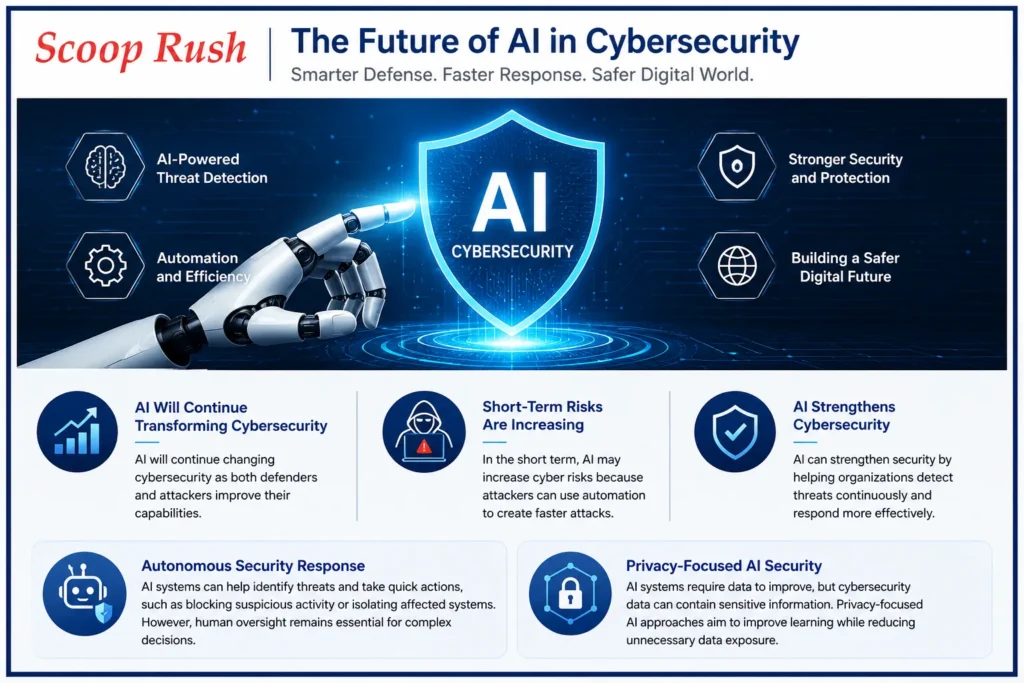
In the short term, AI may increase cyber risks because attackers can use automation to create faster attacks.
However, AI can also strengthen cybersecurity by helping organizations detect threats continuously and respond more effectively.
Autonomous Security Response
AI systems can help identify threats and take quick actions, such as blocking suspicious activity or isolating affected systems.
However, human oversight remains important because complex security decisions require professional judgment.
Privacy-Focused AI Security
AI systems require data to improve, but cybersecurity data can contain sensitive information.
Privacy-focused AI approaches aim to improve learning while reducing unnecessary data exposure.
AI Is Changing the Future of Cybersecurity
Artificial intelligence is becoming one of the most important technologies in modern cybersecurity.
It helps organizations detect threats faster, reduce workload, and protect digital systems more effectively.
However, AI also creates new challenges, including data leakage, model risks, and supply chain security issues.
Organizations that combine AI technology with human expertise and strong governance will be better prepared for future cyber threats.
Conclusion
AI in cybersecurity offers powerful opportunities for improving digital protection, but it also introduces new challenges that organizations cannot ignore.
The most effective approach is not simply adopting AI tools, but building strong security strategies around them. By improving visibility, controlling access, protecting AI interactions, and continuously testing systems, organizations can use AI safely.
Ultimately, AI will continue shaping cybersecurity by helping defenders respond faster while requiring stronger controls to manage emerging risks.
FAQs
What are the main benefits of AI in cybersecurity?
AI helps detect threats faster, analyze large amounts of data, reduce security alerts, improve response times, and protect sensitive information.
What are the biggest risks of AI in cybersecurity?
The biggest risks include data leakage, prompt injection attacks, shadow AI, model manipulation, third-party AI risks, and compliance challenges.
Can AI completely automate cybersecurity?
AI can automate many security tasks, but human experts are still required for complex decisions and threat analysis.
How does AI help prevent cyberattacks?
AI helps prevent attacks by detecting unusual behavior, analyzing patterns, identifying suspicious activities, and supporting faster response.
Why is AI security important?
AI security is important because both organizations and attackers are using AI. Strong security controls help reduce new cyber risks.

