

Have you ever reached mid-afternoon feeling mentally drained, sluggish, and unable to focus? According to new research, the solution might be far simpler than another cup of coffee. A five-minute walk every hour could help improve your mood, reduce fatigue, and make long days of sitting more manageable without any decline in work performance. This kind of small habit matters just as much as other overlooked health choices, from how often you should brush your hair to understanding the risks of taking too many supplements. As modern life grows increasingly sedentary, paying attention to everyday health concerns can make a meaningful difference in how you feel and function.
New Study Explores the Benefits of Regular Walking Breaks
The research was published in the British Journal of Sports Medicine and was led by Dr. Keith Diaz of Columbia University Medical Center. The study examined data from 19,342 adults who enrolled in the “Body Electric Challenge,” an interactive movement program connected to NPR’s Body Electric podcast series. Of those participants, 11,484 went on to begin a two-week walking intervention designed to reduce prolonged sedentary behavior. Researchers wanted to determine whether structured walking breaks could improve how people felt during the day and whether those breaks would interfere with productivity.
How the Body Electric Challenge Worked
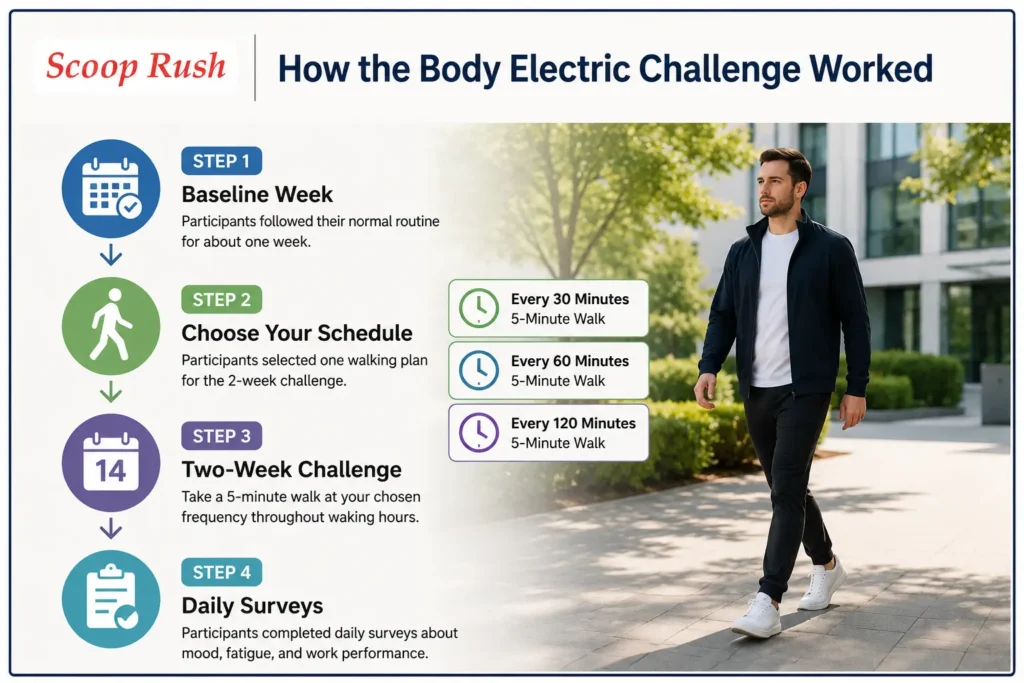
Participants first completed a baseline period of approximately one week while continuing their normal daily routines. After that, they selected one of three walking schedules:
- Five-minute walk every 30 minutes
- Five-minute walk every 60 minutes
- Five-minute walk every 120 minutes
Participants were asked to follow their chosen schedule throughout waking hours for two weeks. Notably, researchers did not use reminder apps or external prompts. Instead, participants managed the program independently in real-world conditions. To qualify, participants had to be adults who could access a smartphone and communicate in English. Individuals with certain recent injuries or exercise-related chest pain were excluded from participation. Meanwhile, participants with physical disabilities who could not walk were encouraged to engage in alternative forms of movement that worked for them.
Why Sedentary Lifestyles Have Become a Major Concern
Researchers noted that adults in many developed countries now spend approximately 11 to 12 hours per day sitting, and this trend has become a growing public health concern. Previous research has linked prolonged sedentary behavior to:
- Increased risk of chronic disease
- Poorer mental health outcomes
- Higher mortality risk
- Greater likelihood of metabolic health problems
Health authorities have long encouraged people to sit less and move more, but that advice does not clearly define how frequently people should interrupt sitting time. Consequently, many individuals struggle to translate broad recommendations into practical daily habits, and this study sought to address that gap directly.
Five-Minute Walk Every Hour Produced Meaningful Benefits
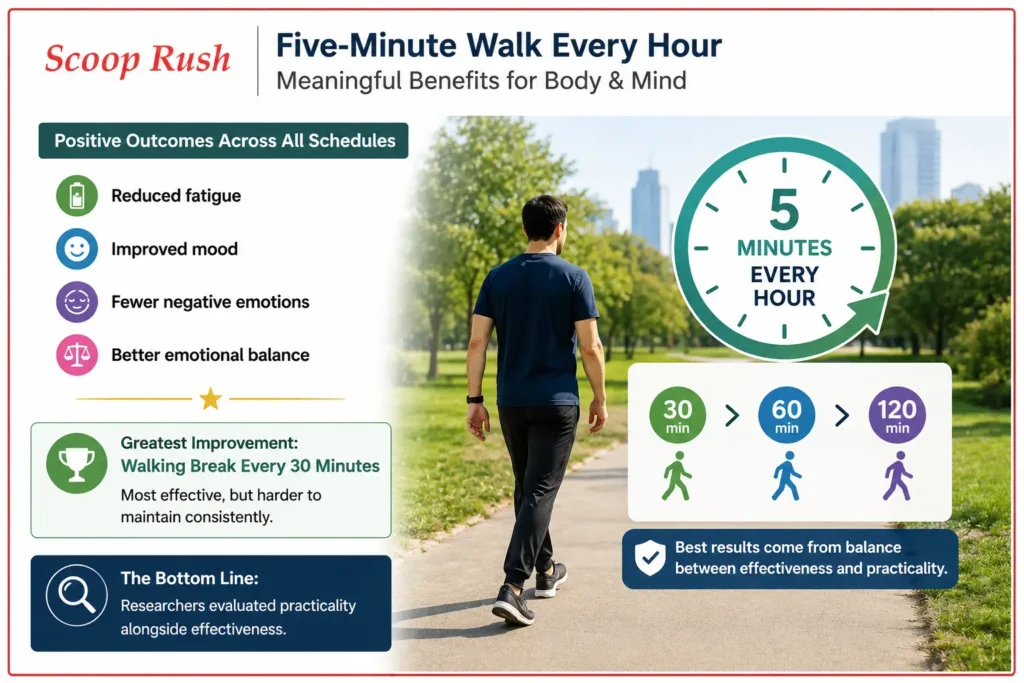
The findings revealed positive outcomes across all three walking schedules. Participants generally reported:
- Reduced fatigue
- Improved mood
- Fewer negative emotions
- Better emotional balance
However, the greatest improvements occurred among participants who took walking breaks every 30 minutes. Despite producing the strongest results, that schedule proved more difficult for many people to maintain consistently, so researchers looked beyond effectiveness alone and evaluated practicality.
Why the Hourly Walking Schedule Stood Out
Among the three options, the five-minute walk every hour emerged as the most balanced approach. Participants reported meaningful improvements in fatigue and mood while still finding the schedule manageable enough to follow consistently. Researchers considered this combination particularly important because public health recommendations must be realistic for everyday life. While more frequent breaks may offer greater benefits, people are less likely to maintain habits that feel disruptive, and the hourly approach appeared to strike an effective middle ground between results and sustainability.
Real-Time Check-Ins Revealed Immediate Mood Improvements
A subset of approximately 1,200 full-time employed participants provided additional data through text-message surveys during the study. These check-ins allowed researchers to examine how participants felt at specific moments throughout the day, and the findings were consistent. Immediately following walking breaks, participants reported:
- Lower levels of fatigue
- Improved mood
- Greater emotional well-being
These effects appeared across all three walking schedules. Researchers suggested that brief movement breaks could help people feel refreshed during long periods of sitting, much the way other health habits like protecting yourself from heat and humidity risks or following simple home cooling tips during hot weather help maintain physical comfort and alertness. Many workers experience energy slumps during afternoon hours, and regular walking breaks may provide opportunities to reset mentally, improve alertness, and interrupt extended sedentary periods.
Did Walking Breaks Hurt Productivity?
One common concern among employees is that stepping away from work could reduce productivity, and many workers worry that frequent breaks may be viewed negatively by supervisors or colleagues. The study’s findings provide reassurance. Participants across all three walking schedules reported that work performance remained stable or improved slightly during the intervention, and researchers found no evidence that movement breaks harmed work engagement. In fact, some participants reported modest improvements. According to Dr. Keith Diaz, movement breaks may help support attention, memory, executive function, and overall mental freshness, meaning that stepping away briefly may actually help workers maintain focus throughout the day rather than reducing effectiveness.
Adherence Rates Showed the Challenge of Frequent Breaks
An important aspect of the study involved measuring how consistently participants followed their assigned schedules. The results highlighted a key reality of behavior change. Compliance rates varied significantly:
- About 10% of participants fully complied with the 30-minute schedule
- About 24% fully complied with the hourly schedule
- About 46% fully complied with the two-hour schedule
These findings suggest that less frequent movement schedules are easier to maintain. However, researchers also observed that meaningful benefits occurred even when participants did not perfectly follow their plans, which may be encouraging for people who struggle to maintain strict routines. Rather than aiming for perfection, simply increasing movement throughout the day may still provide noticeable benefits.
What Makes This Study Different?
Many previous studies examining movement breaks have taken place in controlled laboratory settings where participants are closely monitored. This study differed in several important ways. First, it involved an exceptionally large sample of participants. Second, it took place in real-world environments where people managed their own schedules. Third, participants represented a diverse range of occupations, backgrounds, nationalities, physical abilities, and life circumstances. Because of these factors, the findings may better reflect how movement interventions actually work in everyday life.
Important Limitations to Consider
Despite its strengths, the study also has limitations worth noting. Researchers emphasized that outcomes were based largely on self-reported information. Participants described their own:
- Fatigue levels
- Mood
- Emotional state
- Work performance
The study did not directly measure physical health markers such as:
- Blood sugar levels
- Cardiovascular health
- Blood pressure
- Long-term disease risk
Additionally, the intervention lasted only two weeks, so researchers cannot yet determine whether these improvements would persist over months or years. Future studies will be needed to examine the long-term effects, just as ongoing research continues to explore broader health questions from the role of HPV vaccines in preventing cervical cancer deaths to breakthroughs like teplizumab for delaying type 1 diabetes onset.
Practical Ways to Add More Movement to Your Day
One reason the hourly walking strategy attracted attention is its simplicity. Unlike many wellness interventions, it does not require special equipment, gym memberships, or major schedule changes. People may be able to incorporate movement breaks through simple actions such as:
- Taking a short walk around the office
- Walking outdoors for five minutes
- Pacing during phone calls
- Holding walking meetings
- Walking around the home during work breaks
The goal is simply to interrupt prolonged sitting with brief periods of movement, and for many people, that may be a realistic first step toward a more active lifestyle — something that can matter just as much as other routine habits, like ensuring your work feels purposeful and sustainable.
What the Findings Mean for Public Health

Public health experts have spent years encouraging people to reduce sedentary behavior, but recommendations often remain broad and difficult to implement. This study offers a potentially practical guideline. A five-minute walk every hour appears capable of improving mood and reducing fatigue while fitting reasonably well into daily life. Although more research is needed to explore long-term health outcomes, the findings suggest that regular movement breaks may represent a simple and accessible strategy for millions of people who spend much of the day sitting.
Conclusion
The latest research from the British Journal of Sports Medicine suggests that taking a five-minute walk every hour may be one of the simplest ways to combat the negative effects of prolonged sitting. Participants in a large real-world study reported feeling less fatigued, more positive, and emotionally healthier after incorporating regular walking breaks into their day, and importantly, these benefits did not come at the cost of productivity. While walking every 30 minutes produced the strongest results, the hourly schedule emerged as the most practical balance between effectiveness and sustainability. For anyone who spends long hours sitting, a brief walk each hour could be a small change that delivers meaningful improvements in daily well-being.
FAQs
1. Does a five-minute walk every hour really improve mood?
According to the study, participants who took regular walking breaks reported improved mood, fewer negative emotions, and greater emotional well-being during the two-week intervention.
2. How often should I take walking breaks while working?
Researchers found that a five-minute walk every hour offered the best balance between effectiveness and practicality for most participants.
3. Can walking breaks improve productivity?
The study found no evidence that walking breaks harmed productivity. Participants generally reported stable or slightly improved work performance.
4. Is walking every 30 minutes better than every hour?
Walking every 30 minutes produced the greatest improvements in mood and fatigue. However, participants found it harder to maintain consistently than the hourly schedule.
5. Did the study measure physical health benefits?
No. The research focused primarily on self-reported fatigue, mood, and work performance. It did not directly measure blood sugar, heart health, or other physical health markers.

