
A New Era Begins for Type 1 Diabetes Treatment
What if a treatment could delay type 1 diabetes before symptoms even appear?
For the first time in more than a century of diabetes care, a medicine that targets the underlying immune attack behind type 1 diabetes is becoming available through the NHS in England and Wales. The treatment, called teplizumab, has been approved for eligible patients with early-stage type 1 diabetes and could delay the need for insulin treatment by an average of two to three years.
The decision has been described as a landmark moment by diabetes experts, researchers, and patient advocacy groups. Rather than waiting for symptoms to appear and then managing the condition with insulin, teplizumab offers a chance to intervene earlier and slow the disease process itself.
This breakthrough represents a major shift in how type 1 diabetes is understood, detected, and treated.
What Is Teplizumab?
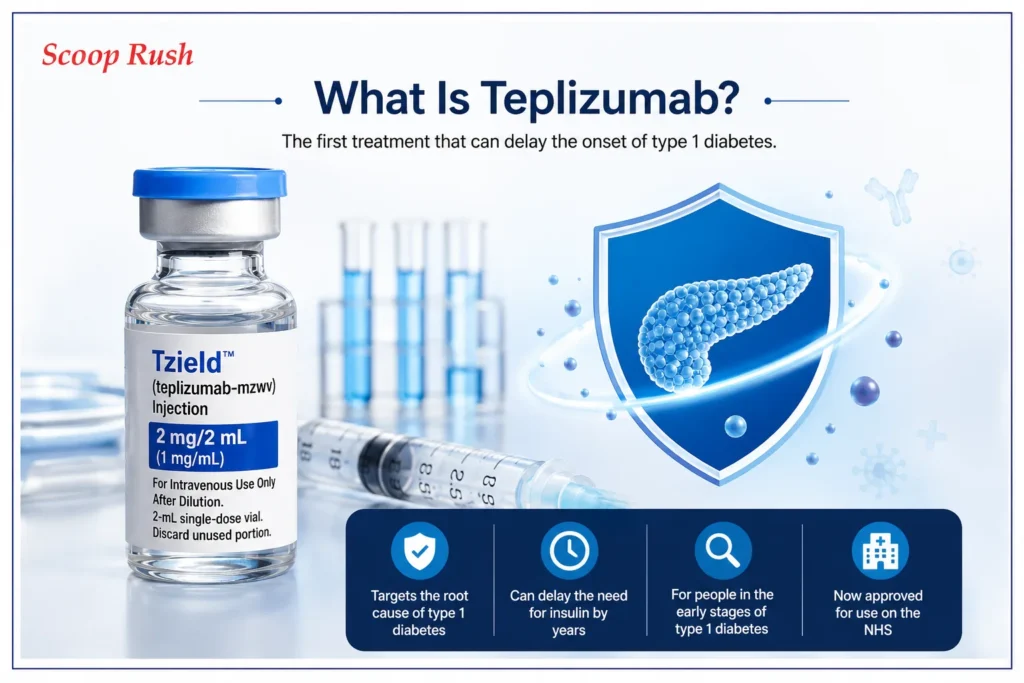
Teplizumab, also known by the brand name Tzield, is the world’s first approved immunotherapy designed to delay the progression of type 1 diabetes.
Unlike insulin, which replaces a hormone the body can no longer produce adequately, teplizumab targets the autoimmune process responsible for the disease.
Type 1 diabetes develops when the immune system mistakenly attacks insulin-producing beta cells in the pancreas. Over time, this damage reduces the body’s ability to produce insulin, eventually leading to symptoms and the need for lifelong insulin therapy.
Teplizumab works by modifying the immune response and helping protect remaining beta cells. As a result, it can slow the progression from early-stage disease to symptomatic type 1 diabetes.
How Teplizumab Works
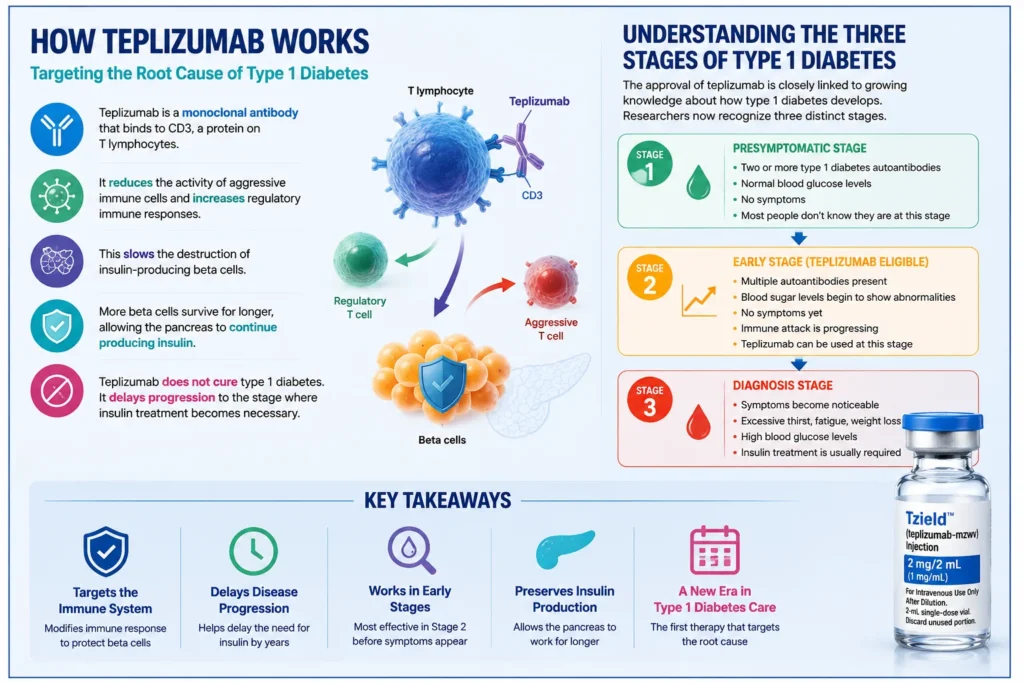
Targeting the Root Cause of Type 1 Diabetes
Teplizumab is a monoclonal antibody that binds to CD3, a protein found on T lymphocytes, which are immune cells involved in the autoimmune attack.
Researchers believe the therapy helps reduce the activity of aggressive immune cells while increasing regulatory immune responses. This process slows the destruction of insulin-producing beta cells.
Because more beta cells survive for longer, the pancreas can continue producing insulin for an extended period.
Importantly, teplizumab does not cure type 1 diabetes. Instead, it delays progression to the stage where insulin treatment becomes necessary.
Understanding the Three Stages of Type 1 Diabetes
The approval of teplizumab is closely linked to growing knowledge about how type 1 diabetes develops.
Researchers now recognize three distinct stages of the disease.
Stage 1
At this stage, people have two or more type 1 diabetes autoantibodies but maintain normal blood glucose levels.
There are no symptoms, and most individuals do not know they have begun developing the condition.
Stage 2
People continue to have multiple autoantibodies, but blood sugar levels begin showing abnormalities.
Symptoms are still absent. However, the immune attack is progressing.
This is the stage where teplizumab can be used.
Stage 3
This is the traditional diagnosis stage.
Symptoms such as excessive thirst, fatigue, weight loss, and elevated blood glucose levels become noticeable. Insulin treatment is usually required at this point.
Who Is Eligible for Teplizumab?
NICE has approved teplizumab for adults and children aged eight years and older with stage 2 type 1 diabetes.
To qualify, individuals generally need:
- Two or more pancreatic islet autoantibodies
- Evidence of dysglycemia or rising blood sugar levels
- No clinical symptoms requiring insulin treatment
- Age eight years or older
The treatment is intended for people whose disease has been identified before symptoms develop.
This highlights the growing importance of early detection and screening programs.
Why Early Detection Matters
One of the biggest challenges in type 1 diabetes care is that many people are diagnosed only after symptoms appear.
By that stage, substantial beta-cell damage has already occurred.
Researchers have shown that autoantibodies can appear years before symptoms develop. Detecting these markers creates an opportunity to identify people at risk and intervene earlier.
Studies such as the ELSA study for children and the T1DRA study for adults are helping identify individuals who may benefit from therapies like teplizumab.
These screening programs use simple blood tests to detect diabetes-related autoantibodies before symptoms emerge.
Clinical Trial Results Show Significant Benefits
The approval of teplizumab is supported by clinical trial evidence showing meaningful delays in disease progression.
In a randomized, placebo-controlled trial involving high-risk individuals aged eight years and older, researchers evaluated the impact of a single 14-day course of treatment.
The results were significant.
Over a median follow-up period of 51 months:
- 43% of people receiving teplizumab progressed to stage 3 diabetes
- 72% of those receiving placebo progressed to stage 3 diabetes
The median time to diagnosis was:
- 48.4 months with teplizumab
- 24.4 months with placebo
Researchers later extended the follow-up period to nearly 77 months.
In that analysis:
- Median time to diagnosis reached 59.6 months for teplizumab recipients
- Median time to diagnosis was 27.1 months for placebo recipients
- Half of treated participants remained diabetes-free
- Only 22% of placebo recipients remained diabetes-free
These findings demonstrate that teplizumab can significantly delay the onset of clinical type 1 diabetes.
How the Treatment Is Given
A 14-Day Infusion Course
Teplizumab is administered through intravenous infusion.
Patients receive one infusion daily for 14 consecutive days.
The treatment requires careful monitoring and dose adjustments over the first several days.
Healthcare providers also recommend premedication with medications such as:
- Acetaminophen or nonsteroidal anti-inflammatory drugs
- Antihistamines
- Antiemetics when necessary
The goal is to reduce potential side effects and improve treatment tolerability.
Potential Benefits Beyond Delaying Insulin
The most obvious benefit of teplizumab is extra time before insulin becomes necessary.
However, experts believe the advantages may extend further.
More Time Without Daily Diabetes Management
Managing type 1 diabetes requires constant attention.
Patients often need to:
- Monitor blood glucose levels
- Count carbohydrates
- Adjust insulin doses
- Respond to changing blood sugar levels throughout the day
Delaying this responsibility can significantly improve quality of life for children and families.
Reduced Risk of Diabetic Ketoacidosis
Early detection and planned disease management may help reduce the risk of diabetic ketoacidosis (DKA), a potentially life-threatening complication that can occur at diagnosis.
Better Preparation for the Future
Families gain valuable time to learn about diabetes, prepare emotionally, and develop management strategies before symptoms emerge.
Real-Life Experiences Highlight the Impact
The importance of teplizumab is reflected in the experiences of families affected by type 1 diabetes.
Imogen, diagnosed with early-stage type 1 diabetes through the ELSA screening study, received teplizumab through an early access program.
Her family described the treatment as an opportunity to preserve more years of childhood before the daily demands of diabetes management become necessary.
Similarly, Dima Boichak participated in a research study after a family member was diagnosed with type 1 diabetes.
Following treatment with teplizumab, his family viewed the therapy as a chance to extend his time without insulin dependence and allow him to enjoy a more typical childhood experience.
These stories illustrate why many families consider the treatment transformative despite the challenges of undergoing two weeks of infusions.
Risks and Side Effects of Teplizumab
Like all immunotherapies, teplizumab carries potential risks.
The most commonly reported side effects include:
- Lymphopenia
- Rash
- Leukopenia
- Headache
Cytokine Release Syndrome
One important safety consideration is cytokine release syndrome (CRS).
Reported symptoms may include:
- Fever
- Nausea
- Fatigue
- Headache
- Muscle pain
- Joint pain
- Elevated liver enzymes
Most CRS events occurred during the first five days of treatment.
Healthcare providers monitor patients carefully throughout therapy.
Infection Risks
Because teplizumab affects the immune system, treatment should not be given to people with serious active infections.
Blood tests are also used to monitor white blood cell counts and liver function before and during treatment.
NHS Rollout and Access
Following NICE approval, NHS England has 90 days to establish services for eligible patients.
NHS Wales has 60 days to make the treatment available.
Access decisions in Scotland and Northern Ireland will be determined through separate processes.
Advocacy groups continue to push for equitable access across all parts of the United Kingdom.
Why Experts Call This a Turning Point
For decades, type 1 diabetes treatment has focused almost entirely on insulin replacement after symptoms appear.
Teplizumab changes that approach.
Instead of responding after substantial damage occurs, healthcare providers can potentially intervene earlier and slow disease progression.
Researchers view this as the beginning of a broader movement toward disease-modifying therapies.
The approval also strengthens arguments for national screening programs capable of identifying people during the earliest stages of type 1 diabetes.
Many experts believe early detection and intervention could eventually become standard practice.
The Future of Type 1 Diabetes Care
Teplizumab is not a cure.
However, it represents the first approved treatment capable of altering the course of type 1 diabetes before symptoms appear.
Researchers continue studying how long the benefits last and why some people respond better than others.
At the same time, ongoing work in screening, immunotherapy development, and disease prevention continues to advance.
For patients and families affected by type 1 diabetes, teplizumab offers something that was previously unavailable: time.
And for the broader diabetes community, it signals the beginning of a new chapter in treatment and prevention.
Conclusion
The approval of teplizumab marks one of the most significant developments in type 1 diabetes care in recent decades. By targeting the autoimmune process responsible for the disease, the therapy can delay progression from stage 2 to symptomatic type 1 diabetes by an average of two to three years.
While the treatment is not suitable for everyone and requires early identification through autoantibody testing, it offers a groundbreaking opportunity to intervene before symptoms appear. As screening programs expand and awareness grows, teplizumab may help reshape how type 1 diabetes is diagnosed, managed, and potentially prevented in the future.
FAQs
1. What is teplizumab used for?
Teplizumab is an immunotherapy used to delay progression from stage 2 type 1 diabetes to symptomatic stage 3 diabetes in eligible adults and children aged eight years and older.
2. How much can teplizumab delay type 1 diabetes?
Clinical studies found that teplizumab delayed the onset of clinical type 1 diabetes by an average of two to three years, although results vary between individuals.
3. Who qualifies for teplizumab treatment?
People aged eight years or older with stage 2 type 1 diabetes, multiple diabetes-related autoantibodies, and abnormal blood sugar levels may be eligible.
4. Does teplizumab cure type 1 diabetes?
No. Teplizumab does not cure type 1 diabetes. It slows disease progression and delays the need for insulin treatment.
5. How is teplizumab administered?
Teplizumab is given through intravenous infusion once daily for 14 consecutive days under medical supervision.

