
The Truth About Hair Brushing: Are You Doing More Harm Than Good?
For generations, people have followed the advice to brush their hair 100 times a day for stronger, shinier locks.Stories about people with famously long hair helped popularize this beauty rule. However, modern research and hair experts now say that this long-standing belief is more myth than fact.
In reality, brushing too much may actually damage your hair rather than improve it. The right brushing routine depends on your hair type, texture, condition, and even the tools you use.
So, how often should you brush your hair? The answer is more nuanced than most people think.
Why Understanding How Often to Brush Your Hair Matters
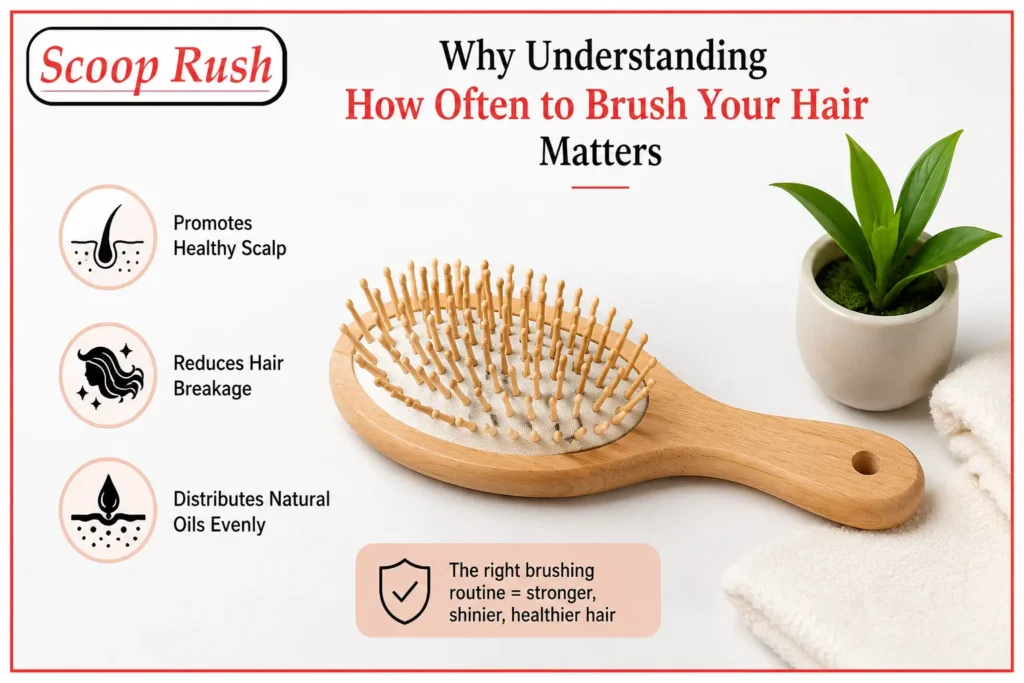
Hair brushing seems like one of the simplest parts of a beauty routine. Yet many people unknowingly cause breakage, split ends, frizz, and unnecessary hair loss through improper brushing habits.
Experts agree that brushing serves several important purposes. It helps distribute natural oils, removes shed hair, detangles knots, stimulates the scalp, and improves the overall appearance of hair. However, these benefits only occur when brushing is done correctly.
As research into hair structure continues to grow, scientists, hairstylists, and hair care specialists are learning that different hair types require different approaches.
The History Behind the 100 Strokes a Day Myth
The recommendation to brush hair 100 times each day has been passed down through generations. Many people associate the practice with Victorian beauty standards and stories about women with exceptionally long hair.
Historical accounts often mention women spending significant time grooming their hair. During the Victorian era, long hair was considered an important symbol of femininity. Hair care routines involved combing to remove debris and then brushing with natural-bristle brushes to distribute oils.
One frequently repeated story involves Empress Elisabeth of Austria (Sisi), whose hair reportedly reached extraordinary lengths. However, experts suggest that claims about her brushing her hair 100 times nightly are likely part of a beauty myth rather than documented fact.
While brushing was important for hygiene and appearance in earlier centuries, modern science does not support the idea that excessive brushing improves hair growth or health.
What Science Says About Hair Brushing
Does Brushing Help Hair Grow Faster?
One of the most common misconceptions is that frequent brushing stimulates hair growth.
According to hair experts, brushing does not directly make hair grow faster. Although gentle brushing can increase blood circulation in the scalp, there is no evidence showing that additional brushing speeds up hair growth.
Many people continue to believe otherwise. However, research and expert observations consistently show that hair growth is influenced by biological factors rather than the number of brush strokes.
Can Too Much Brushing Damage Hair?
Research suggests that excessive brushing can contribute to hair damage.
Scientists studying hair fibers found that repeated grooming creates stress on individual strands. Over time, this stress may lead to internal cracks, split ends, and breakage.
Researchers observed that hair strands subjected to repeated combing and brushing eventually developed structural damage. Hair that was already vulnerable showed signs of splitting more quickly, while healthier hair resisted damage longer but still experienced wear after repeated stress.
Importantly, experts emphasize that force matters more than the exact number of strokes. Aggressive brushing causes far more damage than gentle grooming.
Furthermore, researchers note that brushing-related damage is usually minor compared with chemical treatments, heat styling, bleaching, or other intensive hair procedures.
Benefits of Brushing Your Hair
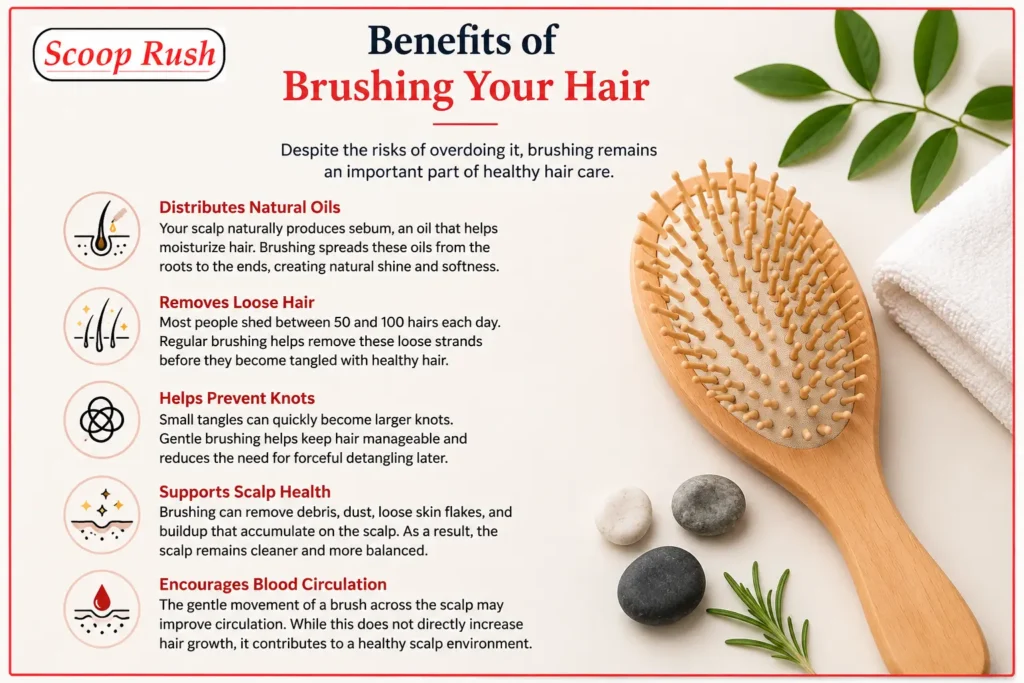
Despite the risks of overdoing it, brushing remains an important part of healthy hair care.
Distributes Natural Oils
Your scalp naturally produces sebum, an oil that helps moisturize hair. Brushing spreads these oils from the roots to the ends, creating natural shine and softness.
Removes Loose Hair
Most people shed between 50 and 100 hairs each day. Regular brushing helps remove these loose strands before they become tangled with healthy hair.
Helps Prevent Knots
Small tangles can quickly become larger knots. Gentle brushing helps keep hair manageable and reduces the need for forceful detangling later.
Supports Scalp Health
Brushing can remove debris, dust, loose skin flakes, and buildup that accumulate on the scalp. As a result, the scalp remains cleaner and more balanced.
Encourages Blood Circulation
The gentle movement of a brush across the scalp may improve circulation. While this does not directly increase hair growth, it contributes to a healthy scalp environment.
Benefits of Combing Your Hair
Combing offers advantages that differ from brushing.
Gentle Detangling
Wide-tooth combs create less friction than many brushes. Therefore, they are often better for removing knots without causing excessive stress.
Better Product Distribution
Combs help spread conditioner, leave-in products, and treatments evenly through the hair.
Curl Definition
For curly and coily hair, combing while hair is wet and conditioned helps define texture while minimizing frizz.
Reduced Breakage
Using a comb carefully from the ends upward can prevent unnecessary pulling and snapping.
How Often Should You Brush Your Hair?
Straight Hair
People with straight hair can typically brush once or twice daily.
Morning brushing helps smooth hair and distribute oils. Evening brushing can remove tangles accumulated throughout the day.
However, excessive brushing may overstimulate oil production and increase breakage.
Wavy Hair
Wavy hair generally benefits from brushing once or twice a day as well.
Because waves can become tangled more easily than straight hair, regular but gentle brushing helps maintain smoothness without disrupting texture.
Curly Hair
Curly hair requires a different strategy.
Experts recommend avoiding daily brushing. Instead, detangle curls when the hair is wet and coated with conditioner. Dry brushing often creates frizz and disrupts curl patterns.
Coily Hair
Coily hair should typically be detangled only when wet and moisturized.
Wide-tooth combs, detangling brushes, or even fingers are often preferred. Over-brushing can increase breakage and dryness.
Fine or Fragile Hair
Fine hair needs extra care.
A light brushing once daily or every other day is usually enough. Soft-bristle brushes and wide-tooth combs help minimize stress on delicate strands.
Thick or Textured Hair
People with thick or textured hair may not need frequent brushing.
Instead, occasional brushing for styling and detangling every few days may be sufficient.
How to Brush Your Hair Correctly
The technique you use can be just as important as how often you brush.
Start at the Ends
Always begin near the ends of your hair and work upward gradually.
Starting at the roots can push knots downward and tighten tangles, increasing the risk of breakage.
Work in Sections
Dividing hair into smaller sections gives you better control. It also reduces pulling and tension.
Use Gentle Strokes
Hair experts consistently warn against aggressive brushing.
If your brush gets stuck, stop and gently work through the knot instead of forcing it through.
Add Moisture When Needed
Detangling products, conditioners, or leave-in treatments can help brushes and combs glide through hair more easily.
Should You Brush Wet Hair?
The answer depends on your hair type.
For Straight and Wavy Hair
Many experts recommend avoiding brushing when hair is wet because wet strands are more vulnerable to stretching and breakage.
If detangling is necessary, use a wide-tooth comb carefully.
For Curly and Coily Hair
Curly and coily hair often benefits from detangling only when wet and conditioned.
Moisture and conditioner reduce friction and help preserve curl structure.
Choosing the Right Brush for Your Hair Type
Different hair textures benefit from different tools.
Fine or Straight Hair
Soft-bristle brushes or boar-bristle brushes help distribute oils while minimizing damage.
Thick or Wavy Hair
Paddle brushes and cushioned brushes work well for smoothing thicker textures.
Curly or Coily Hair
Wide-tooth combs, detangling brushes, and finger detangling remain the preferred options.
Signs You May Be Brushing Too Much
Your hair often provides clues when your routine needs adjustment.
Watch for:
- Increased breakage
- Split ends
- Excessive frizz
- Scalp sensitivity
- More hair shedding than usual
If these signs appear, reducing brushing frequency and using gentler techniques may help.
Why Hair Type Matters More Than Rules
One of the biggest lessons from modern hair science is that no single brushing routine works for everyone.
Researchers studying textured hair have found that curly and coily hair behave differently than straight hair. Differences in structure, moisture retention, and physical properties affect how each hair type responds to grooming.
As a result, universal advice such as brushing 100 strokes a day simply does not reflect the complexity of different hair textures.
Instead, experts recommend paying attention to your hair’s individual needs.
Conclusion
The idea that everyone should brush their hair 100 times a day is a beauty myth that does not hold up under modern research. In fact, excessive brushing may contribute to breakage, split ends, and unnecessary hair stress.
For most people, brushing once or twice daily is enough. However, the ideal routine depends heavily on hair type. Straight and wavy hair generally tolerate more frequent brushing, while curly and coily hair benefit from less frequent detangling and more moisture-focused care.
Ultimately, healthy hair depends less on the number of brush strokes and more on gentle techniques, appropriate tools, and understanding your hair’s unique needs.
FAQs
1. How often should you brush your hair?
Most experts recommend brushing straight or wavy hair once or twice a day.Curly and coily hair generally requires less frequent detangling.
2. Is brushing your hair 100 times a day good?
No. Experts consider this an outdated myth. Excessive brushing may increase breakage and split ends.
3. Does brushing help hair grow faster?
Brushing may stimulate scalp circulation, but it does not directly increase hair growth speed.
4. Is it bad to brush wet hair?
Wet hair is more fragile. Use a wide-tooth comb and gentle techniques if detangling is necessary.
5. What type of brush is best for healthy hair?
The best brush depends on hair type. Soft-bristle brushes suit fine hair, paddle brushes work well for thick hair, and wide-tooth combs are ideal for curly or coily hair.

