
Introduction
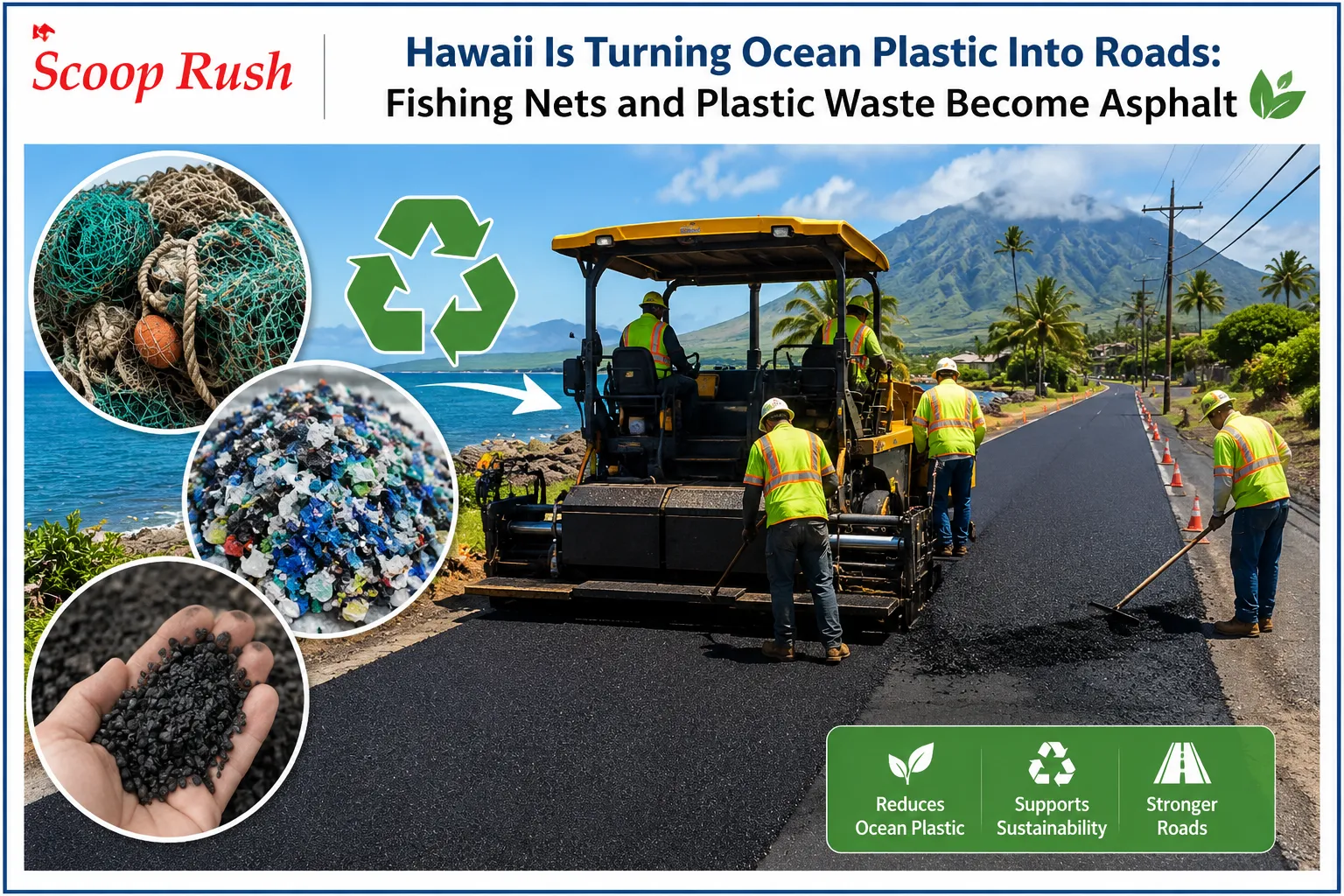
What if the plastic polluting the ocean could become part of the roads people drive on every day? Researchers in Hawaii are testing a new solution by transforming old fishing nets, marine debris, and recycled plastic waste into asphalt materials. The project called Hawaii turning ocean plastic into roads shows how researchers are finding new ways to recycle marine waste and create useful road materials.
The project, known as Hawaii turning ocean plastic into roads, is designed to tackle the growing problem of plastic pollution while finding a practical use for waste materials. Scientists are studying whether plastic collected from oceans and communities can be safely reused in road construction instead of being sent to landfills.
Early research shows that recycled plastic roads did not release more microplastics than traditional pavement during testing. Although more studies are needed, researchers believe the project could offer a new way to manage plastic waste and create useful infrastructure.
Hawaii Turns Ocean Plastic Into Roads Through Recycling Innovation
Hawaii faces a growing plastic waste challenge because of its location and limited recycling options. Moving waste away from the islands for processing can be expensive and difficult.
Meanwhile, marine debris continues to affect Hawaii’s beaches and surrounding waters. Discarded fishing nets are one of the major sources of plastic pollution found in the ocean.
Researchers from the Center for Marine Debris Research (CMDR) at Hawaiʻi Pacific University are now exploring whether these materials can be reused in asphalt roads.
Instead of allowing plastic waste to remain in the environment, scientists are testing whether it can become a valuable construction material.
The research team is working with the Hawaii Department of Transportation (HDOT) to study the performance and environmental impact of recycled plastic asphalt.
Why Researchers Are Adding Plastic to Asphalt
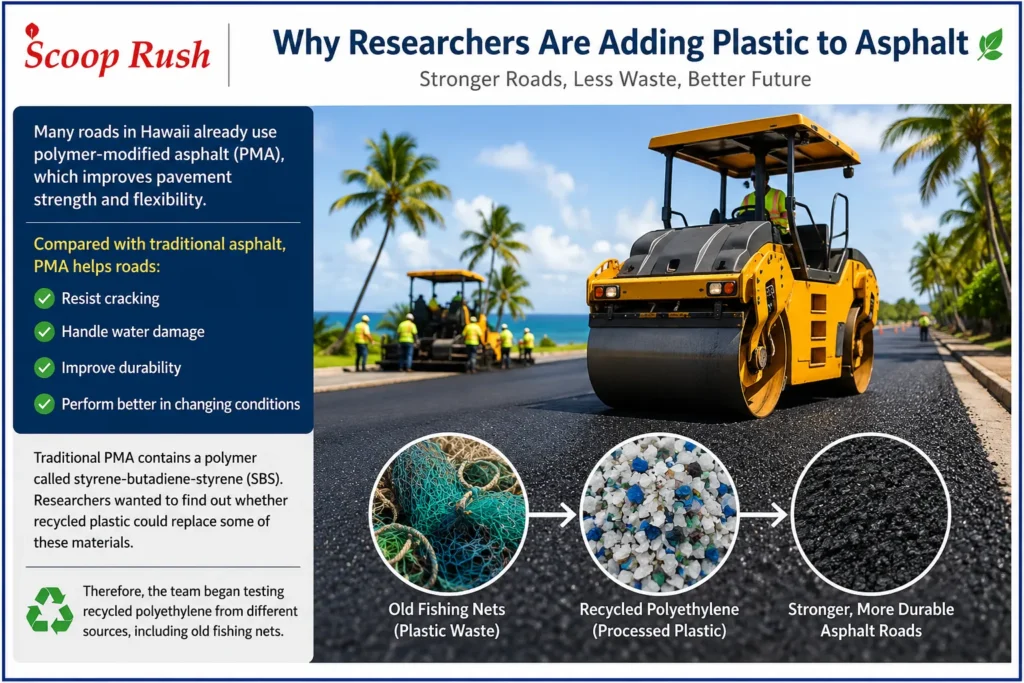
Many roads in Hawaii already use polymer-modified asphalt (PMA), which improves pavement strength and flexibility.
Compared with traditional asphalt, PMA helps roads:
- Resist cracking
- Handle water damage
- Improve durability
- Perform better in changing conditions
Traditional PMA contains a polymer called styrene-butadiene-styrene (SBS). Researchers wanted to find out whether recycled plastic could replace some of these materials.
Therefore, the team began testing recycled polyethylene from different sources, including old fishing nets.
Old Fishing Nets Are Being Recycled Into Roads
Abandoned fishing gear is a major part of Hawaii’s marine debris problem.
Through the Bounty Project, the Center for Marine Debris Research works with licensed commercial fishers to remove marine waste from the ocean.
Researchers collect discarded fishing nets and other plastic materials before separating plastics that can be reused.
Many fishing nets contain polyethylene, a durable plastic that is also used in everyday products.
After collection, the materials are processed and prepared for asphalt production.
The recycled plastic is then mixed with road materials to create experimental pavement sections.
Testing Recycled Plastic Roads on Oahu
Researchers tested the recycled plastic asphalt on a residential road located on Oahu.
A paving company created three different road sections using different asphalt mixtures.
Traditional Asphalt Section
One road section used standard polymer-modified asphalt containing SBS.
Household Recycled Plastic Section
Another section used recycled polyethylene collected from local recycling programs.
Fishing Net Plastic Section
The third section used polyethylene recovered from discarded fishing nets.
After about 11 months, scientists collected road dust samples to study whether the recycled plastic pavement released microplastics.
Scientists Examine Microplastic Release From Roads
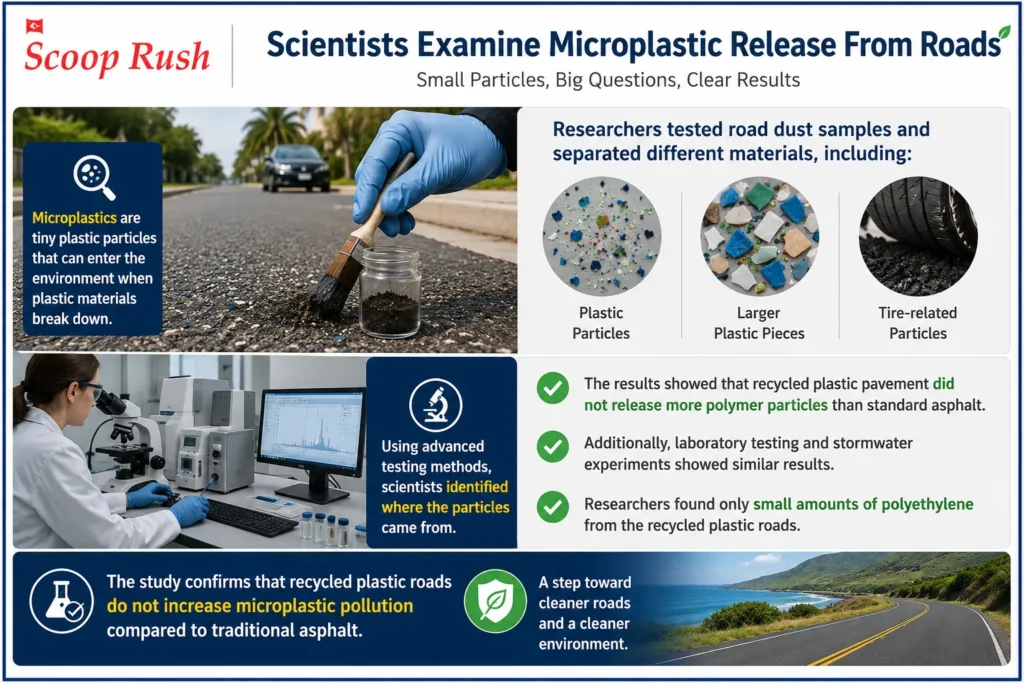
Microplastics are tiny plastic particles that can enter the environment when plastic materials break down.
Researchers tested road dust samples and separated different materials, including:
- Plastic particles
- Larger plastic pieces
- Tire-related particles
Using advanced testing methods, scientists identified where the particles came from.
The results showed that recycled plastic pavement did not release more polymer particles than standard asphalt.
Additionally, laboratory testing and stormwater experiments showed similar results.
Researchers found only small amounts of polyethylene from the recycled plastic roads.
Tire Wear Had a Larger Impact Than Recycled Plastic
During testing, scientists discovered that tire wear produced a much stronger signal than recycled plastic materials.
Vehicles naturally release tiny tire particles as they travel across roads. Researchers found these particles in much higher amounts compared with polyethylene from recycled plastic asphalt.
This suggests that recycled plastic inside asphalt may remain combined with other road materials instead of separating into individual plastic particles.
Could Plastic Roads Help Reduce Ocean Pollution?
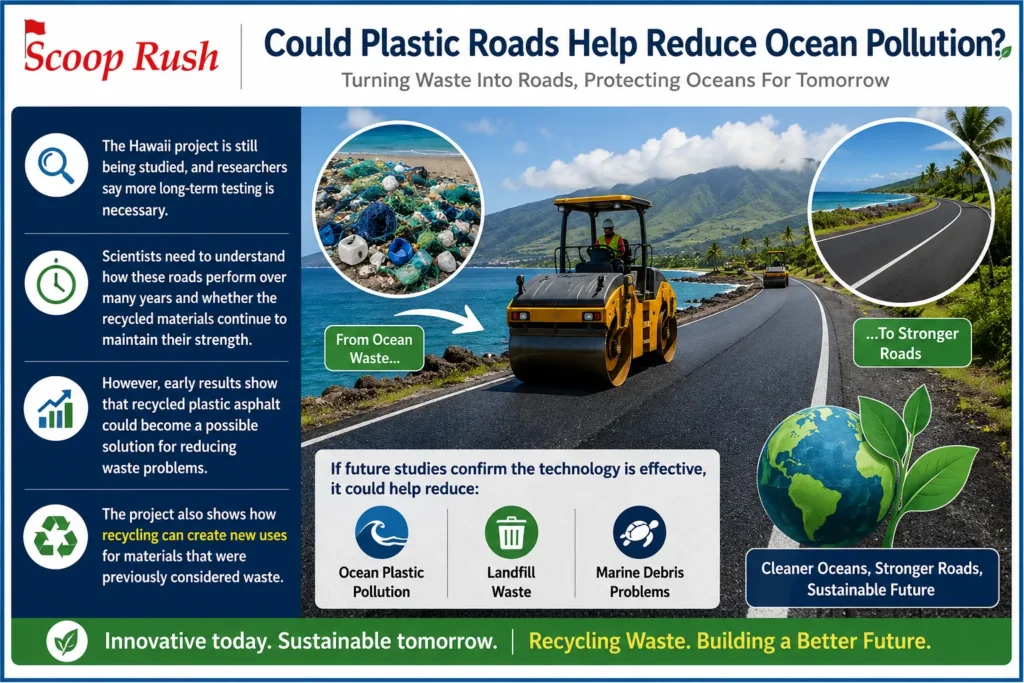
The Hawaii project is still being studied, and researchers say more long-term testing is necessary.
Scientists need to understand how these roads perform over many years and whether the recycled materials continue to maintain their strength.
However, early results show that recycled plastic asphalt could become a possible solution for reducing waste problems.
If future studies confirm the technology is effective, it could help reduce:
- Ocean plastic pollution
- Landfill waste
- Marine debris problems
The project also shows how recycling can create new uses for materials that were previously considered waste.
The Future of Hawaii’s Plastic Road Experiment
The idea of turning ocean plastic into roads represents a new approach to dealing with waste.
Instead of treating old fishing nets and plastic debris as useless materials, researchers are exploring how they can become part of important infrastructure.
Furthermore, the project provides valuable information about how recycled plastics behave in real-world conditions.
Although more research is required, Hawaii’s experiment demonstrates how science and recycling can work together to address environmental challenges.
Conclusion: Hawaii’s Plastic Roads Could Create a New Recycling Model
Hawaii is testing an innovative method by turning ocean plastic, fishing nets, and recycled waste into road materials. The Hawaii turning ocean plastic into roads project highlights how recycled materials can help solve plastic pollution challenges while supporting future infrastructure solutions.
Early findings suggest that recycled plastic asphalt does not release more microplastics than traditional pavement. While researchers continue studying the long-term results, the project offers a possible new way to manage marine debris.
Ultimately, Hawaii’s plastic road experiment could become an example of how waste materials can be reused to create practical solutions.
FAQs
1. Why is Hawaii turning ocean plastic into roads?
Hawaii is testing recycled plastic roads to reuse marine debris and reduce plastic waste problems.
2. Are recycled plastic roads safe?
Early testing shows recycled plastic asphalt did not release more microplastics than traditional pavement, but research is continuing.
3. What type of plastic is used in these roads?
Researchers are using polyethylene recovered from household recycling and discarded fishing nets.
4. Where are these roads being tested?
The experimental road sections were created on Oahu, Hawaii.
5. Will recycled plastic roads become common?
More long-term testing is needed, but the technology could become a useful recycling solution in the future.

